

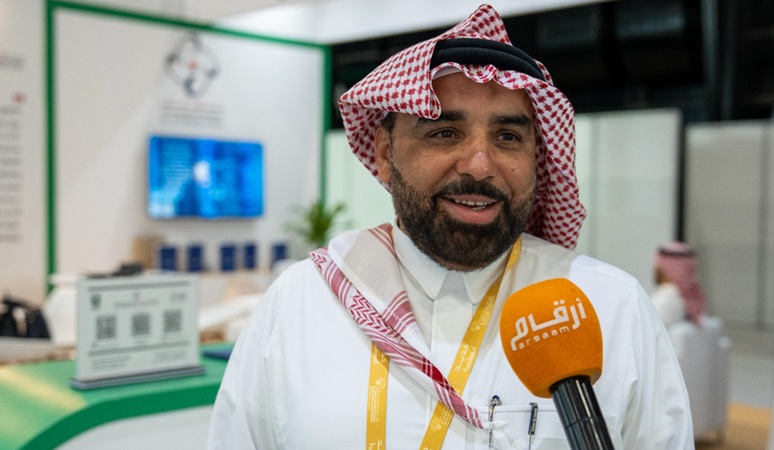
Jassim Al-Abbas, General Manager of Marketing, Sales, and Business Development at Al-Ittefaq Steel, confirmed that domestic steel demand in Saudi Arabia stands at around 7.5 million tons annually, while the total installed production capacity of all steel plants in the Kingdom is approximately 15 million tons per year.
Speaking to Argaam on the sidelines of the 3rd Saudi International Iron and Steel Conference, Al-Abbas stated that there is no slowdown in domestic demand, contrary to market perception. He explained that demand is growing at an annual rate of 2%–3%, adding that new production capacities have captured part of the market share from existing mills, creating a false impression of weaker demand, while actual demand remains stable and balanced.
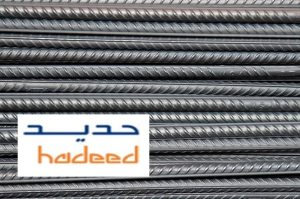
He added that rebar demand covers all project types, including mega and giga projects under Saudi Vision 2030, as well as private and investment projects.
Rising Scrap Prices and Limited Supply
Al-Abbas noted that scrap prices in Saudi Arabia are among the highest in the Middle East, often surpassing global levels, due to limited supply and strong demand. He said the market is witnessing persistent tightness and continuous price increases, expecting further pressure in the coming years as new mills relying on domestic scrap enter production in 2025. He warned that the continued ban on scrap imports would keep the market under sustained pressure.
Cost Gap Between Large and Small Mills
Regarding market competition, Al-Abbas explained that the sector shows a clear divide between large, capital-intensive mills and smaller, low-cost producers, creating a significant cost gap. Some small mills, he added, import steel billets at prices lower than local production costs, allowing them to sell at lower prices that pressure major producers and force them to cut prices to stay competitive. This situation, he said, is unhealthy, leading to margin erosion and pushing some companies to break-even levels, ultimately threatening industry stability.
Export Challenges and Market Restrictions
On exports, Al-Abbas noted that 2025 will be one of the weakest years for exports due to restrictions imposed by target markets, such as Iraq’s 30% import tariff on steel, along with exceptional conditions limiting exports to Yemen. He expressed hope for improvement and market reopening soon, pointing out that Canada reduced import quotas this year after Saudi Arabia exported significant volumes last year, while the Syrian market looks promising for future exports. He emphasized that government support for local industries and Saudi trade exhibitions abroad will enhance export growth opportunities.
Strategic Shift Toward Specialty Steel
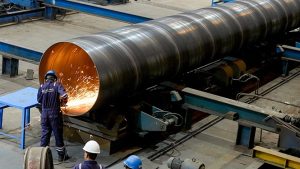
Al-Abbas highlighted that Saudi Arabia’s steel sector is entering a new strategic phase focused on specialty steel production, used in heavy industries such as shipbuilding and railways. He added that upcoming mega-events such as Expo 2030 and the 2034 FIFA World Cup, along with the release of idle lands, are expected to stimulate construction activity and boost steel demand in the coming period.
He concluded by saying that the steel industry in the Kingdom is on a positive trajectory, supported by Saudi Vision 2030 and large-scale development projects, predicting a gradual improvement in demand and prices during the third and fourth quarters of this year.
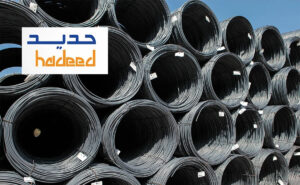
Finally, he noted that Al-Ittefaq Steel is the second-largest private steel producer in Saudi Arabia, with plants in the Eastern, Central, and Western regions, and a total production capacity of 3 million tons of rebar, 2 million tons of billets, and 1.5 million tons of DRI (direct reduced iron).