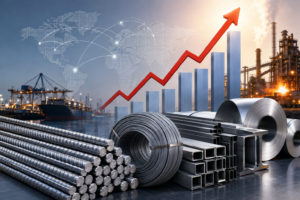


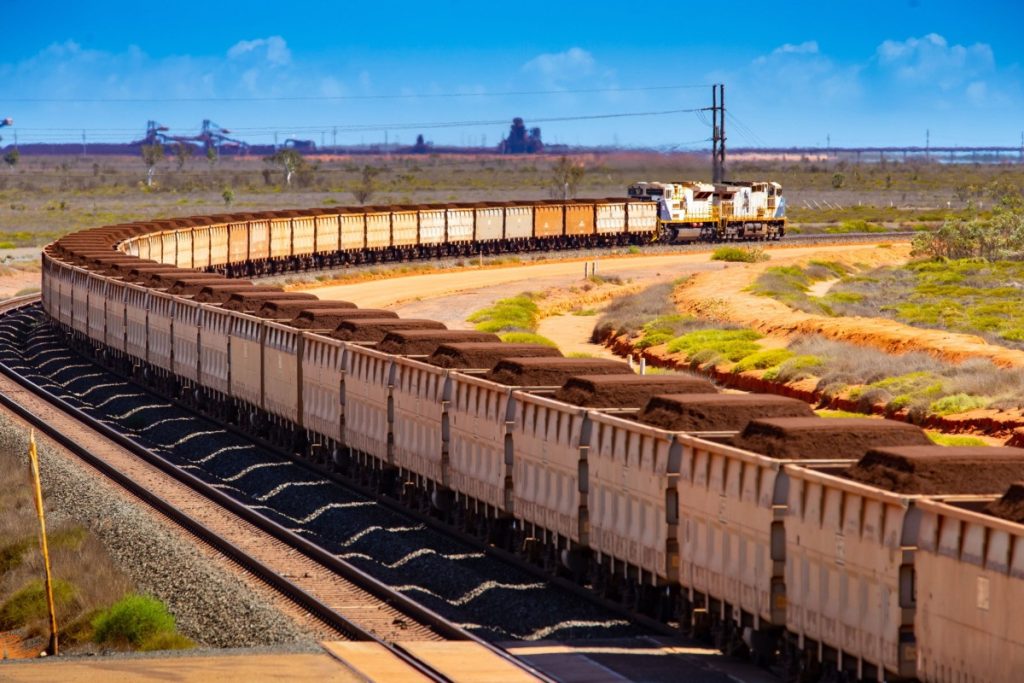
Iron ore futures rose, driven by improved relations between the largest producer, Australia, and its largest consumer, China, although gains were capped by ongoing concerns about the weakness of China’s property sector.
The most-traded iron ore contract for September delivery on China’s Dalian Commodity Exchange rose 1.11% to 773.5 yuan ($107.71) per tonne by 03:03 GMT.
The benchmark August contract on the Singapore Exchange rose 0.84% to $99.75 per tonne.
This came after a meeting in Beijing between Australian Prime Minister Anthony Albanese and Chinese President Xi Jinping, where the two sides agreed to launch a “new policy dialogue on decarbonizing the steel industry,” giving Australia a clearer view of the Chinese government’s plans in this area.
Albanese also indicated that the free trade agreement signed a decade ago between China and Australia, Australia’s largest trading partner, would be reviewed.
Since Australia’s exports to China are dominated by iron ore, Albanese was accompanied on his visit by executives from major mining companies such as Rio Tinto, BHP, and Fortescue, who met with Chinese steel industry officials.
Rio Tinto, the world’s largest iron ore producer, reported a 13% increase in shipments quarter-on-quarter and its strongest second-quarter production since 2018.
Brokerage firm Galaxy Futures said that steel demand in the manufacturing sector remains strong, and expectations of supportive government measures on the supply side also contributed to the upward movement in prices.
However, weak fundamentals continue to weigh on market sentiment. Amid the ongoing slowdown in China’s property market, crude steel production in June fell 9.2% year-on-year, making the first-half of the year the weakest since 2020.
ANZ analysts noted in a note that this decline has weakened the positive momentum that had been building in recent weeks due to signs of strong demand.
On the Dalian Stock Exchange, other steel components declined, with metallurgical coal falling 0.6% and coking coal falling 0.96%.
On the Shanghai Futures Exchange, most steel indices declined, with rebar falling 0.26%, hot-rolled coils falling 0.25%, wire rod falling 0.09%, and stainless steel rising 0.12%.
(Reuters)