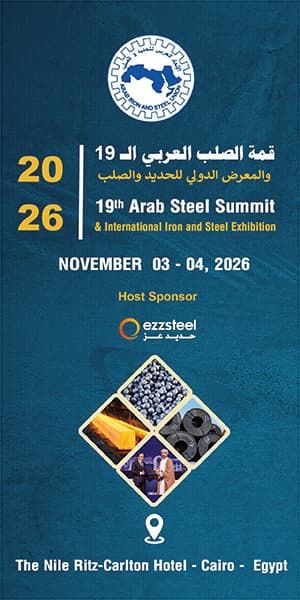
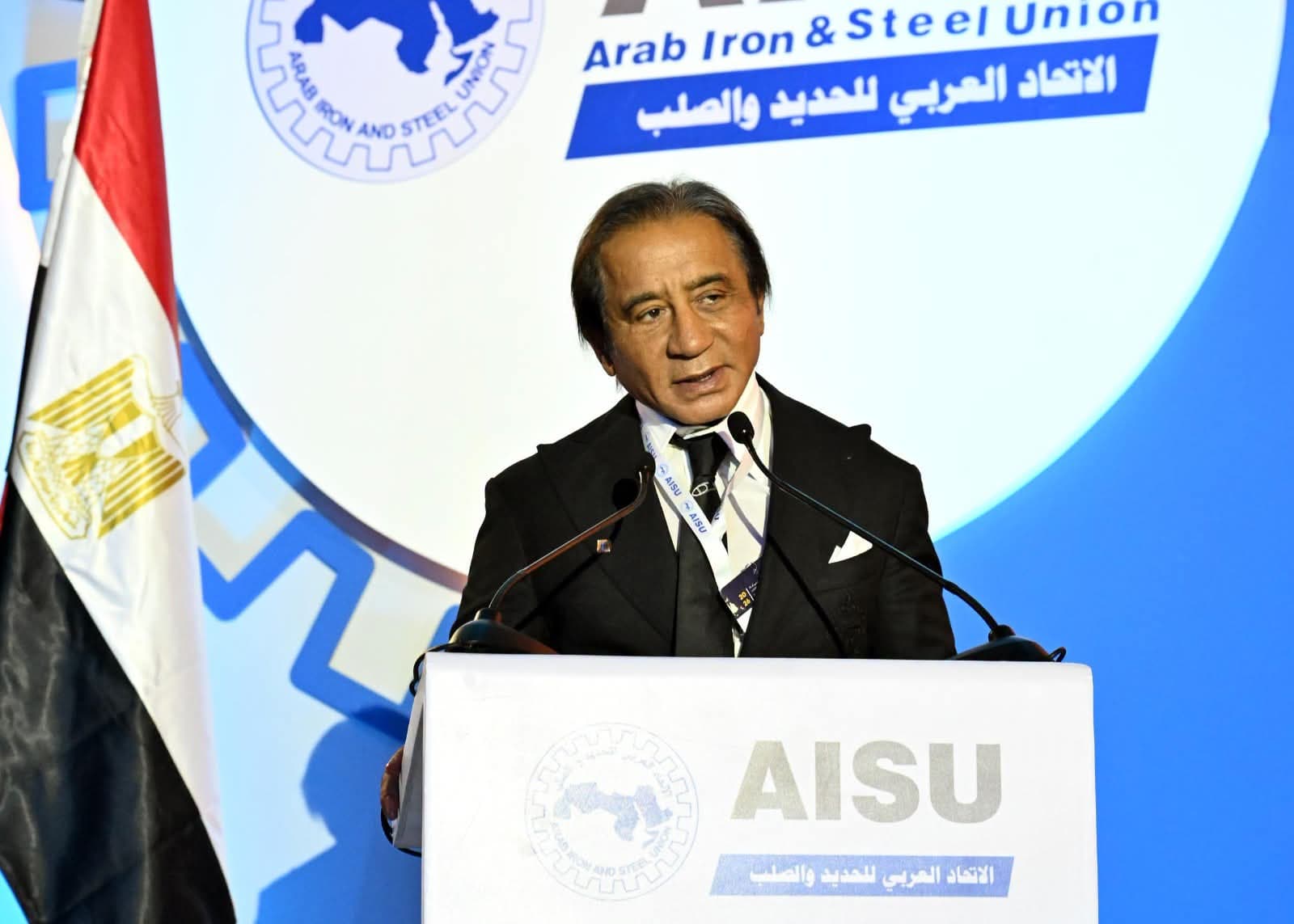
Eng. Ahmed Ezz, Chairman of the Board of Directors of the Arab Iron and Steel Union, announced the final recommendations of the 19th Arab Steel Summit, "Cairo Declaration," issued on November 4, 2026. The declaration included six recommendations aimed at strengthening cooperation among Arab countries, confronting the challenges facing the steel industry, and supporting its competitiveness in regional and international markets.
In his speech during which he delivered the declaration, Ahmed Ezz affirmed that these recommendations stem from the desire of the members of the General Assembly of the Arab Iron and Steel Union and representatives of Arab steel companies to unite in confronting the challenges the industry is undergoing, and in the belief that joint action represents a fundamental way to achieve the interests of the Arab citizen, Arab markets, and governments. He also acknowledged the role of the Union as an effective framework for joint Arab action.
The declaration directed its recommendations to the Secretary-General of the League of Arab States, Nabil Fahmy, the Arab Ministers of Industry and Trade, and Arab governments. The recommendations were as follows:
First Recommendation: Establishing a Common Arab Steel Market
The declaration called for working towards establishing a common Arab steel market through a sectoral agreement within the framework of the League of Arab States and the Economic and Social Council, following a gradual four-stage process starting with willing countries, leading to the creation of an integrated legal and institutional framework to achieve this goal.
The first stage begins with unifying the definition of the scope of products covered by the agreement according to customs codes from 7201 to 7306, and establishing a unified Arab database for production, capacities, and trade, to be managed by the Arab Iron and Steel Union.
The second stage includes unifying customs duties among participating countries to approach the levels of major markets, establishing rules of origin for Arab steel that require smelting and casting operations to take place within the signatory countries, in addition to establishing a unified external protection shield, and forming a joint Arab investigation authority responsible for dumping, subsidy, and surge in imports cases, empowered to issue measures applicable to all participating countries.
The third stage aims to eliminate customs and non-customs barriers between signatory countries, including quantitative restrictions on the trade of steel products of Arab origin, with the adoption of a unified Arab standard for each grade, mutual recognition of certificates of conformity and accredited laboratories, and a ban on protectionist measures between member states. The joint Arab investigation authority will be responsible for related competencies.
The fourth stage stipulates the establishment of a permanent Arab Steel Authority, which will be responsible for managing external protection of Arab markets, monitoring competition within the market, publishing prices and data, and granting it specific powers to deal with crisis situations.
Second Recommendation: Unifying Commercial Protection Levels
The declaration called on Arab governments to adopt protection levels and scopes consistent with those applied in industrialized countries, until the implementation of the common Arab steel market is completed, ensuring that the Arab industry maintains its competitive edge against industrially advanced countries.
Third Recommendation: Expanding Upstream Production Stages and Deepening Added Value
The declaration emphasized encouraging rolling mills in Arab countries to invest in upstream production stages, including direct reduction and smelting and casting, or to move towards integration and joint investment in value-added chains.
It also called for issuing a unified certificate of origin for Arab steel, requiring the tracking of smelting and casting operations to the slab number, and halting the import of used or dismantled production equipment that is reassembled within Arab countries.
The recommendation stressed the importance of confronting import flows of semi-finished and finished products that are subsidized from abroad, by imposing appropriate countervailing duties.
Fourth Recommendation: Encouraging the Consumption of Rebar
The declaration called for efforts to increase the consumption of rebar in the Arab world, by facilitating the conditions and requirements for building private housing, whether through incentive initiatives to provide affordable mortgage financing, simplifying licensing procedures, or providing serviced land.
Fifth Recommendation: Supporting Industries Using Flat Steel
The declaration stressed the necessity of driving industrial growth for Arab industries that use flat steel, by localizing the manufacturing of automobiles, home appliances, equipment, and shipbuilding, which will enhance local demand for steel products and support deepening manufacturing and added value within Arab economies.
Sixth Recommendation: Establishing Specialized Steel Industry Sectors within Arab Ministries of Industry
The declaration called for encouraging the establishment of specialized sectors for the steel industry within Arab ministries of industry, comprising experts and practitioners from the sector, with the aim of enhancing coordination and understanding between industry and governments, and providing more specialized channels for discussing the challenges and needs facing companies and factories.
The "Cairo Declaration" concluded the summit's recommendations by emphasizing the importance of transforming these proposals into practical steps, which will enhance Arab industrial integration and support the building of a steel industry more capable of facing global trade transformations and benefiting from the available production and investment potentials in Arab countries.