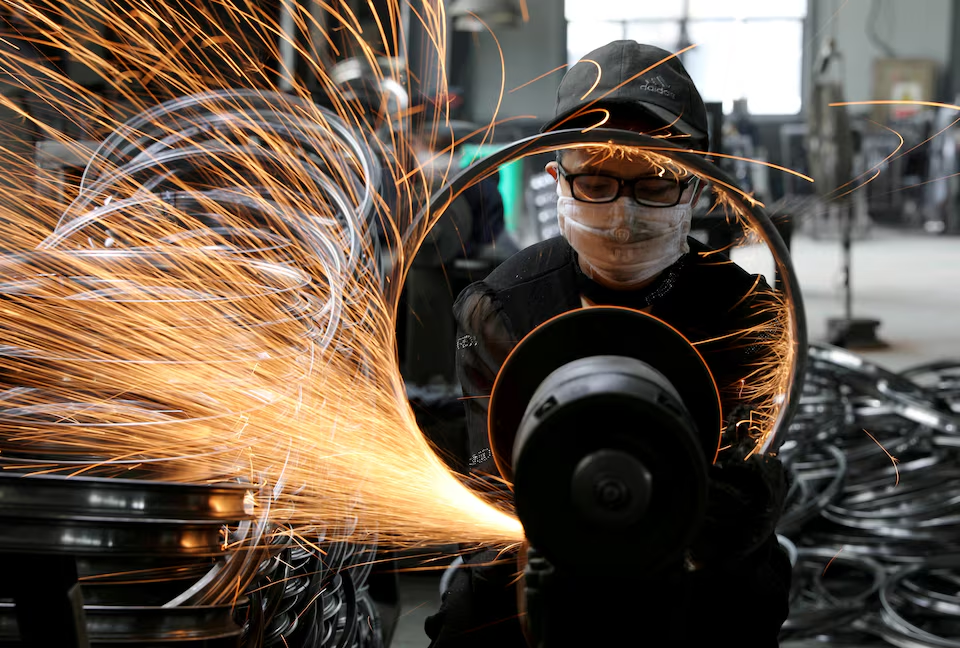
The gap between the performance of China's steel industry and its iron ore imports is widening, with steel production continuing to decline while raw material imports maintain strong levels, driven by falling prices, accumulating inventories, and increasing global supply.
According to an analysis published by Reuters, China's steel production reached 70.83 million tons in October 2026, a decrease of 6.9% compared to September and 1.6% year-on-year. Production also declined by 2.8% in the first ten months of the year, reaching 795.61 million tons.
The decline is more concentrated in inland steel mills in the Yangtze River region, where blast furnace operating rates fell to 52%, compared to 70% in the coastal Hebei province, which benefits from easy access to export markets. Chinese steel mill profit margins halved between May and September, according to data from DBX Commodities.
In contrast, China's iron ore imports rose by 3.1% in the first ten months to reach 1.06 billion tons, while Kpler estimates that seaborne shipments in November could reach 116.4 million tons.
Increased imports contributed to a rise in Chinese port iron ore inventories to 157.36 million tons in the week ending November 20, a year-on-year increase of 12.7%.
The decline in iron ore prices also supported demand, as the benchmark contract on the Singapore Exchange recorded $90.37 per ton on November 20, a decrease of 19.2% from its yearly high of $111.91 in May 2026.
Global supplies are heading for further expansion with increased shipments from Australia and Brazil and higher production from the Simandou project in Guinea. China's imports of Guinean ore reached 3.12 million tons in October, with expectations of an increase to 5.75 million tons in December 2026.