The Arab region possesses diverse mineral resources, including phosphate, potash, iron ore, copper, and gold, in addition to minerals whose importance is growing with the transformations in energy, infrastructure, and technology. However, the value of these riches is not determined solely by their geological volume, but by the ability of countries to explore, develop, process, and transform them into competitive industrial products. The United Nations Economic and Social Commission for Western Asia (ESCWA) estimated in a 2023 report that the value of non-fuel mineral production in 18 Arab countries reached about $23 billion in 2020.
The importance of mining is not limited to providing raw materials, but extends to supporting downstream industries, iron and steel, and fertilizer and chemical supply chains, boosting exports, creating jobs, and reducing reliance on importing certain inputs. With the global demand shifting towards strategic minerals, Arab countries have an opportunity to enhance their presence in new value chains, provided that reliable geological data, long-term financing, appropriate infrastructure, and technologies are available, while managing costs and environmental risks.
Therefore, the challenge facing Arab mining is not limited to possessing resources, but to transitioning from extracting and selling ores to integrated projects that produce intermediate materials and higher-value products. This sometimes requires transcending national market boundaries to joint Arab investments that employ available resources, financing, and industrial expertise, and distribute benefits and risks more efficiently.
In this context, the Arab Mining Company (ARMICO) emerges as an Arab experience in investing in mineral wealth, linking mining activity with industrial development and economic integration. The company was established in 1975 within the framework of the Council of Arab Economic Unity, according to its official profile, and is headquartered in Amman. Its activities range from contributions to mining and natural resource-related industries, wholly-owned subsidiaries, and an investment portfolio comprising mining and industrial assets and financial investments.
Its direct published contributions on its official website include: Arab Potash Company in Jordan, National Mining and Industry Company (SNIM) in Mauritania, Major Mining Industries Company (AMAK) in Saudi Arabia, Fluorine Industries Company in Tunisia, and Arab Detergents and Chemicals Company in Iraq. These investments extend to mining, fertilizers, chemicals, and industrial materials. The company has also developed subsidiaries and projects, including Arab Mining Company - Fujairah and Arab Basalt Fiber Company in the United Arab Emirates, and Arab Phosphate Mining Company in Jordan, and Arab Mining Company - Saudi Arabia. The basalt fiber project aims to produce rebar and materials used in construction and industrial applications, while the Arab Phosphate Mining Company, wholly owned by ARMICO, is working on an integrated project for phosphate mining and fertilizer production in the Al-Risha region of Jordan.
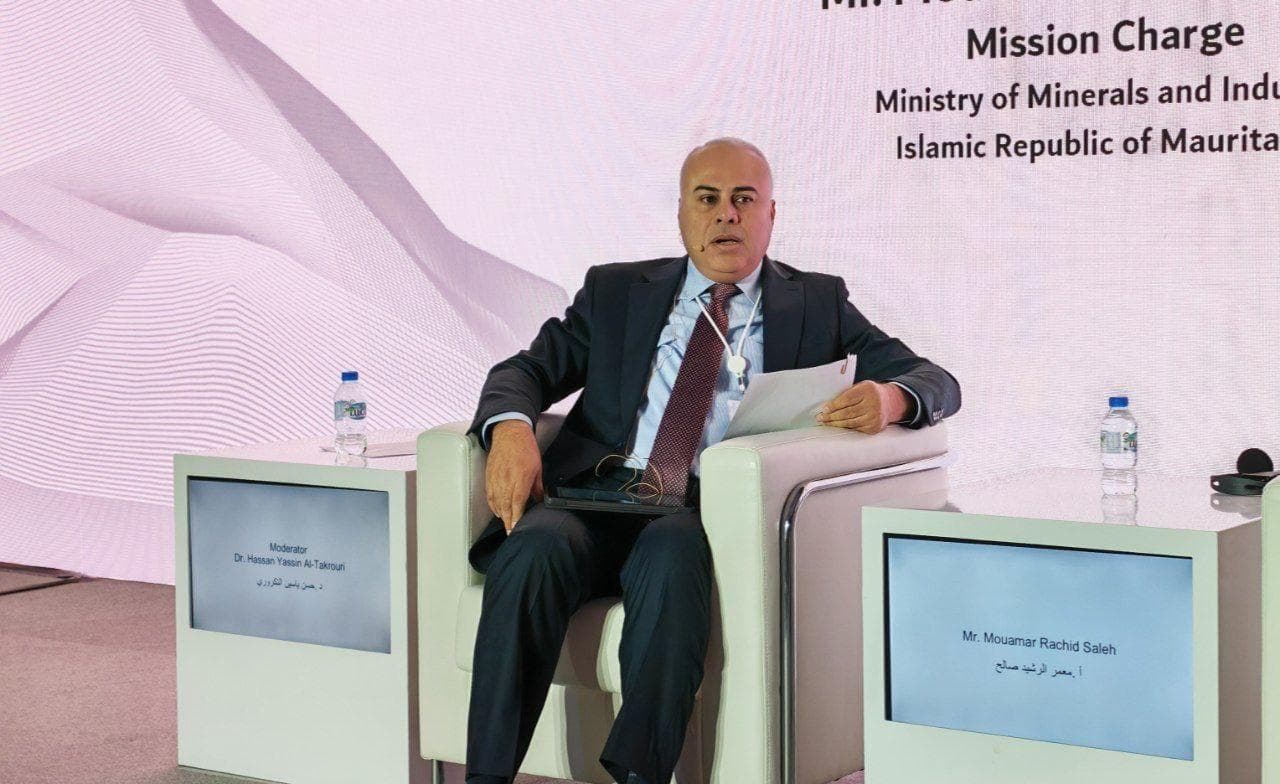
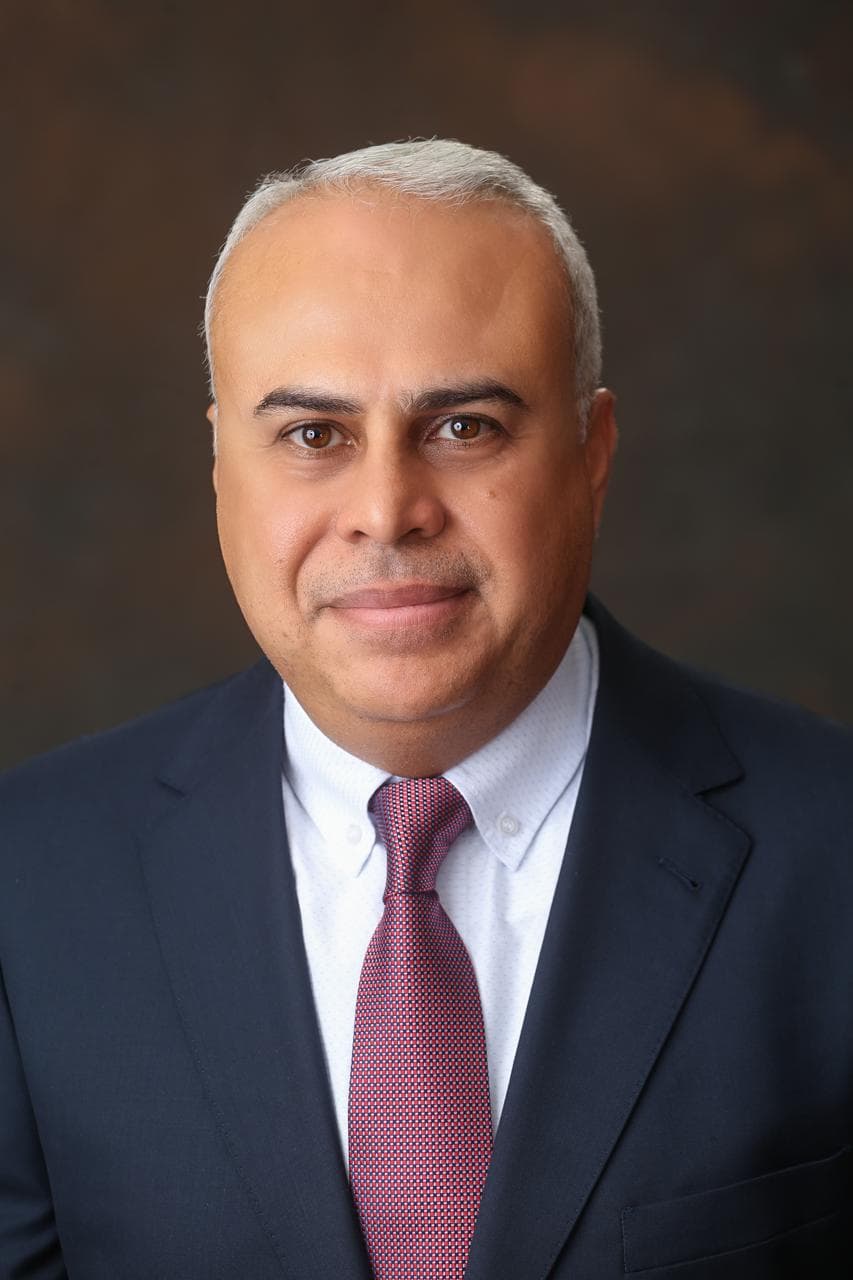
After more than five decades since its establishment, the company faces a test that goes beyond managing its existing investments to developing new projects, maximizing the added value of mineral resources, strengthening the links between mining and downstream industries, and expanding the role of Arab capital in more integrated and competitive projects. This is the subject of the "Arab Steel Bulletin" interview with Dr. Hassan Yassin Al-Tukrouri, Director General of the Arab Mining Company (ARMICO).
Al-Tukrouri has led the company since December 2010, overseeing its strategic management, investment development, and project expansion in mining and related industries during this period. His professional career spans over three decades in executive management, financial planning, auditing, and corporate governance. He served as Executive Director of Financial Management at Jordan Kuwait Bank (2009–2010) and led major audit and review operations for over 13 years as Senior Audit Manager at Talal Abu-Ghazaleh Organization in Saudi Arabia (1995–2009). He holds a Doctorate in Business Administration (DBA) from the International Business Academy in Switzerland, a Master's degree in Accounting from the Applied Science University in Jordan, along with international professional accreditations and certifications.
The interview addresses the position of mineral resources in the future of Arab industrial development and ways to transform them into sustainable production projects, the company's strategy in selecting and evaluating investments, and lessons learned from projects that faced technical or economic challenges. It reviews developments in Jordan's projects; the company did not proceed with completing the lithium project in the Finan area, while studies continue for the gold project in Jabal Mubarak and technical evaluations for the Al-Risha phosphate project, confirming that economic feasibility, not initial geological indicators, guides investment. It discusses local manufacturing methods and maximizing added value through the phosphate and fertilizer project in Al-Risha and the basalt fiber experience in Fujairah, and the role of investment partnerships in enhancing Arab cooperation in mining-related industries.
The interview also discusses the future of Arab mining in light of global shifts in demand for strategic minerals, the challenges of energy, water, transportation, and financing and their impact on project competitiveness, opportunities for technology, artificial intelligence, and remote sensing in exploration, and the requirements for environmental protection and enhancing social acceptance. The discussion extends to the relationship between mining and the iron and steel industry, opportunities for developing suitable Arab ores for industrial use and building supply chains linking mining, concentration, pelletizing, reduction, smelting, and rolling, and the impact of energy and shipping costs, low-emission hydrogen, and the European carbon border adjustment mechanism on industry competitiveness. It also presents the potential for mining integration among Arab countries, the role of investment institutions and sovereign funds in providing long-term financing, the need for modern geological databases and a clear investment environment, and Al-Tukrouri's vision for the sector's future by 2035 and the steps required over the next five years.
The interview's themes converge on the reality that mineral wealth does not automatically translate into economic power, but requires disciplined investment, long-term financing, appropriate technologies, and effective links between resources, markets, and industries; this is a equation being tested by the Arab Mining Company's experience in its existing investments and new projects.
And now, the interview...
First Theme: The Company and its Investment Philosophy
When we talk about Arab mining today, are we talking about a sector that still sells raw materials in their primary form, or about an opportunity to build integrated industries that include minerals, chemicals, iron and steel, and energy?
We are talking about an opportunity to build an integrated industrial base linked to mineral resources and achieve sustainable returns from them: extracting the ore, which is the beginning of the value chain, and its benefits are amplified through processing, manufacturing, and product development. This concept is present in the objectives of the Arab Mining Company, which include exploration, extraction, concentration, processing, transportation, marketing, and manufacturing. We have experience in the Fujairah Basalt Fiber Production Company, which is a model that demonstrates the possibility of transforming a natural resource into advanced industrial materials serving multiple markets.
What is the role of the company in the mining sector today?
The company was established to employ mineral wealth in productive and developmental projects and enhance Arab economic integration. Our role combines investment, project development, partnership building, and the utilization of expertise and technology. Our tools range from strategic stakes and wholly-owned subsidiaries to global investment portfolios in mining and related sectors, with continued priority given to investment in Arab countries in accordance with the company's founding provisions.
What are the criteria for selecting a new mining project?
We evaluate the project as an integrated economic unit, including the quantity of the resource, ore quality, data reliability, and the feasibility of its extraction using appropriate technology. We then study energy, water, transportation, licenses, the market, the capabilities of strategic partners, and the environmental and social impact. The size of the resource is important, but the decision is determined by the project's ability to compete and achieve sustainable returns, and by the opportunities for establishing a related downstream industry.
How are the company's investment activities evaluated?
Sustainable financial return and increasing the value of investments for shareholders are two fundamental criteria for measuring the company's success, in addition to its contribution to the development of mining and related industries. In direct projects, we look at added value, quality of job opportunities, knowledge transfer, and supplier development, while financial portfolios are assessed based on return, risk, liquidity, and diversification. The most important factor is the quality of the investment and its ability to endure market cycles, not just the number of projects. Perhaps the most prominent embodiment of the company's success and continuity is its completion of fifty years since its establishment, and its entry into a new phase extending for another fifty years, based on its accumulated experience, the trust of its shareholders, and its ability to continue investing and growing.
What are the lessons learned from projects that faced difficulties?
One of the most important lessons is that ore quality alone does not guarantee success; reliable processing, a clear market, and an capable partner are essential. Costs and timelines should be tested under conservative conditions, and spending should be phased as information matures. Redesigning or postponing a project when results warrant it is part of investment discipline and capital preservation.
Do you prefer direct investment or financial and strategic partnerships?
We use multiple models depending on the nature of the opportunity: strategic stakes allow participation in company development, industrial investment enables building production capacities, and partnerships combine technical, financial, and marketing expertise. Financial portfolios provide broader participation in global markets. Among our most significant contributions is the Major Mining Industries Company (AMAK) in Saudi Arabia, a producer of gold, silver, and copper and zinc concentrates. The choice depends on feasibility, added value, return, and risk.
Second Pillar: Projects in Jordan and Challenges
Where can the gap arise between geological studies and investment-ready opportunities?
The fundamental gap is the transition from a geological indicator to a project that can be evaluated and financed. This requires drilling, analysis, resource estimation, processing tests, and studies of the market and infrastructure, as well as the environment. The problem varies between countries, but it is often related to the novelty of data and the financing of early stages. Therefore, research institutions and mining expertise play an important role in transforming geological knowledge into investment opportunities.
What progress has been made in the gold, lithium, and phosphate projects undertaken by the company?
Regarding the exploration and prospecting projects carried out by the Arab Mining Company in Jordan, these projects have witnessed varying developments according to the results of technical and geological studies. The latest updates can be clarified as follows:
First: The Lithium Project in the Finan Area
The Arab Mining Company signed a Memorandum of Understanding with the Ministry of Energy and Mineral Resources on December 18, 2022, to explore lithium ore in the Finan area. The company commenced exploration and preliminary studies. However, the results were not encouraging from both technical and economic perspectives. Therefore, we decided to halt exploration activities on the project, based on our commitment to directing the company's investments towards projects with economic feasibility and promising development opportunities.
Second: The Gold Project in the Jabal Mubarak Area
Work on this project began under a Memorandum of Understanding signed on December 18, 2022. The initial exploration results have shown positive and encouraging indicators. Accordingly, we are currently working on expanding the scope of geological studies and exploration activities, with the aim of achieving a more accurate assessment of the extent of mineralization, gold concentrations, and the potential for economic exploitation. We are optimistic about the initial indicators, while emphasizing that a final judgment on the economic feasibility of the project requires the completion of the necessary technical studies.
Third: The Phosphate Project in the Al-Risha Area
The Al-Risha phosphate project is considered one of the most promising mining projects we are developing in Jordan. The project began with the signing of a Memorandum of Understanding with the Ministry of Energy and Mineral Resources on April 10, 2023. We established the Arab Phosphate Mining Company, wholly owned by the Arab Mining Company, to undertake the project's development and follow-up.
We are pleased to note that we have completed exploratory drilling, sampling, and necessary analysis. The results have been positive and encouraging. We are currently in an advanced stage of technical evaluation of the ore, including studying its suitability for processing and conducting pilot tests, with the aim of identifying the best technical and economic options for producing value-added phosphate derivatives and fertilizers, in preparation for the final feasibility study of the project.
Our vision for this project is not limited to extracting and exporting phosphate ore; rather, we aspire to develop downstream industries that contribute to maximizing the added value of Jordan's natural resources and enhancing the mining sector's contribution to the national economy.
In this context, we announced in December 2025 our collaboration with the Arab Potash Company to explore integration opportunities in phosphate and fertilizer industries. We also signed a Memorandum of Understanding in June 2026 with the Social Security Investment Fund to study the possibility of its investment participation in the phosphate fertilizer project.
We view these partnerships as an important step towards building an integrated industrial project that leverages the natural resources available in the Kingdom and enhances investment, manufacturing, and export opportunities.
In conclusion, our strategy at the Arab Mining Company is based on developing promising projects according to well-studied technical and economic foundations, with a focus on transitioning from merely exploring mineral resources to investing them in downstream industries that generate sustainable added value for the economy.
What is the plan for the Al-Risha project? Is the direction towards manufacturing within Jordan or exporting the ore?
The declared orientation for the Al-Risha project is to develop downstream industries including phosphoric acid and fertilizer products, to maximize added value. The ore will not be exported without processing. The design of the plants, their capacities, and products will depend on studies and market analysis. For other ores, the processing and manufacturing route will be selected after proving technical and economic feasibility.
What is the biggest obstacle to mining projects in Jordan?
The challenge varies depending on the stage and the ore. During exploration, data and risk-bearing financing are prominent. During development, water, energy, transportation, licensing, and long-term financing emerge. Therefore, the biggest challenge is coordinating project elements within a single plan, as the failure of one essential element can delay the project, regardless of the resource quality.
Can Jordan become a regional hub for mining industries?
Jordan can build on its existing expertise in phosphates and potash to develop specialized fertilizers and chemical industries, as well as engineering and laboratory services. The announced cooperation between the Arab Mining Company and the Jordan Phosphate Mines Company in phosphate and potash fertilizers illustrates this direction. Industries related to copper and lithium first require proving economic resources, processing tests, and market availability; geological indicators alone are not sufficient to establish a plant.
How do mining projects in Jordan deal with water scarcity?
Water is a critical factor in feasibility and technology selection. A water balance must be prepared for each project, specifying sources, quantities, quality, and impact on other uses. Options include recycling process water, using treated water, improving tailings dewatering, and studying dry processing where applicable to the ore. For example, a basalt fiber production plant uses a closed-loop system for water management, while each ore requires a suitable solution.
Third Axis: Arab Integration and Strategic Minerals
Why hasn't geological diversity translated into an integrated industry?
There are successful Arab experiences, but integration among data, technology, financing, infrastructure, expertise, and markets remains varied. A geological resource requires a system to transform it into a project and an industry. It is necessary to evaluate the entire value chain and develop the segments where we can compete locally or regionally, while addressing the specific obstacles of each country and project.
Do we need a joint Arab mining strategy?
We need a practical framework for cooperation that includes data, expertise, exploration financing, infrastructure, and downstream industries. This should be translated into specific projects with responsibilities, implementation schedules, and performance indicators. The idea of joint projects and economic integration is one of the foundations upon which the Arab Mining Company was established; the value of a strategy is demonstrated by the investments and results it achieves.
How do Arab countries integrate in terms of mining?
The advantages of different countries can be pooled: resources in one country, energy and manufacturing in another, and financing, markets, and logistics services in others. This requires long-term contracts, compatible specifications, joint investments, and clear arrangements for risk and return distribution. Joint Arab institutions help transform these relationships into sustainable economic projects.
What are the most strategic minerals for the coming years, and which minerals might change the mining map in the next decade?
Strategic importance is measured by the mineral's function in the economy: phosphates and potash for food security, iron for construction and industry, and copper for electricity and grids. Lithium and some rare earth elements are important for energy technologies and advanced industries. It is best to prioritize based on economic resources, competitive advantage, and processing technologies, while monitoring technological changes and global demand. Copper is a strong candidate due to its widespread use in electricity, grids, and industry. Other minerals may have an impact when coupled with suitable technology, products, and markets, as the basalt experience illustrates. The mineral that changes the map is one for which we can prove economic resources and develop a competitive value chain around it.
Is the transition to clean energy a real opportunity for the Arab mining sector?
Yes, through the production and processing of minerals, and the manufacturing of materials and components needed for grids, renewable energy, and storage. Renewable energy can also be used in industrial processes when proven feasible. To benefit, it is necessary to identify competitive segments, develop quality, expertise, and performance, and monitor technological changes that may alter demand for specific minerals.
How can Arab countries seize opportunities in international competition for critical minerals?
By identifying Arab industrial interests, diversifying partnerships and markets, and developing processing, services, and technology. Negotiating power increases when reliable data, infrastructure, expertise, and competitive products are available. Arab investment institutions can participate in international opportunities and link them to the needs of Arab industry, so that global expansion adds knowledge, returns, and supply chain resilience.
What does the Arab mining sector need from regional decision-makers?
The sector needs stable regulations, accessible geological data, coordinated licensing, and appropriate infrastructure. It also requires financing for exploration and studies, stages that are difficult to fund with traditional debt. Incentives should be linked to measurable outcomes in production, manufacturing, training, local value addition, and environmental performance, to achieve sustainable benefits for the state and the investor.
How can we attract international companies and increase local value?
By offering well-studied opportunities and partnerships that include developing available resources, training, knowledge transfer, and studying local processing and manufacturing. Infrastructure, expertise, and stable procedures enhance the attractiveness of these activities. Our global investments also allow us to identify companies, technologies, and markets that can support the development of Arab resources, within realistic, phased, and trackable commitments.
Do you believe that launching an Arab platform or exchange for minerals would make an economic or marketing difference for the Arab mining sector?
A reliable platform for data, opportunities, producers, and specifications can improve transparency and reduce search and transaction costs. An exchange, however, requires standardized products, trading volume, liquidity, and arrangements for inspection, storage, and settlement. Therefore, it is advisable to first develop information and trade, and then consider an organized market for products that meet the necessary conditions.
Fourth Axis: Mining and Steel
What is the relationship between mining and the iron and steel industry?
The relationship is strategic; the quality of inputs and the stability of their supply affect the cost, specifications, and production efficiency of steel. Factories need a long-term vision for suitable ores, energy, and transportation. Our contribution to the National Mining and Industry Company (SNIM) in Mauritania links our portfolio to iron ore and underscores the importance of developing the resource according to the requirements of the final industry and the market.
Are Arab ores capable of supporting a competitive steel industry?
Iron ore production in Mauritania provides a foundation to build upon, but the suitability of the ore for each industrial route depends on its iron content, impurities, and amenability to concentration and pelletization. Direct reduction processes may require additional treatment. Competitiveness is measured by the cost of the input that meets specifications upon arrival at the plant, including extraction, processing, and transportation.
Is the establishment of an integrated Arab steel chain realistic?
An integrated Arab chain can be achieved through specific projects linking mining, concentration, pelletization, reduction, smelting, and rolling. The missing links vary by country, ore, and technology. Distributing the stages among countries may be more efficient if stable supply contracts, suitable transportation, and compatible specifications are available. The starting point is to study a specific chain with clear costs, partners, and markets.
Is it better to expand in different production stages within Arab countries, or is specialization and distribution of stages preferable?
Expansion should follow demand and competitive advantage. Distributing stages among countries can combine the ores of one country with the energy of another and a suitable industrial or logistical location. Mining and steel companies can cooperate in testing, ore development, pelletization, and procurement, reducing the specification gap and linking investment in each stage to a clear need in the next.
How can Arab mining reduce steel plants' reliance on imports?
By developing ores and intermediate products suitable for steel plants, and investing in processing and pelletization and supply contracts in cooperation with the plants from the outset. This is complemented by improving scrap collection, sorting, and recycling. The goal is to provide diverse and reliable sources, improve cost, quality, and supply flexibility, with each investment based on clear economic feasibility.
How do energy and shipping affect the cost of steel production, and will solar and hydrogen reduce costs?
Energy and shipping are key cost determinants and can alter the viability of an industrial location. Renewable electricity may improve competitiveness when its operating cost and continuity are favorable. Low-emission hydrogen allows for carbon reduction in direct reduction, but does not currently guarantee lower costs; viability depends on its production, storage, ore quality, financing, and operation.
Is green steel a real opportunity for the Arab steel sector?
Yes, when suitable ore, competitive energy, infrastructure, and a market that absorbs the product come together. The project requires purchase and financing contracts, reliable emissions measurement, and consideration of water, energy continuity, and technology maturity. The region possesses exploitable advantages, but industry success requires a project that proves its ability to operate and sell with a sustainable return.
How can the Arab steel sector remain competitive amidst excess capacity?
By increasing operational efficiency and quality, controlling expansion according to demonstrable demand, and developing products and services that markets need. New capacities should be evaluated under conservative price and demand conditions. Sustainable advantage comes from managing costs, energy, and supply, building long-term business relationships, and the plant's resilience during demand downturns.
What are the implications of applying the European Carbon Border Adjustment Mechanism?
The importance of measuring and verifying emissions, improving energy efficiency, recycling, and selecting lower-emission technologies will increase. These elements should be incorporated into investment and upgrade decisions. Solutions vary among plants based on their age, technology, ores, and operating capacity; a feasible and financeable pathway that achieves documented improvement and maintains competitiveness is required.
________________________________________
Axis V: Technology, Data, Finance, and Risks
Does the Arab mining sector lack a modern database?
The modernity and quality of data vary between regions. Old data can be useful but requires digitization, verification, and updating before investment decisions. A good database integrates maps, drilling, analyses, licenses, infrastructure, and environmental constraints, indicating the source and reliability of each piece of information. This improves exploration priorities and reduces the time needed to evaluate opportunities.
How do artificial intelligence and remote sensing serve the mining sector?
Satellite imagery, maps, geophysical, and geochemical data can be integrated to identify targets worthy of exploration and prioritize them. These tools improve the direction of work and spending, but their results require field verification through samples, drilling, and analysis. Proving an economic resource remains an integrated technical task subject to expert review.
Can technology transform non-economic projects into investable ones?
Technology can improve recovery, reduce resource consumption, or develop new economic uses for ore. Our investment in basalt fiber in Fujairah is a practical example; rocks are processed at 1400 to 1600 degrees Celsius to produce fibers used in composite rebar and advanced materials for construction, automotive, renewable energy, and more. The value of technology is measured by product quality, cost, market, and its ability to achieve a sustainable return.
How is digitalization used to monitor mining sector projects?
By linking exploration, laboratory, production, maintenance, energy, water, and cost data, and comparing performance against the plan to detect deviations early. Within portfolios, information helps track sectoral and geographical distribution, risks, and returns. Success depends on data quality and clear responsibilities, while resource and reserve estimates remain subject to specialized technical controls and reviews.
The mining sector suffers from a lack of investment. Why do financial institutions hesitate to inject capital? And how do we finance the long development period?
Because mining combines a long development period with uncertainty in resources, processing, costs, and markets. Gradual financing is most suitable, starting with capital that bears exploration risks, then partners for development, and finally financing based on feasibility, licenses, and appropriate contracts.
What role do sovereign wealth funds and regional institutions play in developing mining and related industries?
These institutions can provide long-term capital, finance infrastructure, and participate in regional projects, according to their mandates. Their participation helps mobilize additional financing when coupled with feasibility studies, governance, and a clear risk distribution. The shared Arab nature of the company provides a suitable basis for partnerships that serve investment, economic integration, and the development of resource-related industries.
How does the sector cope with fluctuations in prices, energy, and shipping?
Diversifying investments sectorally, geographically, and by asset class provides a basis for managing exposure to market cycles, adopting strategic asset allocation, and periodically reviewing their components. In industrial projects, cost efficiency, operational flexibility, liquidity, and supply contracts are prominent. Diversification requires monitoring interdependencies between investments and does not eliminate the need to assess the risks of each investment.
What are the current priority challenges to address in the current period?
Priority changes with project stage: supplier reliability and processing in exploration, financing, execution, and licensing in development, and safety, cost, and market during operation. Global portfolios add currency, market, and regulatory/political risks. Good management tracks environmental and social risks throughout the cycle, defining responsibilities for their mitigation, early warning indicators, and their portfolio impact.
________________________________________
Sixth Pillar: Environment, Society, and Workforce
How does the company balance investment speed with environmental protection?
The balance is achieved by integrating the environment, water, waste, and community needs into the design from the outset. Studies and consultations can be carried out in parallel with technical development within clear procedures. Investment speed improves with coordination and information quality, while exceeding requirements may lead to greater delays later. A sustainable project is one that combines execution efficiency with environmental and social commitment.
How is the environmental impact of a project assessed before investment?
Environmental studies and the selection of appropriate technology are included within the company's objectives in its bylaws. At the project level, assessment begins with understanding water, soil, air, biodiversity, and land use, then comparing alternatives and identifying mitigation and monitoring measures and their costs. The results feed into the investment and design decision according to the nature of the activity and the host country's requirements.
What happens after the mine's life ends?
Closure and rehabilitation planning should begin at the design stage and their estimates updated throughout the mine's life. This includes securing the site, managing waste, managing water, determining appropriate land use, and post-closure monitoring. Plan details are reviewed for each project according to partner responsibilities and host country requirements; orderly closure is part of the full cost and long-term impact of mining.
Mining activities always face varying degrees of social rejection due to their diverse environmental impacts. How can we make mining more socially acceptable?
Enhancing community acceptance of the mining sector begins with raising awareness of its economic and developmental importance, clarifying its role in creating jobs, supporting national industries, and contributing to sustainable development. This is in addition to adhering to the highest safety and environmental protection standards, and involving local communities in various stages of mining projects. Community trust is built through transparency and continuous communication, and most importantly, through tangible results that positively impact the lives of citizens and local communities.
In this context, and stemming from our social responsibility and our role in disseminating mining culture and knowledge, the Arab Company for Mining is in the final stages of establishing a specialized mining museum at its headquarters in Amman. The museum aims to introduce the world of mining and mineral resources, showcase the evolution of the mining industry throughout history, and highlight the modern technologies used in mineral exploration, extraction, and processing. It will also emphasize the vital role of minerals in our daily lives and in various modern industries and technologies.
We aspire for this museum to become an interactive educational and knowledge center, particularly targeting school and university students, researchers, and interested individuals. It will provide them with an opportunity to closely learn about mineral resources and their economic and strategic importance, and to understand the relationship between mining, industrial development, and technological progress, through an educational experience that combines scientific knowledge with modern interactive technologies.
We believe that introducing young generations to the importance of the mining sector, and highlighting the scientific, professional, and investment opportunities it offers, is a fundamental part of our responsibility towards society. It contributes to building a clearer and more positive image of this sector and encourages youth to pursue specializations related to earth sciences, engineering, mining, and mineral industries.
In our assessment, social acceptance of mining is not achieved solely by discussing its economic benefits, but by building a societal culture that recognizes the importance of mineral resources and trusts that their exploitation is carried out responsibly, achieving a balance between economic development, environmental protection, and the interests of future generations.
What is the percentage of national workforce? Are there training programs?
The percentages of national workforce vary between countries, companies, and projects. The exact figure is presented according to human resources data, distinguishing between direct employees and contractors. Training and knowledge transfer have a clear basis in the company's objectives, which include skills transfer and the establishment of training, research, and expertise centers.
________________________________________
Seventh Pillar: Arab Success, Expansion, and Vision
What project, upon its completion, represents a success for Arab cooperation?
Joint Arab investments in the mining sector are among the most prominent successful models of Arab economic integration. Experience has shown that consolidating capital, technical expertise, and natural resources can establish major industrial projects that achieve sustainable economic returns and contribute to enhancing the economic development of Arab countries.
Among the most notable examples is the Arab Potash Company in the Hashemite Kingdom of Jordan, which was founded as a joint Arab project with the participation of the Jordanian government and the Arab Company for Mining. Its shareholder base later expanded to include a group of Arab countries. This experience has served as a successful model for long-term Arab investment. The Arab Potash Company has achieved a leading global position, becoming one of the top eight potash producers worldwide and the sole producer in the Arab region. Its success has not been limited to extracting potash from the Dead Sea and exporting it to global markets, but has extended to developing advanced downstream industries, including bromine and potassium nitrate and their derivatives. This has contributed to maximizing the added value of Jordanian natural resources, boosting national exports, creating job opportunities, and achieving rewarding and sustainable investment returns for shareholders.
Among the modern models we are proud of at the Arab Company for Mining is the Basalt Fiber Company project in the Emirate of Fujairah, United Arab Emirates. This project is the largest of its kind in the Middle East and North Africa region, covering an area of 40,173 square meters. This project represents a practical model for employing Arab investments in advanced industries that transform natural resources into high value-added industrial products. Basalt rocks are converted into fibers and specialized products used in construction, infrastructure, and various modern industrial applications. The project also reflects the company's direction towards investing in modern technologies and developing industries capable of competing in regional and global markets.
Based on these experiences, we are currently developing the phosphate and related downstream industries project in the Al-Reesha area in the Hashemite Kingdom of Jordan. We aspire for this project to become a new model for Arab investment and industrial integration. We have established the Arab Phosphate Mining Company, wholly owned by the Arab Mining Company, to undertake the project's development. We are also working on building strategic partnerships, most notably collaborating with the Arab Potash Company and signing a Memorandum of Understanding with the Social Security Investment Fund to explore its potential contribution to the project. We look forward to leveraging Jordan's natural resources, industrial expertise, and financial capabilities to develop integrated phosphate fertilizer industries and their derivatives, thereby enhancing added value and supporting the national economy.
At the Arab Mining Company, we believe that the true success of joint Arab investment is measured not only by the volume of capital invested but also by its ability to transform natural resources into productive projects and competitive industries, create quality employment opportunities, transfer knowledge and technology, and achieve sustainable economic returns. This is the vision that guides our current and future investments, through which we seek to enhance the role of mining as a key driver of economic development and Arab industrial integration.
Is the company planning to expand outside of Jordan?
Our investments extend to the United Arab Emirates, the Kingdom of Saudi Arabia, Mauritania, Iraq, Tunisia, and Kuwait, in addition to Jordan, as well as global investments through portfolios in mining and related sectors. Among our most significant Saudi investments is the Major Mining Industries Company (MA'ADEN), a producer of gold, silver, and copper and zinc concentrates. To develop opportunities, we have established wholly-owned companies: the Arab Phosphate Mining Company in Jordan, the Arab Mining Company - Fujairah, and the Arab Mining Company in Saudi Arabia. These are investment arms in these countries and support the company's activities in the Gulf region generally. In Fujairah, the basalt fiber investment represents a move towards technology and advanced materials, with announced plans by the company to expand its markets in North America and Western Europe.
How do you envision the sector in 2035?
We aspire to a sector more closely linked to manufacturing and global markets, relying on up-to-date data, qualified personnel, and more efficient technologies for water and energy use. We anticipate a broader presence of metallic and chemical products and advanced materials, along with practical Arab cooperation in finance, supply, and manufacturing. This vision requires continuous development of projects, infrastructure, governance, and performance monitoring.
What is your message to an investor who views mining as slow and high-risk?
Mining requires patience, knowledge, and discipline, but it offers multiple opportunities in exploration, producing companies, processing, manufacturing, services, and portfolios. Investors should choose the tool that suits their horizon and risk tolerance, relying on professional assessment. Our experience combines strategic contributions, industrial investments, and global portfolios; returns come from developing a competitive investment and managing it well.
What is the priority element in mining activity that you want to change in the investment environment?
Enhancing clarity of the pathway from exploration to development and operation. Investors need to know the rights, obligations, and requirements of each stage, as well as the responsible authorities. This clarity improves the timing of studies and financing, reduces delays and uncertainty, and helps regulatory bodies systematically monitor technical, environmental, and social compliance.
If Arab countries had to take only three steps in the next five years to build a more competitive mining sector, what would these steps be? And why?
First, transforming geological data into investable opportunities by funding exploration, analyses, processing tests, and feasibility studies. Second, improving execution capacity by clarifying rights and licenses, developing energy, water, transportation, and workforce capabilities, and integrating environmental and social requirements early on. Third, launching joint Arab projects in selected value chains that combine resources, finance, technology, and markets, with measurable goals for manufacturing, operations, and knowledge transfer. These steps link resources to a feasible project and an industrial product that yields sustainable returns.