EGP 750 million in investments over three years, and an Italian technological partnership to prepare a new generation of technicians
In a landscape where the pace of technological development is accelerating and the formulation of global production is changing, relying solely on modernizing factory lines is no longer sufficient to ensure competitive advantage; rather, human efficiency has become the backbone of industrial sustainability and its true fuel.
From here, technical and technological education emerges as the lifeline and the strategic bridge connecting classrooms to the pulse of factories and the actual needs of the labor market.
And at the heart of this transformation, the experience of Ezz Steel Applied Technology Schools stands out as an exceptional model embodying a promising national and international partnership; it combines the vision of a leading industrial sector, the Ministry of Education and Technical Education, and the Italian expertise represented by Danieli & C. Officine Meccaniche S.p.A. and the Institute for Higher Technical Training (ITS).
An investment project with allocations exceeding EGP 750 million, it is not limited to establishing schools and equipping their laboratories and workshops, but rather offers an educational program designed according to Level 4 of the European Qualifications Framework (EQF Level 4), to prepare a new generation of professional technicians.
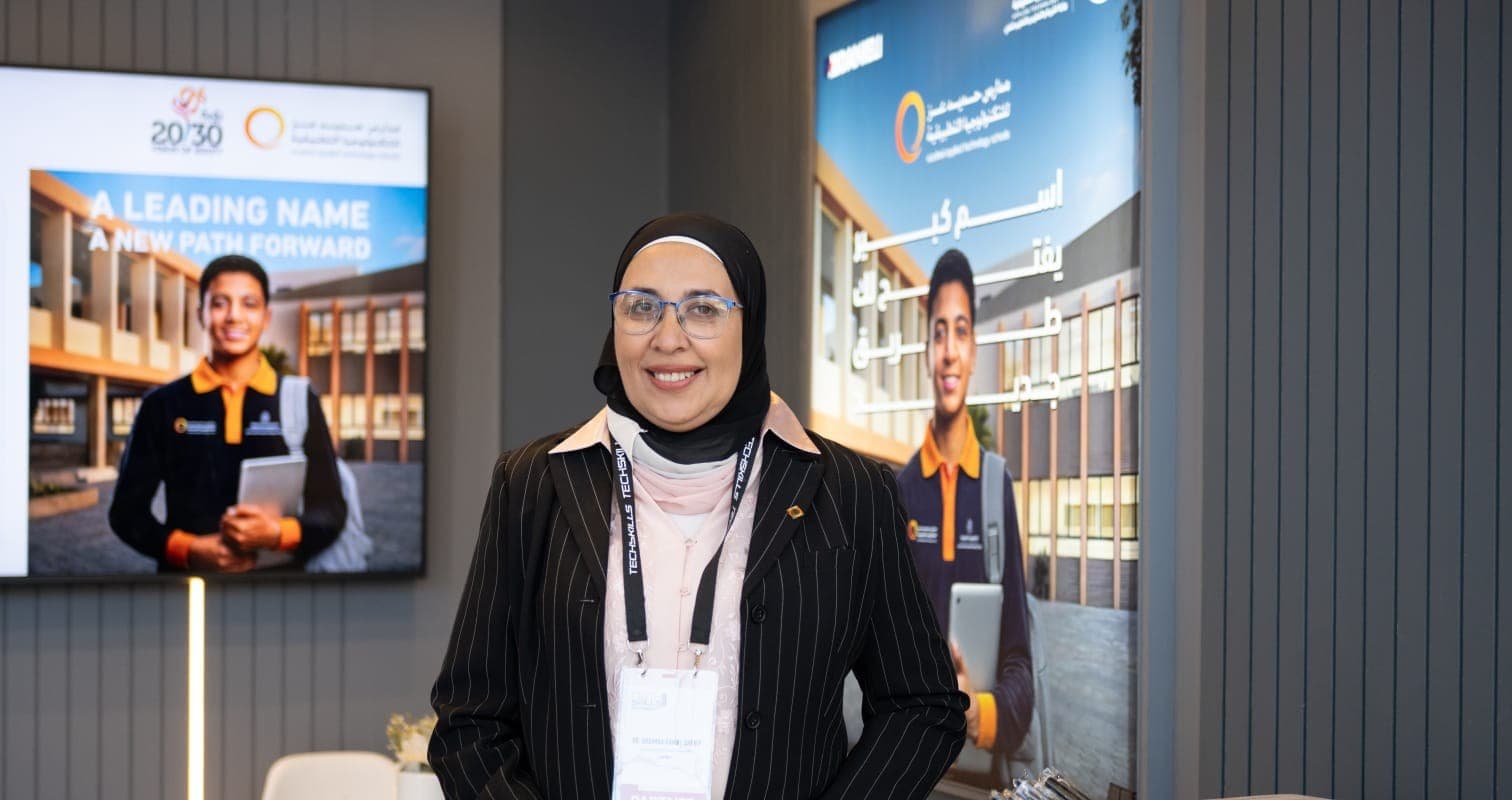
In this interview with Dr. Shaimaa Gamal, Educational Advisor for Ezz Steel Applied Technology Schools, we delve into the behind-the-scenes of the experience; to reveal the project's philosophy, the strict selection criteria for students and teachers, the mechanisms for integrating theory with practice, and finally, a roadmap that opens the doors of the future to graduates capable of competing in local and global markets.
• What industrial need prompted Ezz Steel Group to establish applied technology schools? And does the project aim to prepare technicians to work only within the Group's factories, or does it extend to the Egyptian industry in general?
The idea of establishing Ezz Steel Applied Technology Schools stemmed from the Group's social responsibility, and in response to the need to develop the qualification level of technical cadres, in light of the experience of recruiting technicians revealing a gap between available skills and the requirements of work within modern factories.
Within the framework of the state's direction towards developing technical education and expanding applied technology schools, the tripartite protocol was signed between the Ministry of Education and Technical Education, Ezz Steel Company, and Danieli Italian Company, to establish a specialized educational system that links theoretical study with practical training, and prepares graduates capable of competing locally and internationally.
The objectives of this system are not limited to preparing technicians to meet the needs of Ezz Steel factories only, but extend to graduating qualified cadres to work in various industrial companies and sectors. Modern industry requires a technician who possesses a solid scientific foundation, specialized practical skills, and the ability to deal with advanced equipment and operating and control systems, going beyond limited training on performing specific tasks.
In November 2025, a tripartite cooperation protocol was signed between Ezz Steel Group, the Ministry of Education and Technical Education, and Danieli Italian Company (Danieli), which is responsible for supplying the equipment and technology used in the Group's factories. This cooperation represented an important step towards linking the educational process with actual industrial applications, and benefiting from technological and industrial expertise in developing the education and training system and preparing technical cadres.
• What is the volume of investments allocated to the project, and what are the most prominent areas of expenditure included?
The investments allocated to the Ezz Steel Applied Technology Schools project amount to approximately EGP 750 million over three years, including investment and operational expenses, reflecting that the project is not limited to establishing infrastructure and equipping schools with equipment, but extends to providing the necessary resources for the continuation of the educational and training process with efficiency.
These investments include equipping workshops and laboratories, with 14 workshops and laboratories in each school, developing and upgrading infrastructure, as well as providing materials used in practical training and daily operational supplies, including tools, consumables, paper, ink, and other necessary needs for the educational process to run smoothly.
Ezz Steel Group also bears the salaries of teachers and training and operational costs, within an integrated system that aims to ensure the continuity of education and training at the required level. The project is not based solely on equipping schools with buildings and equipment, but requires continuous funding to operate workshops and laboratories, provide training supplies, maintain the efficiency of the educational process, and achieve its objectives.
• The Ezz Steel Applied Technology Schools system includes seven schools in three governorates... How was the project's vision translated into an educational system on the ground, and what are its most prominent features in terms of specializations and capacity?
Classes began on October 4, 2026, through seven schools currently offering the Mechatronics specialization - a technological specialization that combines mechanics, electronics, automated control, and programming, and aims to prepare technical cadres capable of operating and maintaining modern industrial equipment and systems, and diagnosing and repairing faults.
In the iron and steel industry, the specialization is related to the operation and maintenance of automated production lines, equipment control systems, industrial robots, and sensors-
The number of classes and students is distributed according to the capacity of each governorate; the schools in Alexandria Governorate include 13 classes with a total of approximately 250 students, while the schools in Menoufia Governorate include 19 classes with a total of 457 students.
As for Suez Governorate, the schools include 14 classes.
Overall, the total number of students in the schools is 907 students, distributed across seven schools in three governorates.
• What are the admission requirements and procedures for students? And how do the schools ensure their readiness to enroll in a specialization related to work within workshops and factories?
We started admissions with a minimum score of 200, giving the opportunity to every student who achieved this score and chose Ezz Steel Applied Technology Schools as their top preference to take the admission tests.
Applications were submitted through the Ministry of Education's website, which opens to receive applications for applied technology schools, technical schools, and dual education programs. The application period opened at the beginning of August 2026.
After the ministry's tests to measure the level of applicant students, we conducted a set of additional tests for them, which include three basic stages:
First: The electronic test
It includes questions in English, Mathematics, and Arabic, in addition to an Intelligence Quotient (IQ) test.
In the mathematics test, we consider the language of instruction that the student is accustomed to; students who studied mathematics in Arabic take the test in Arabic, while students who studied it in English take it in English.
Second: The personal interview
After evaluating the test results, we select the students with the highest scores for a personal interview, in which a representative from Ezz Steel Company and a representative from the Ministry of Education participate.
The interview focuses on assessing the student's English language proficiency, personal attributes such as discipline, communication skills, and teamwork ability, and their readiness to study in an applied educational environment.
Third: Medical Examination
After passing the personal interview, the student undergoes a medical examination to ensure their health fitness and ability to study and train in an industrial environment.
This procedure is particularly important due to the nature of training in workshops and factories during the study years, and the nature of work in industrial environments after graduation. Both require direct interaction with machinery and equipment, adherence to safety and security requirements, and thus necessitate ensuring the student's health fitness to safeguard their well-being.
• Why was the Mechatronics specialization chosen? And what is the role of the Italian company Danieli in defining the specialization and the curriculum?
The selection of specializations was not based solely on the needs of Ezz Steel factories, as the schools were not established to serve only the group's factories. Instead, they aim to prepare qualified technical cadres with skills that align with the demands of the labor market.
The choice of Mechatronics specialization (a field combining mechanics, electrical engineering, electronics, and automated control systems) was made in alignment between Ezz Steel and the Italian company Danieli, as it is one of the in-demand specializations in European and local markets.
As for the curricula, they are determined and reviewed in coordination with the Italian partner to ensure the educational content aligns with the nature and technical requirements of the specialization.
Students receive two types of training: practical training within the schools' workshops and laboratories, supervised by school teachers who are specialized engineers with pedagogical and technical qualifications for this role, and field training within factories, through which students become familiar with the actual industrial work environment.
• What is the role played by both the Italian company Danieli and the Italian Higher Technical Institute (ITS) in designing the educational and training system for Ezz Steel Applied Technology Schools? How are the curricula developed, reviewed, and approved to ensure their alignment with Italian and European standards and the requirements of the Egyptian technical education system?
The Italian company Danieli, in collaboration with the Italian Higher Technical Institute (ITS – Istituto Tecnico Superiore) located in Udine, northern Italy, assists in developing the integrated curriculum for our schools to establish a curriculum that keeps pace with global standards.
On the Egyptian level, we have worked to align the curriculum with the Egyptian framework for technical education and the Competency-Based Education system, which focuses on measuring a student's ability to apply their knowledge and skills in performing practical tasks according to specific standards.
According to the tripartite protocol, the Ministry of Education and Technical Education is responsible for approving the curriculum, in accordance with Egyptian frameworks.
• What is the nature of the relationship between the Egyptian curriculum applied in Ezz Steel Applied Technology Schools and the Italian curriculum? What are the bases and documents upon which the program description relies to be compliant with the fourth level of the European Qualifications Framework (EQF Level 4)? Does this mean achieving educational equivalence, or obtaining official recognition or accreditation of the qualification?
The program references the Mechatronics program within the Italian Technical and Vocational Education and Training system, classified at the fourth level of the European Qualifications Framework (EQF Level 4), in its new four-year format.
The level of qualification in this framework is determined by learning outcomes, i.e., what the graduate knows, understands, and can do upon completing the program.
Level 4 defines these outcomes in three areas: broad theoretical and applied knowledge in the field of specialization, practical skills enabling the graduate to find solutions to specific problems in the work environment, and the ability to work independently, take responsibility, and supervise routine tasks for others.
Based on this, the Ezz Schools program was designed to achieve the same learning outcomes within three years, taking advantage of the fact that Egyptian students study for nine years before high school, compared to eight years for their Italian counterparts, making the total study years equal at 12 years.
The topics of each subject have been distributed across the three years in a progressive manner, reflecting the development of competencies acquired by the student year after year.
• How is the study program divided between theoretical education and practical training? What is the proportion allocated to training in workshops and laboratories compared to field training in factories? Has field training commenced, or is it postponed to later stages of study?
Practical training accounts for 60% of the program, compared to 40% for theoretical study. The total weekly hours allocated to the Mechatronics curriculum are 25 hours, distributed in the usual system as follows: 5 hours for theoretical study, 6 hours for practical training, and 14 hours for field training conducted in the actual work environment within factories).
In the initial phase, we consider the students' age and characteristics, as well as safety requirements and risks associated with working in industrial facilities. Therefore, we currently allocate 18 hours per week to specialized study, including 11 hours for practical training in the school's workshops, which are equipped to simulate the actual factory environment, and 7 hours for theoretical study.
Field training in factories is conducted in a concentrated manner at the end of the academic year, after the student has acquired the necessary theoretical and practical foundation, to maximize its benefit.
• What are the most prominent technical skills that students acquire through the Mechatronics specialization? And how do you ensure their ability to apply these skills practically and efficiently handle industrial equipment and systems?
In the Mechatronics specialization, we focus on equipping students with a comprehensive set of technical skills that combine mechanics, electrical engineering, control systems, materials science, and engineering drawing, with an emphasis on practical application alongside theoretical study.
The curriculum is divided into four main areas.
In Mechanics, Machinery, and Power, students study the fundamentals of force and motion, hydraulics (systems that rely on fluid pressure to transmit force and motion), pumps and turbines, and then move on to material resistance, gear transmission, and thermodynamics.
In Materials Technology and Manufacturing Processes, students learn about the properties of engineering materials and conduct tensile, hardness, and impact tests in laboratories. They also study the stress-strain curve, which illustrates the relationship between the stress applied to a material and the resulting strain.
They also train in welding, sheet metal forming, lathing, and machining on tools, leading to programming Computer Numerical Control (CNC) machines, which are used to manufacture parts with precision according to computer programs. They also study the stages of iron and steel production, from direct reduction and the electric furnace to continuous casting and rolling.
In Systems and Automation, students study the fundamentals of electricity and electronics, logic gates (electronic circuits that perform logical operations based on input signals), relay control, sensors, and pneumatics.
Then they move on to Programmable Logic Controllers (PLCs, which are units used for automated control of equipment and production lines), electric motors, and industrial robots.
The program is completed with Engineering Drawing, Design, and Industrial Organization, where students learn manual drawing, 2D drawing using AutoCAD, 3D Modeling (which is the creation of three-dimensional digital models of parts and components), along with the fundamentals of production planning, quality, and safety.
Occupational Health and Safety (Health & Safety) receives primary attention from the beginning of the study, as we are keen to familiarize students with safe work practices and how to handle tools and equipment, given the nature of training within workshops and industrial environments.
Student assessment is conducted periodically by combining theoretical and practical evaluation, including coursework, quizzes, and monthly tests, in addition to practical observation sheets used by instructors to monitor each student's mastery of the required skills during workshop training. Students also undergo a formative assessment at the end of each study unit and a summative assessment at the end of each semester to measure the achievement of targeted learning outcomes.
Through these mechanisms, we can monitor student progress, determine their level of mastery of technical skills, and their ability to apply what they have learned practically, while adhering to quality and safety requirements.
• How do you ensure that each student gets a real opportunity to train on the equipment, rather than just observing or working in groups?
The workshops and laboratories are equipped with machinery that can accommodate more than 25 students per class, while the actual class density ranges between approximately 18 and 20 students, which helps provide suitable training opportunities for each student.
Activities vary between individual and group work, but individual training remains essential to ensure that the student is capable of performing the skill independently, not just following their peers during work.
This is why we use observation sheets, where the teacher records whether they have directly observed the student performing the skill and mastering its steps.
Periodic practical assessments are also conducted, requiring the student to perform tasks independently using the appropriate machine or equipment.
These mechanisms allow us to monitor the actual mastery level of each student and identify skills that require further training before moving on to more advanced tasks.
• How do the schools address individual differences among students, especially if some face difficulties in understanding subjects or acquiring practical skills?
We address individual differences by developing personalized improvement plans for students who need additional support.
It begins with studying the student's case and identifying the nature of the difficulty they face, rather than relying on a one-size-fits-all approach.
If the problem is language-related, coordination is made with the English language teacher to provide appropriate support. If the problem is related to social or psychological aspects, collaboration with the social worker or relevant school authorities takes place, depending on the nature of the case.
Teachers also receive training to help them deal with individual differences and develop remedial and improvement plans tailored to each student's needs. The goal is to identify difficulties early, monitor student progress, and give them an opportunity to improve their performance before educational or practical gaps accumulate.
• How were the teachers selected and qualified to teach according to the new curriculum? What was the role of Italian experts in building their capabilities?
Approximately 245 engineers applied to work within the teaching system, and about 40 of them were selected through multiple evaluation stages.
The selection process began with an electronic test consisting of 60 questions, developed collaboratively by the Italian Technical Education Institution and Suez Steel engineers, followed by interviews involving representatives from Suez Steel and the Italian company Danieli.
Furthermore, 18 of Suez Steel's top engineers working in the Sokhna, El-Dekheila, and Sadat factories were selected for intensive training by Italian experts for three weeks, aiming to qualify them to transfer knowledge and experience to the teachers.
The teachers, in turn, received intensive training for a month and a half, using a system combining e-learning and in-person training, in collaboration with representatives from Danieli and Italian experts from ITS Udenie. The training covered curriculum content, modern teaching methods, and their application in classrooms and workshops.
Qualification does not end with the training program; follow-up continues through pedagogical guidance and daily communication, supporting teachers in dealing with educational situations and developing their performance. The success of the curriculum is linked to the teacher's ability to transform technical content into knowledge and skills that students can actually apply.
• What is the role of foreign languages in the curriculum? What are the target levels for English and Italian?
Foreign languages are an important element in preparing students to work in an international industrial environment. Therefore, the program includes the study of English and Italian, with targeted levels set for each language.
For Italian, the program aims to reach level B2 according to the Common European Framework of Reference for Languages (CEFR), as part of an agreement with the Italian Cultural Center in Cairo, utilizing specialized instructors.
This level helps students expand their opportunities for study or work in Italy or with Italian companies.
For English, the program aims to reach level B1. The study began with an introductory unit known as Unit 0, to standardize student levels and address initial differences among them.
• What are the most prominent indicators you have observed in students since the start of the study? Have there been tangible results in terms of interaction with the curriculum and training?
The initial indicators are encouraging, and we have observed good interaction from students with the educational experience. An example that caught our attention was when our students tackled an entire study unit, summarized its content, and showed a clear interest in learning and the tasks assigned to them.
We are also working to instill a safety culture through the Safe School project, where students participate in a tour within the school to identify potential hazards and note safety-related observations. These activities help transform safety from theoretical information into daily behavior and practice.
We also monitor the level of interaction in classrooms and workshops, the results of quizzes, and student participation in practical activities. These indicators form an initial basis for evaluating the experience, with ongoing monitoring to identify strengths and areas needing development.
• What are the available pathways for graduates of Suez Steel schools? Is there a specific mechanism for employment in the group's factories?
Graduates of Suez Steel Applied Technology Schools have five main pathways they can choose from based on their interests and qualifications, which are:
First: Entering the job market in factories and companies within Egypt, according to employment requirements and available opportunities.
Second: Working abroad. The specialization allows graduates to pursue job opportunities in Italy or in Arab and foreign countries, according to labor market demands and the employment procedures in place in each country.
Third: Completing higher education within Egypt. Graduates can enroll in technological colleges according to the applicable admission rules, or apply to engineering colleges after passing the equivalency exam and meeting the prescribed admission requirements.
Fourth: Continuing studies in Italy. Graduates can apply to continue their studies in Italian Higher Technical Institutes (ITS – Istituto Tecnico Superiore), according to the admission requirements approved by the institute.
Fifth: Continuing studies in Egypt. The possibility of continuing studies is available through the Higher Technology Institute (ITS) in Egypt, providing graduates with an additional pathway to develop their specialized knowledge and skills.
Thus, the graduate possesses a qualification that opens multiple paths for them. They can either join the labor market in various industrial sectors or continue their studies and specialize in their field.
As for employment, it is linked to available opportunities, the needs of employers, and their admission requirements. The diversity of pathways allows the student to build their professional or educational future according to their abilities and aspirations.
• Does the experiment aim to meet the needs of Ezz Steel only, or is the broader goal to build a base of qualified technicians for Egyptian industry? What are the upcoming expansion plans?
The goal is to prepare technical cadres capable of serving the industry in general, not to limit the output of the schools to the needs of Ezz Steel Group. Good technological education allows the graduate to work in more than one institution and provides the industrial sector with a wider base of technicians who possess the knowledge, skills, and ability to deal with modern technology.
The protocol includes a framework that allows for the operation of ten schools, while studies have already commenced in seven schools. The operation of the other three schools can be considered according to available needs and capabilities, in coordination with the Ministry of Education and Technical Education.
We view the experiment as a long-term investment in human capital, aiming to develop technical education and link it more directly to industry requirements. The wider the base of qualified technicians, the greater the capacity of industrial institutions to develop, improve efficiency, and leverage modern technology.