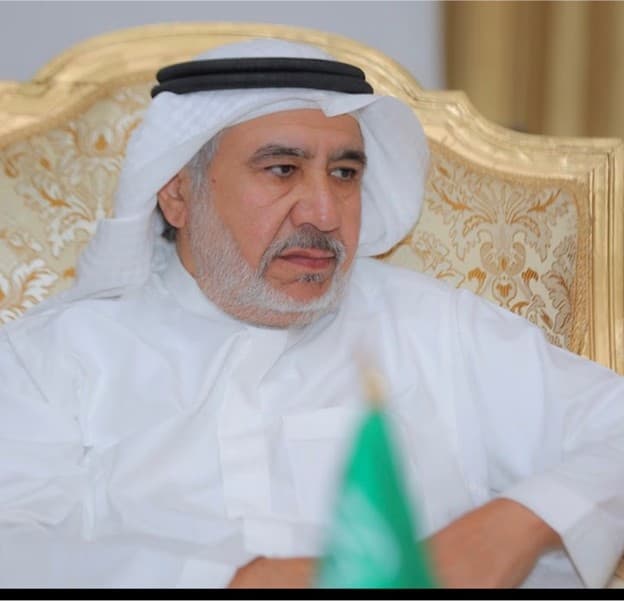
It is time for the Arab Iron and Steel Union to be a partner in shaping the future of the industry
We need Arab entities and alliances that transcend the borders of local markets
From establishment to the sixth decade.. Mohammed bin Saleh Al-Jabr recalls milestones of Arab work in the steel industry
Mohammed bin Saleh Al-Jabr
The fourth Chairman of the Board of Directors of the Arab Iron and Steel Union
2006 - 2008
A leader who transferred Arab expertise to global platforms
Engineer Mohammed bin Saleh Al-Jabr is one of the most prominent Arab industrial leaders who succeeded in combining executive management, strategic vision, and institutional work at the Arab and international levels. Over more than four decades, he contributed to leading major iron, steel, and metals companies, and held influential executive positions and memberships in international industrial institutions, making him one of the most present Arab figures in the international steel industry.
He served as Chairman of the Board of Directors of the Arab Iron and Steel Union during the period 2006-2008, a phase that witnessed unprecedented growth in Arab industrial investments, an increase in production volume, and widening global competition. During that phase, he worked to consolidate the Union's role as a platform for coordination among Arab producers, enhance dialogue on industry issues, and develop technical and commercial cooperation among member companies in line with the rapid transformations in global steel markets.
His chairmanship of the Union was an extension of a rich professional career that began at the Saudi Iron and Steel Company (HADEED), where he served as Chairman of the company between 2002 and 2006. He led one of the most important industrial institutions in the region during a period of expansion and modernization that strengthened HADEED's position as the largest steel producer in the Kingdom and one of the most prominent producers in the Arab world.
During the same period, he also held the position of Vice President of the Metals Sector at the Saudi Basic Industries Corporation (SABIC), contributing to shaping the investment and expansion policies for the metals sector within one of the world's largest industrial companies.
His impact was not limited to the Arab sphere. In 2008, he moved to ArcelorMittal Group, the world's largest steel producer, to assume the position of Vice President of Business Development, Mergers, and Acquisitions, dedicating his expertise to global expansion projects, mergers and acquisitions, and the development of major industrial investments.
He also later served as CEO of SULB in Bahrain and JESCO in Saudi Arabia, and participated in the boards of directors of prominent industrial institutions such as Aluminium Bahrain (ALBA) and GARMCO, in addition to his membership in governance, investment, and audit committees in a number of industrial and financial companies.
His contributions extended to institutional work, where he represented Saudi Arabia in the World Steel Association
(World Steel Association), served as Vice Chairman of the National Committee for Iron at the Council of Saudi Chambers, and contributed to formulating many visions related to industry development, enhancing governance, improving the efficiency of industrial investments, and supporting integration among the mining, metals, and manufacturing sectors.
Mohammed bin Saleh Al-Jabr's professional career reflects a unique model of an Arab leader who combined executive management, strategic planning, governance, and international industrial investment. This made his chairmanship of the Arab Iron and Steel Union a natural extension of the journey of a leader who believed that the future of Arab industry is linked to the ability to compete globally, develop competencies, and build industrial partnerships that transcend geographical boundaries.
Mohammed bin Saleh Al-Jabr obtained a Bachelor of Science in Business Administration, majoring in Economics, from King Saud University in Riyadh in 1981. In 1983, he joined the Saudi Iron and Steel Company (HADEED), where he began a career that spanned over four decades, during which he moved through various fields, including sales, marketing, human resources, finance, information technology, and strategic planning, before assuming the position of CEO of the company in 2002, alongside the position of Vice President of the Metals Sector at Saudi Basic Industries Corporation (SABIC).
SABIC's Metals Sector included overseeing the company's investments in the aluminum sector, where Al-Jabr served as a board member of Aluminium Bahrain (ALBA), as well as a board member of Gulf Aluminium Rolling Company (GARMCO) in Bahrain.
In 2008, he moved to ArcelorMittal, then the world's largest steel producer, where he served until 2012 as Vice President of Business Development, Mergers, and Acquisitions for the Middle East region, with his work related to business development, investments, and mergers and acquisitions in the region.
He also held the position of CEO of SULB in Bahrain and Saudi Arabia, before assuming the chairmanship of Jubail Energy Services Company (JESCO), which, upon its launch, was the first plant for the production of seamless pipes in Saudi Arabia and the Arab world.
A testimony from within the journey
From the position of responsibility, the Union's journey is not merely narrated as facts in a historical record, but as an experience lived by its stakeholders who shaped part of its transformations.
In this interview, Mohammed bin Saleh Al-Jabr recalls his tenure as Chairman of the Union's Board of Directors, discusses the decisions that changed work mechanisms, the challenges facing the Arab industry, and his vision for what has been achieved and what remains of the dream of Arab integration.
• How do you describe the period when you took over the chairmanship of the Arab Iron and Steel Union, and what were the most prominent challenges facing the Arab industry at that time?
I describe that period as a pivotal stage in the history of the Union and the Arab iron and steel industry. I was one of the deputies of Dr. Mohammed Adel El-Danaf, the Union's Chairman, during his presidency, which lasted about 12 years. During that period, I proposed amending the Union's system to elect the Chairman of the Board of Directors and rotate the presidency among the chairmen of the member companies, to give everyone the opportunity to participate in achieving the Union's goals and vision.
Indeed, in 2006, I was elected as the first Saudi to chair the Board of Directors of the Arab Iron and Steel Union, in my capacity as CEO of the Saudi Iron and Steel Company (HADEED). This change had a regional and international impact, especially since the Union represented steel producers in the Arab world and actively participated in specialized international forums and meetings, including meetings of the Organisation for Economic Co-operation and Development (OECD) and meetings of the World Steel Association.
That period coincided with the growth and prosperity of the Arab steel industry and the restoration of its presence and position on the global steel industry map, despite the challenges facing the industry, most notably global competition, high production costs, and the need to develop efficiency and technologies. One of our most important goals was to enhance cooperation and integration among Arab countries and companies, to support the competitiveness of the Arab industry and strengthen its ability to face these challenges.
• What did the Union represent for the Arab steel industry at that stage, and what role were you seeking to strengthen?
At that stage, the Union represented the collective voice of the Arab iron and steel industry, a platform that brought together major Arab producers to coordinate and exchange expertise and information. It also represented the Arab industry in regional and international forums.
We sought to enhance the Union's role to be an effective umbrella for cooperation and integration among Arab producers. Among its most important roles was organizing meetings that brought together major manufacturers and officials in the sector to discuss common challenges, exchange visions and expertise, and work towards unifying perspectives and positions on the global challenges facing the steel industry.
Our goal was to move from merely exchanging information to genuine cooperation and Arab integration that enhances the industry's competitiveness and helps it face global changes and regain its position on the global steel industry map.
• To what extent did global competition compel Arab companies to consider larger entities and alliances that extend beyond the borders of each local market?
To a large extent. Global competition compelled us to recognize that Arab companies, regardless of their strength in their local markets, need larger entities and alliances that transcend single-market borders.
Furthermore, Gulf countries, along with Arab nations like Egypt, Libya, and Algeria, possess an attractive investment environment due to their strategic location and the availability of competitively priced energy. This provides significant opportunities for building partnerships and joint Arab industrial investments.
Therefore, through the Union, we sought to enhance cooperation among major Arab producers, unify visions regarding global challenges, and leverage integration in markets, expertise, and investments to strengthen the Arab industry's ability to compete and defend its interests internationally.
• What are the most prominent decisions or initiatives that you believe have had a real impact on the Union's journey during your presidency?
I believe one of the most significant initiatives that left a real impact on the Union's journey was the rotation of the chairmanship of the Board of Directors among member states. At times, the Arab Republic of Egypt held the presidency, then the Kingdom of Saudi Arabia, then Bahrain, then Kuwait, then Algeria, and so on.
This rotation gave all members a sense of partnership and responsibility, enhanced cooperation among them, and affirmed that the Union represents the Arab steel industry across its various countries, not a single nation. I believe this approach left a clear mark in fostering the spirit of joint Arab work within the Union.
• Based on your experience, what was the biggest obstacle to building a unified Arab strategy for the steel industry?
I believe the biggest obstacle was the difference in conditions and capabilities among Arab countries, even though opportunities for industrial integration are clearly present. For example, Mauritania possesses significant iron ore resources, while other Arab countries have industries capable of using these ores and transforming them into steel products.
However, the difference in market sizes, varying economic environments and cultures, along with financing and investment challenges, were among the most prominent factors that made it difficult to reach a unified and integrated Arab strategy. Nevertheless, we believed these challenges could be overcome by enhancing cooperation among Arab countries and companies, and by transforming available integration elements into joint projects and investments.
• And what was the relationship between the Union and its member companies? Did the Union succeed in transforming membership into actual cooperation among producers?
The relationship between the Union and its member companies was, in my view, distinguished and successful, based on clear institutional foundations. It is not a recent relationship but has spanned over 50 years, during which continuous cooperation and communication have been witnessed between the Union and its members.
Most importantly, this relationship was not limited to formal membership but evolved into effective channels for cooperation, exchange of expertise and information, addressing common challenges, and coordination among Arab producers, thereby strengthening the Union's role as a platform uniting the Arab steel industry and supporting its common interests.
• What lessons did you learn from the experience of leading the Union that you believe are still relevant for the Arab steel industry today?
Among the most important lessons learned from the experience of leading the Union is that the iron and steel industry is a strategic and fundamental industry for any economy, and therefore requires a clear vision and long-term planning, not just decisions tied to immediate circumstances.
We also learned the importance of monitoring developments in local and global markets and benefiting from the experiences of advanced countries and factories, because the industry's success does not depend solely on production but on the ability to read the market and plan for investment, expansion, and competitiveness.
I believe that the most important thing we must adhere to today is long-term strategic thinking, early preparation for global transformations, and linking production plans to the needs of local and global markets, thereby ensuring the sustainability and competitiveness of the Arab steel industry.
• After 55 years since the Union's establishment, what has changed in the Arab industry, and what challenge has remained the same?
After 55 years since the Union's establishment, I believe the Arab steel industry has undergone a significant transformation, not only in terms of production growth but also in terms of moving towards producing value-added products and opening doors for international investments and partnerships.
Among the most prominent indicators of this are the entry of Jindal Steel into the Sultanate of Oman, alongside investments from major global companies in the region. In Saudi Arabia, ArcelorMittal entered the seamless pipe industry, and Baosteel entered the heavy plate industry. In Algeria, Tosyali's investments have emerged, in addition to a number of new Arab projects and partnerships, including cooperation between Qatar and Algeria.
These developments confirm that the Arab steel industry has become more capable of attracting global investments and building strategic partnerships, and that the potential available in the region allows for overcoming many challenges. However, the challenge that still remains is how to deepen Arab integration, coordinate investments, and better leverage the available resources, markets, and capabilities in Arab countries.
• Looking at the Union today, what role should it play in the coming years to remain influential in an industry where the rules of competition are rapidly changing?
I fully agree with this direction regarding the role the Union must play. I believe the time has come not only to keep pace with the changes in the global iron and steel industry but also to contribute to changing the rules of competition and enhancing the presence of the Arab steel industry.
I believe that the election of Eng. Ahmed Ezz as Chairman of the Union's Board of Directors for this term represents an exceptional opportunity to achieve a qualitative leap in the Union's role. He has already begun to translate this direction through his visits and meetings with major steel producers in the region, which enhances communication and coordination of visions regarding common challenges.
Sustainable coordination with international federations and unifying the positions of Arab producers in international forums can also enhance the Union's standing and make it a more influential voice for the Arab steel industry.
The goal in the next phase is for the Union to transition from merely a platform for coordination and expertise exchange to an active partner in shaping the future of the industry and its competitive rules.
• What is your message to the new generation of Arab steelmakers and to the Union as it enters its sixth decade?
My message to the new generation of Arab steelmakers is that the future holds great opportunities as well as challenges, and that the upcoming competition will not only be about production volume, but about technology, innovation, sustainability, and added value.
As for the Union, as it enters its sixth decade, I believe it must renew its role in line with global changes, and leverage its experience and history to be more influential in defending the interests of the Arab steel industry, enhancing cooperation among its producers, and representing it more strongly in international forums.
I hope the Union will remain a platform that brings generations together, transferring expertise from one generation to another, while simultaneously opening the door for the new generation to lead a new phase of Arab development and integration.
• If you were to choose one milestone from the Union's history that you feel encapsulates the meaning of joint Arab action in the steel industry, what would it be? And why?
I believe one of the most important milestones that encapsulates joint Arab action in the steel industry is the annual Steel Summit Conference, which provides an important opportunity for direct meetings and dialogue among major Arab producers, and for exchanging expertise and visions on the future of the industry.
More importantly, the conference has contributed to creating a positive competitive environment among Arab manufacturers, especially in the areas of research and development, quality, and sustainability, thereby driving the Arab industry towards continuous development and enhancing its global competitiveness.
• What memory still stands out from your time heading the Union? A meeting, a situation, a personality, a crisis, or a decision that you feel today had a greater impact than we realized at the time?
I believe the most prominent memory that encapsulates that period is the amendment of the Union's system and the transition of the presidency from appointment to election and rotation among Arab countries. This was not merely an administrative adjustment, but an important step in consolidating the concept of partnership and participation among Arab steel producers.
Another situation that remains in my memory is organizing field visits to factories in the host country. I particularly recall the Union and its members visiting the HADEED company in Jubail. The visit had a significant impact, not only professionally and in terms of exchanging expertise, but also in fostering a beautiful social and human atmosphere among the Union members. Jubail Industrial City is not only an important industrial powerhouse but is also distinguished by its beautiful location on the Arabian Gulf. I believe the Union members greatly enjoyed that visit, and it was an opportunity to strengthen relationships and friendships among them outside the framework of official meetings.
Today, when I recall that period, I see that such informal gatherings held great value in building the trust and spirit of cooperation upon which joint Arab action is based.