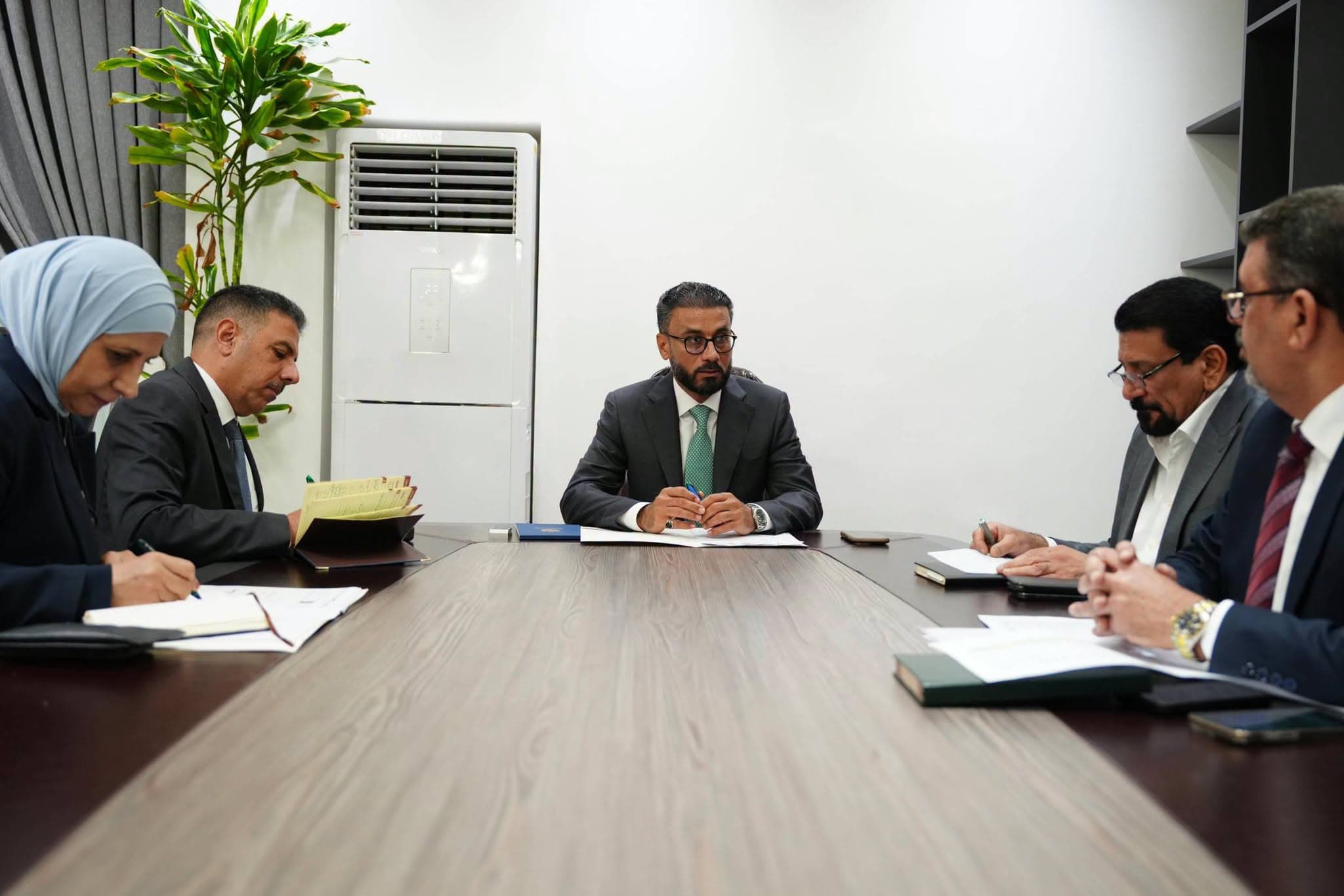
The Iraqi Ministry of Industry and Minerals discussed ways to address the obstacles facing the factories of the General Company for Iron and Steel in Basra Governorate, with the aim of activating work and production. This was during a meeting chaired by the Ministry's Technical Undersecretary, Engineer Jumaa Diwan Al-Bahadli, with the participation of officials from the Investments and Technical Affairs departments, and representatives of the company and Ibn Majid General Company.
The meeting addressed the latest developments of the factories and the measures taken regarding them, as well as mechanisms for resolving existing problems and settling pending issues. Emphasis was placed on strengthening coordination between the relevant authorities within legal frameworks to support local production and develop the Iraqi iron and steel industry.
The General Company for Iron and Steel was established in 1972, and its industrial complex is located in the Khor Al-Zubair area of Basra Governorate. The complex includes factories for sponge iron, steel, and rolling, in addition to units for producing iron pipes, engineering services, and quality control.
The company's facilities were shut down in 2003, before rehabilitation efforts gradually began. The rolling mill was opened in March 2024 with a declared capacity of 500,000 tons per year, and the steel plant underwent its first trial melt in March 2025.
Development efforts aim to restore the complex's production capacities and enhance the supply of iron products to the Iraqi market.
During the rehabilitation and operation phases, the General Company for Iron and Steel factories in Basra faced technical and financial challenges, including delays in completing the installation of smelting equipment and production lines, and the need for operating supplies and financing to restore production capacities.
The company also faced difficulties in marketing its products and competing with imports, while some of its projects were affected by delays in the supply of imported raw materials due to navigation and shipping disruptions.
. Addressing these issues, along with completing rehabilitation works, securing production needs, and enhancing marketing opportunities for local products, are important factors for supporting operational stability and increasing the contribution of Basra factories to meeting Iraq's demand for iron and steel products.