The iron and steel industry is entering a new phase where operational efficiency intersects with energy and data management, and emissions reduction, driven by rising energy costs, tightening environmental requirements, and the rapid expansion of artificial intelligence and automation applications. In this context, the concept of the Twin Transition emerges, a term used to describe the combination of the green transition and the digital transition; that is, using technology, data, artificial intelligence, and automation to enhance efficiency, while simultaneously reducing energy consumption and emissions and improving resource utilization. For energy-intensive industries like iron and steel, these two paths are no longer separate; precise data on energy consumption, equipment performance, and production quality have become integral to reducing costs and emissions simultaneously.
These transformations gain greater significance with the introduction of new requirements into the European industrial landscape, notably the Carbon Border Adjustment Mechanism (CBAM), expanding emissions measurement and environmental disclosure requirements, alongside investment support programs for digitization, energy efficiency, and industrial transformation.
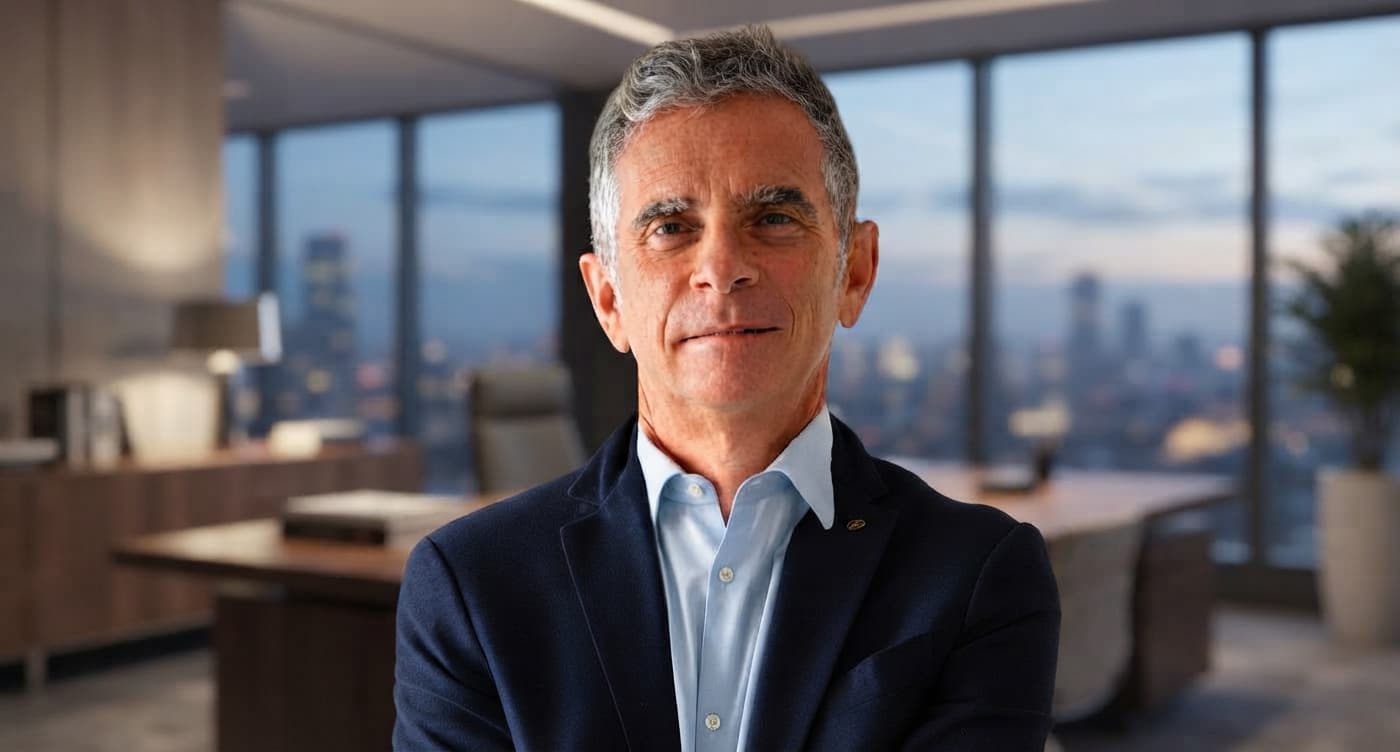
From this perspective, we present an interview with the Italian Doctor Engineer Enrico Flamini, whose expertise spans over 30 years in engineering, the metals industry, energy management, and the operation of energy-intensive factories and foundries.
Flamini holds a PhD in Mechanical Engineering from Marche Polytechnic University (2010), where his research focused on optimizing melting processes using oxygen and natural gas combustion in industrial furnaces. He also earned a Bachelor's degree in Chemical Engineering from the University of Bologna in 1992.
Professionally, Flamini possesses direct experience in managing factories and foundries for the production of iron and steel alloys and non-ferrous metals, in addition to his consulting work in energy, environment, industrial transformation, and European incentives, including Italy's Transition 5.0 program (an Italian program to support digital transformation, energy efficiency, and reduced energy consumption in industry).
He also holds EGE certification as an expert in energy efficiency management and auditing from Italy, Lead Auditor certification for the ISO 14001 Environmental Management System, and PMVA-L3 certification for measuring and verifying energy savings according to the international IPMVP protocol, which is an accredited framework for measuring and verifying the results of energy efficiency projects.
As an invited expert, he participated in the European Commission's Technical Working Group (TWG) responsible for identifying best environmental and management practices in the metal products sector. He also co-authored the book Manuale della Fonderia, specializing in the foundry industry, and has over 50 scientific and research papers published or presented at international conferences and forums.
In this interview with the Arab Iron and Steel Union Media Center, Flamini discusses the transformations in the iron, steel, and foundry industries over the past decade, priorities for investment in digitization and artificial intelligence, untapped opportunities for reducing energy consumption, predictive maintenance, improving energy quality, and practical solutions for decarbonization.
He also addresses the readiness of Arab companies for the European market under CBAM, opportunities for producing low-carbon direct reduced iron, the role of renewable energy and hydrogen, the potential for industrial and investment cooperation between Arab and European countries, as well as financing models for energy efficiency and industrial transformation projects.
The conversation shifts from discussing industrial transformation as a general trend to the specifics of factory operations:
Where can energy consumption be reduced? How can data prevent breakdowns and minimize waste? What investments can yield tangible returns? And how can the industry balance emissions reduction with maintaining its competitiveness?
- The iron, steel, and foundry (metals) industries have undergone changes due to geopolitical tensions and fluctuating energy prices, leading to a European shift towards enhancing energy security and reducing reliance on fossil fuels, particularly through the REPowerEU plan (the European plan to reduce dependence on Russian fossil fuels and launch clean energy transition projects). Based on your experience, what are the most prominent technological and operational transformations the industry has witnessed? And which technologies do you expect to have the greatest impact on its competitiveness in the coming years?
Based on my experience in operational management and consulting for foundries and secondary smelting plants – for both ferrous and non-ferrous metals – the past decade has seen a profound technological and managerial transformation in the industry.
This transformation began within the framework of European policies related to the Green Deal and the goal of achieving climate neutrality by 2050. Among the most significant changes the sector has witnessed are:
- Electrification of Processes and Thermal Energy Management:
Many facilities have moved from old, fossil fuel-intensive systems to more efficient electrical solutions, including induction furnaces. The viability of these solutions can be enhanced through long-term Power Purchase Agreements (PPAs) for renewable energy, helping to mitigate the impact of energy price volatility.
In secondary aluminum foundries, thermal efficiency can be improved using recuperative burners that recover heat from exhaust gases. Oxygen-fuel (Oxy-fuel) combustion technologies are also used in scrap treatment to help eliminate organic pollutants and reduce exhaust gas volume.
- Scrap and Circular Economy:
A significant shift has occurred in the perception of metal scrap; it is no longer just residual material but a raw material whose metallurgical quality (metal quality and properties) must be preserved. This highlights the importance of precise scrap sorting by alloy type to prevent material mixing and maintain purity, alongside technologies like cold briquetting for wet metal chips, which can help recover cutting oils and reduce metal oxidation during remelting.
- Digitization and Energy Management:
Facilities have gradually moved from relying on invoice data and general estimates to continuous measurement of energy consumption using smart meters and sensors. When this data is linked to energy management systems and production control systems like MES and SCADA, the factory gains a more accurate database for decision-making, performance improvement, and the implementation of energy management systems according to ISO 50001 (the international standard for energy management systems and the improvement of their efficiency).
As for future competitiveness, I believe there are three main pillars: energy efficiency, carbon intensity reduction, and the ability to reliably and verifiably demonstrate performance.
- What does the transition from Industry 4.0, based on digitization, automation, and smart factories, to Industry 5.0, which adds a focus on people, sustainability, and resilience, entail? And how do you see this transformation reflected in iron, steel, and foundry plants?
Industry 5.0 does not eliminate the technological infrastructure of Industry 4.0, but rather redirects it to serve a broader set of goals; in foundries and smelters, I see three main pillars for this transformation:
First: Sustainability and carbon intensity traceability.
Digitization has become an essential tool for measuring energy consumption and emissions and documenting the improvements achieved by the facility; accurate field data is now necessary for managing sustainability requirements, not just for operational improvement.
Second: Operational and energy flexibility.
Factories must be more capable of dealing with fluctuations in energy prices and supply changes, including improving furnace operation, managing energy contracts, and utilizing renewable energy sources and incentives associated with industrial transformation.
Third: Human and occupational safety.
Technology should make the work environment safer, not just more productive. Collaborative robots (Cobots) can be used for handling heavy or hot parts, and wearable devices and smart interfaces to support workers, along with simulation and virtual reality for training workers and testing processes in a safe environment.
- In light of your practical experience, which technologies are currently offering the fastest and clearest return on investment for iron and steel plants and foundries?
If we look at the return on investment, priority should be focused on technologies targeting the two largest components of operating costs: energy and unplanned downtime.
First: Industrial Internet of Things and data quality
Effective applications include installing sub-digital meters that measure energy consumption at the charge, production line, or shift level, helping to identify consumption sources and compare performance more accurately.
However, collecting data alone is not enough; its accuracy must be ensured, measuring devices calibrated regularly, and data linked to reliable measurement and verification methodologies. Decisions based on inaccurate data can lead to misleading conclusions and results.
Second: Predictive maintenance
Vibration, temperature, and ultrasonic sensors can be employed to monitor critical equipment, such as induction furnace coils and hydraulic circuits, and detect signs of degradation before they turn into actual failures.
These systems help transition from maintenance after failure or according to fixed schedules to intervention based on the actual condition of the equipment, reducing unplanned downtime and maintaining overall equipment effectiveness (OEE), which is the efficiency of equipment operation and utilization of its production capacity.
Third: Advanced process control and artificial intelligence
AI and machine learning algorithms can analyze large amounts of operational data and link process variables to production outcomes and product quality, helping to optimize operating conditions and identify opportunities for efficiency improvements.
Digital Twins offer greater strategic value because they create a digital model that simulates actual equipment or processes and helps analyze performance and test operating scenarios. However, their implementation typically requires larger investments in digital infrastructure, data collection, and system integration, so the return and implementation time differ compared to measurement, control, and predictive maintenance solutions that can be implemented more quickly.
- What are the most significant untapped opportunities for reducing energy consumption in iron and steel manufacturing processes, especially those that do not require significant capital investment?
There are many opportunities not necessarily linked to large investments, but rather to improving the management of processes and auxiliary services.
The first of these opportunities is recovering waste heat from exhaust gases, cooling circuits, and compressor rooms. This heat can be used for preheating scrap, heating workshops, or drying molds.
The second opportunity relates to scrap management. Precise source segregation by alloy type prevents metallurgical degradation and reduces the need for additional processing. Cold compaction of metal chips can also recover cutting oils, reduce oxidation, and improve the remelting process.
Compressed air is another important area where savings can be achieved by reducing operating pressure, addressing leaks, segregating distribution networks, and using smart shut-off valves.
Finally, there is equipment consumption during standby periods. Reprogramming PLCs to put equipment into a low-power standby mode during downtime can significantly reduce energy consumption during this phase.
- How can digitalization and artificial intelligence improve energy efficiency, process stability, productivity, and maintenance?
Digitalization is the foundational infrastructure that allows for the practical application of AI and machine learning.
One important application is the control of fume and dust extraction systems. In traditional systems, fans may operate at high levels even when their full capacity is not actually needed. Using IoT sensors to monitor operating conditions, variable frequency drives (VFDs) to control the speed of extraction fans, and automated valves to regulate airflow, the extraction system can be operated based on actual demand while maintaining sufficient air velocity to prevent dust settling.
The second application is linking process variables to product quality. Defects in casting processes usually result from the interaction of many variables. Machine learning algorithms can analyze these relationships and predict the likelihood of defects, allowing the process to be adjusted before defective parts are produced. This not only improves quality but also saves the energy that would have been consumed in remelting defective products.
The third application is predictive maintenance, through continuous monitoring of water flow, temperatures, the condition of furnace coils, linings, and other critical assets, allowing for intervention before failures occur.
- What technologies do you see as most technically and economically feasible for reducing emissions in iron and steel manufacturing processes in the short and medium term?
I distinguish between short-term solutions that can be implemented with a quick return, and medium-term solutions that require larger investments but bring about structural change.
In the short term, available solutions include waste heat recovery and reuse, using recuperative burners that recover some of the exhaust gas heat to improve combustion efficiency, and utilizing renewable energy power purchase agreements (PPAs) – long-term agreements to buy electricity from renewable sources. Additionally, improving scrap sorting and compaction, and efficiently managing auxiliary equipment operation using VFDs to control motor speed according to actual demand. These measures can also contribute to reducing energy consumption and improving productivity without requiring a complete change in the plant's infrastructure.
On the medium term, a transition to more structural solutions is possible, primarily the electrification of melting processes and the replacement of some gas or fossil fuel furnaces with high-efficiency electric furnaces, where the nature of the process allows. Oxygen-fuel combustion technologies can also be used to reduce natural gas consumption and exhaust gas volume, with varying results depending on the type of process, equipment, and materials used.
- To what extent can power factor correction and power quality systems affect the efficiency and operational stability of iron and steel plants and foundries?
This aspect often does not receive sufficient attention, despite its direct impact on energy costs and equipment reliability.
First, power factor correction helps reduce reactive power consumed by furnaces and motors, can decrease some costs associated with reactive power, reduces electrical losses, and frees up transformer capacity.
Second, power quality; power electronics used in plants can cause distortions in the electrical waveform known as harmonics, which can affect the performance of some electrical and electronic equipment and systems. Active filters can be used to mitigate these harmonics and improve current quality, along with voltage stabilizers to help protect electrical systems, control devices, and measuring instruments from voltage fluctuations.
For a plant increasingly reliant on digitalization, power quality becomes part of the reliability of the plant's digital infrastructure, not just a separate electrical issue.
- What is the importance of independent management systems and certifications like ISO 50001, ISO 14001, and EMAS in demonstrating commitment to sustainability and enhancing companies' competitiveness?
Accredited management standards and systems have become increasingly important in industry, as they move sustainability from the level of commitments and declarations to measurable, auditable, and improvable work systems and procedures.
ISO 50001, the international standard for energy management systems, is at the forefront of standards related to improving energy efficiency. It helps facilities measure energy consumption, identify waste sources, set efficiency improvement targets, and track results. Its importance is growing for energy-intensive facilities, given the tightening European requirements for energy efficiency.
On the environmental front, ISO 14001, the international standard for environmental management systems, sets a framework for managing an organization's environmental impacts and continuously improving its environmental performance.
EMAS (Eco-Management and Audit Scheme) is a European system that helps organizations assess and improve their environmental performance and communicate their results.
However, the true value of these standards lies not in obtaining a certificate per se, but in implementing a continuous system for measuring performance, identifying improvement opportunities, and reviewing and verifying results. This methodology also helps companies deal with sustainable finance requirements, prepare environmental reports, and keep pace with increasing demands from markets and supply chains.
- What practical steps should iron and steel companies and the metals industry take to prepare for increasing environmental reporting requirements and value chain tracking?
I see four main areas:
First: Understanding Double Materiality.
Companies must view sustainability from two perspectives: impact materiality, i.e., the impact of the company's activities on the environment and society, and financial materiality, i.e., how climate change, energy transition, and regulatory requirements affect the company's financial situation. This concept has become a fundamental part of the European sustainability reporting framework, through CSRD (EU Corporate Sustainability Reporting Directive) and ESRS (European Sustainability Reporting Standards), which define disclosure requirements for environmental, social, and governance information and companies' sustainability performance.
Second: Accurate Emissions Measurement.
Companies must have reliable systems for measuring and tracking their emissions, including Scope 1 (direct emissions from sources owned or controlled by the company), Scope 2 (indirect emissions from energy purchased by the company, such as electricity), and Scope 3 (other indirect emissions related to the value chain, such as raw materials, transportation, and product use), according to applicable requirements.
Third: Expanding Value Chain Tracking.
It is no longer sufficient for a company to know its plant data; information related to suppliers and the supply chain is increasingly important.
Fourth: Circular Economy and Material Efficiency.
To the extent that scrap quality can be maintained and reused efficiently, waste can be reduced, and material and energy efficiency can be improved.
- For Arab iron and steel producers and industrial groups wishing to enter or invest in the European market, what are the most important regulatory and environmental requirements to prepare for?
The Carbon Border Adjustment Mechanism (CBAM) has become an essential part of the regulatory environment that producers wishing to enter the European market must understand. Companies must first understand the declaration mechanism for emissions associated with products subject to the mechanism and the data requirements that must be submitted. Actual, verifiable emissions data is also increasingly important, rather than relying on default values where possible. Producers outside Europe need to build internal systems that enable them to measure, collect, verify, and exchange emissions data with the European importer according to applicable requirements. Companies should also consider that European sustainability requirements do not stop at CBAM; there are also requirements related to reporting, sustainability, and the value chain.
Companies looking to invest directly in Europe, whether through mergers and acquisitions (M&A), establishing new plants and projects from scratch (Greenfield), or forming joint ventures, must study European environmental and energy requirements, including Best Available Techniques (BAT) and the reference documents that define these techniques and their application requirements (BREFs - Best Available Techniques Reference Documents), in addition to the terms of support programs and incentives available for industrial investments.
- The Transition 5.0 plan in Italy, a government program to support digital transformation and improve energy efficiency in industrial facilities, has generated significant interest. From your experience, what makes these incentives important for industry? And what types of investments can benefit most from them?
The important element in Italy's Transition 5.0 program to support digital transformation and improve industrial energy efficiency is linking the incentive to achieving measurable and verifiable energy savings, not just purchasing new equipment or technologies.
Among the investments that can achieve clear value are: Industry 4.0 technologies, both hardware and software, including digital systems, software, smart equipment, high-efficiency electrical equipment, and smart auxiliary systems that use variable frequency drives (VFDs) to control motor speed according to actual needs, alongside renewable energy installations for self-consumption and energy storage systems. Measurement and control systems are increasingly important, as they allow for reliable monitoring of energy consumption and verification of the savings achieved by the project.
Technical documentation is also an essential element; eligible investments require a prior technical assessment (Ex-Ante) to determine the expected energy consumption level and targeted savings, followed by a subsequent verification (Ex-Post) to measure the actual savings achieved, in accordance with applicable rules and procedures. Therefore, the project's value in this framework is linked to its ability to achieve measurable and verifiable energy savings, not merely its classification as a green or digital project.
- What opportunities do green and digital transformations create for Arab steel companies? And where do you see the greatest potential for industrial cooperation between Arab and European countries?
There is clear complementarity between some of the resources available in Arab countries and the technological and regulatory expertise present in Europe. I see four main areas for cooperation:
First: Green hydrogen and direct reduced iron.
Some Arab countries have significant solar energy potential, which can be utilized to produce low-carbon hydrogen and use it in the production of direct reduced iron (DRI). Low-carbon DRI can serve as a feedstock for steel production in electric arc furnaces (EAFs) in Europe, enabling the creation of low-emission industrial value chains.
Second: Energy efficiency and technology transfer.
European and Arab companies can cooperate in applying the Best Available Techniques (BAT), which are the most efficient and least environmentally impactful technologies practically available in the industry, including heat recovery, variable frequency drives, and energy and power quality management systems.
Third: Circular economy and metal recycling.
There is significant scope for developing scrap sorting and processing methods, which preserve its quality and enhance the efficiency of its reuse.
Fourth: Digitization, measurement, and verification.
Applying reliable measurement and verification methodologies like the International Performance Measurement and Verification Protocol (IPMVP) can help transform energy efficiency projects from technical ideas into more bankable projects.
- What investment and financing models can help companies implement digital transformation, energy efficiency, and decarbonization projects, especially given the high cost of capital investments?
There are financing models that can alleviate the direct capital burden on companies, particularly for energy efficiency projects. One such model is energy performance contracting through Energy Service Companies (ESCOs), which undertake the implementation of energy efficiency projects in exchange for returns linked to the achieved savings.
In the Guaranteed Savings model, the ESCO commits to achieving a specific level of energy savings compared to the baseline consumption level before project implementation, according to the contract terms. This model helps reduce financing risks, as the achieved savings can be used to lower energy costs and cover the financial obligations associated with the project.
In the Shared Savings model, the ESCO participates in financing the energy efficiency project and, in return, receives an agreed-upon share of the savings generated by the project during the contract period, while the facility benefits from reduced energy costs according to the agreement terms.
There is also the Energy-as-a-Service (EaaS) model, where a specialized company finances, installs, owns, operates, and maintains the equipment, while the facility pays for the service usage under an agreed contract, instead of bearing the full cost of purchasing, operating, and maintaining the equipment.
However, the crucial factor in all these models is the ability to reliably measure and verify the energy savings achieved by the project, allowing for the determination of actual savings and their comparison to the pre-project energy consumption level. This is where the International Performance Measurement and Verification Protocol (IPMVP) comes in; it provides a clear methodology for establishing the baseline – the energy consumption level before the energy efficiency project – and then reliably measuring and verifying the achieved savings. Without reliable measurement, it becomes difficult for banks or investors to assess the project's true return.
- Through your collaboration with specialized associations in the metal and foundry industries, such as AIM (Italian Association of Metallurgy and Materials) and Assofond (Italian Foundry Association), what technical topics are currently of greatest interest? And which technologies do you believe are still underutilized?
There are several topics of increasing interest in European industrial discussions, particularly concerning energy efficiency measurement, process development, and resource utilization optimization.
Among these are Energy Performance Indicators (EnPIs), which are used to measure and monitor a facility's energy consumption performance, alongside the development of more specialized benchmarks for foundries. This allows for the measurement of each facility's performance against appropriate reference levels for its operational nature and links the results to energy management systems.
Reducing thermal holding times is also of great importance; synchronizing metal melting with casting or forming processes can shorten the period molten metal remains in furnaces, thereby reducing energy consumption, without necessarily requiring significant capital investments.
Regarding technologies that deserve more attention, inorganic binders stand out. These can be used instead of some organic binders and resins in the manufacturing of molds and cores used in foundries. This helps reduce volatile organic compound (VOC) emissions during the casting process and improves working conditions within foundries.
Cold compaction of metal chips can also contribute to processing waste from machining operations by compressing and consolidating chips into denser briquettes, with the potential to recover some of the associated cutting oils. This facilitates handling, storage, and reintroduction of chips into the melting process, while also reducing their exposure to air and minimizing oxidation.
However, technology alone is not sufficient for industrial transformation; the success of these investments also depends on companies' ability to develop and upskill their workforce.
Moving to Industry 5.0 means employing Industry 4.0 technologies, such as digitalization, data, AI, and robotics, with a greater focus on humans, sustainability, and resilience. Therefore, factories need workers, technicians, and engineers capable of handling energy systems, digital systems, AI, and robotics, alongside understanding cybersecurity requirements and protecting industrial systems and data from hacking and disruption risks. Continuous training and skill development must be an integral part of the transformation strategy, not a separate activity from it.
In the next phase, factories' competitiveness will increasingly depend on their ability to measure performance, improve energy efficiency, reduce emissions, leverage data, and simultaneously develop employee skills. This is the essence of the Twin Transition; integrating digital and green transitions within the factory, so that technology becomes a means to improve efficiency and reduce operating costs and emissions, while maintaining production flexibility and competitiveness.