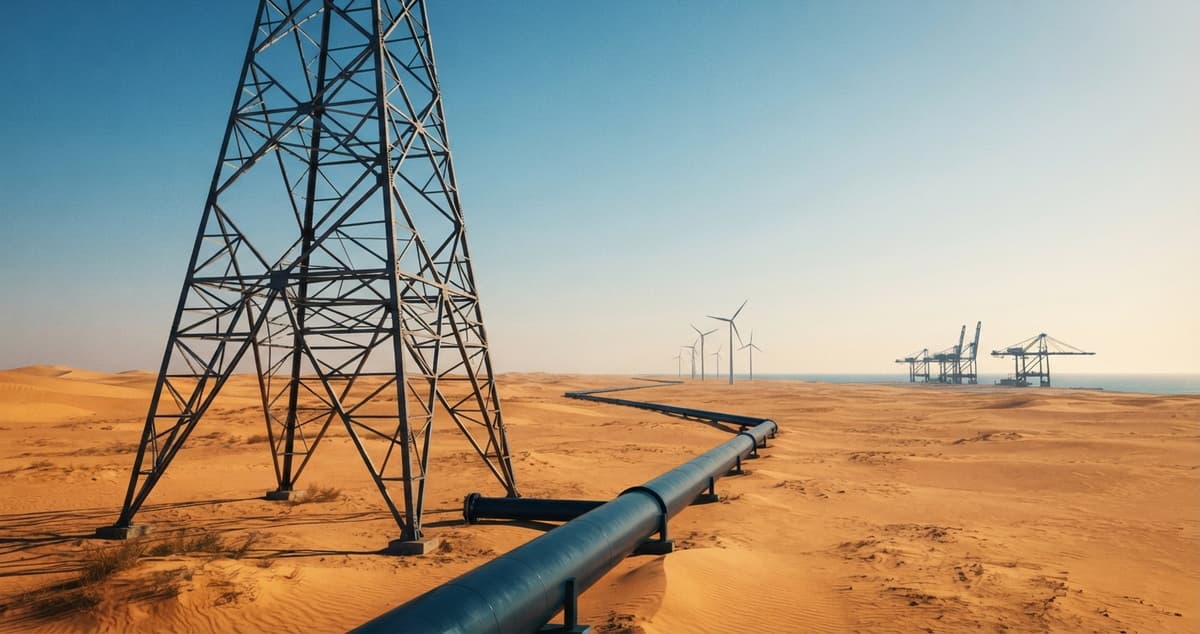
Mauritania's steel market is heading towards new growth opportunities driven by energy, gas, and infrastructure projects, despite the country's complete reliance on imports of finished steel products and the absence of local production.
According to the Ukrainian GMK Center, steel demand will stabilize at around 100,000 tons in 2026, with its value expected to rise to $62 million, supported by increased prices for pipes and bars.
High-quality pipes and bars used in the gas extraction and mining sectors account for a significant portion of the financial value of imports. Experts estimate the construction sector's contribution to Mauritania's GDP to be between 5% and 7%, according to the report.
Infrastructure development is another source of demand for heavy iron products, including bars, sheets, pipes, and metal structures. Among the most prominent infrastructure projects in the country during the 2021-2025 period is the development of the Nouadhibou port.
China leads the iron suppliers to Mauritania, with an estimated share of about 35% of total imports, benefiting from competitive prices and supply flexibility. The European Union's share is also around 35%, with a major presence from France, Spain, and Belgium, leveraging historical economic ties with Mauritania.
Turkey, Morocco, and Senegal also meet some of the immediate demand for construction iron, rebar, and light rolled products.
The country possesses a significant iron ore base, represented by the activities of the National Industrial and Mining Company (SNIM), one of Africa's leading iron ore producers. This gives the mining sector a pivotal role in the country's economy, with the potential to support the development of the mineral value chain in the future.