· The scale of investment required for decarbonization in the steel sector is unprecedented
· The global steel industry is moving from ambition to action, and will witness a mix of convergence and divergence
· The Middle East and North Africa have advantages that well position them for the transition to low-emission steel production
· There is a strong foundation for future growth in the region, based on industrial capacity, energy resources, and strategic location
· Egypt starts from a position of strength and has a great opportunity to participate in low-emission iron and steel value chains
· Current policy frameworks tend to focus on supporting production rather than creating markets
· The role of steel organizations is to educate the public and policymakers about the role of the steel industry in society
· Current policies tend to focus on supporting production rather than creating markets
· International convergence on emissions accounting is crucial, with greater transparency and high-quality data needed
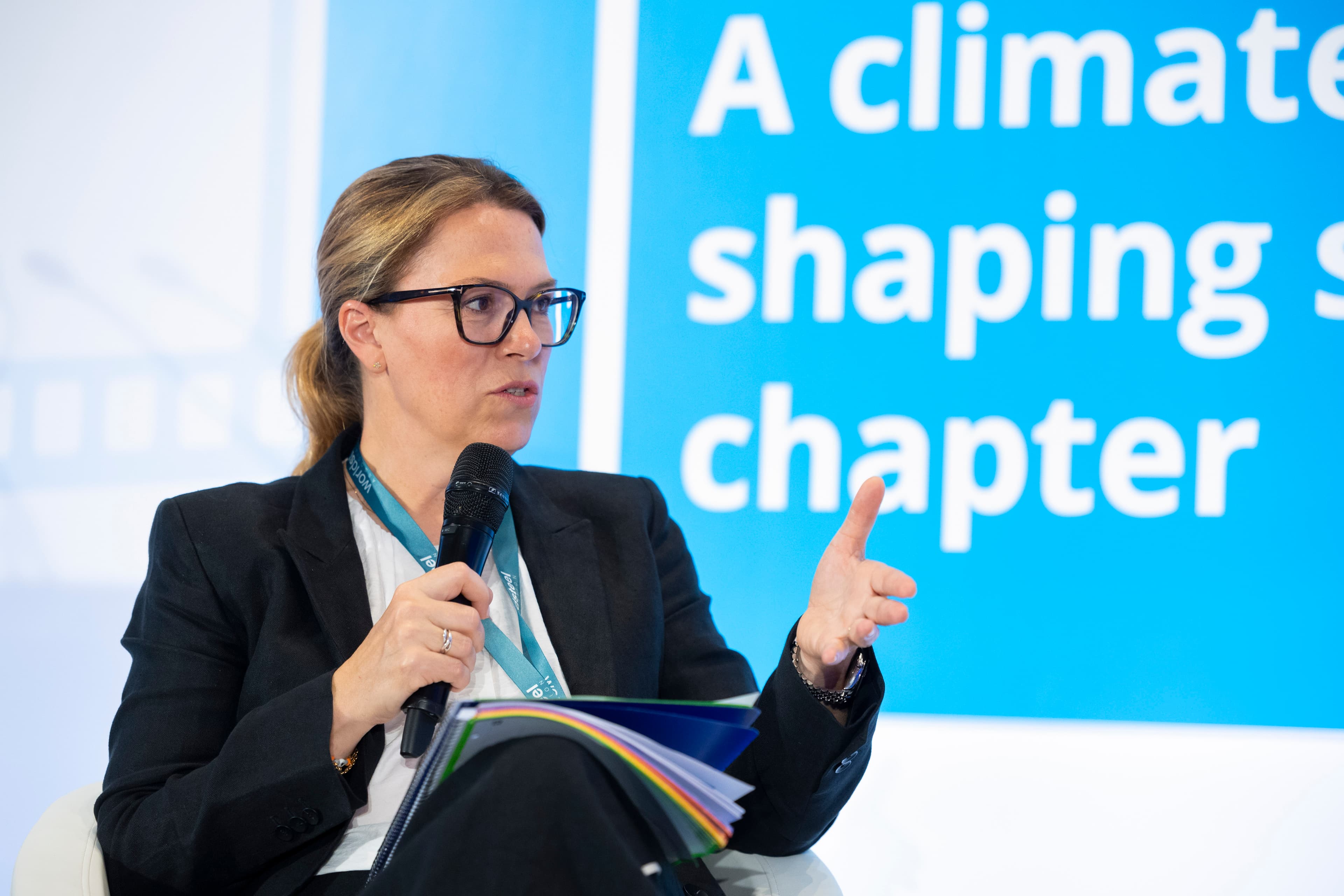
Swedish expert Åsa Ekdahl, Director of Communications and Climate Policy at the World Steel Association, stated that the scale of investment required for decarbonization in the steel sector is unprecedented, emphasizing that the cost of its removal amounts to $5.5 trillion.
Ekdahl, who also serves as the secretary of the Environment Committee and coordinator of the Open Forum at World Steel, pointed out that the Middle East and North Africa region has the potential to play a significant role in future supply chains for low-carbon iron products, including its convenient geographical access to major steel-consuming markets.
She indicated that the combination of industrial capacity, energy resources, and strategic location in the region provides a strong foundation for future growth.
Ekdahl suggested that access to low-carbon energy at an affordable cost will be one of the most important factors shaping the future geography of iron and steel production.
She noted that the role of steel organizations and associations is to educate the public, policymakers, and others about the role of steel and the steel industry in society, and to present available decarbonization options in a technologically neutral manner.
She pointed out that decarbonizing steel is not just about replacing one technology with another, considering it one of the most common misconceptions. It requires a transformation across entire industrial ecosystems, including energy systems, raw material supply chains, infrastructure, markets, and policy frameworks.
Ekdahl affirmed that the biggest challenge in global decarbonization depends on succeeding in collaboration across the entire value chain and achieving the long-term political certainty that supports investment and innovation.
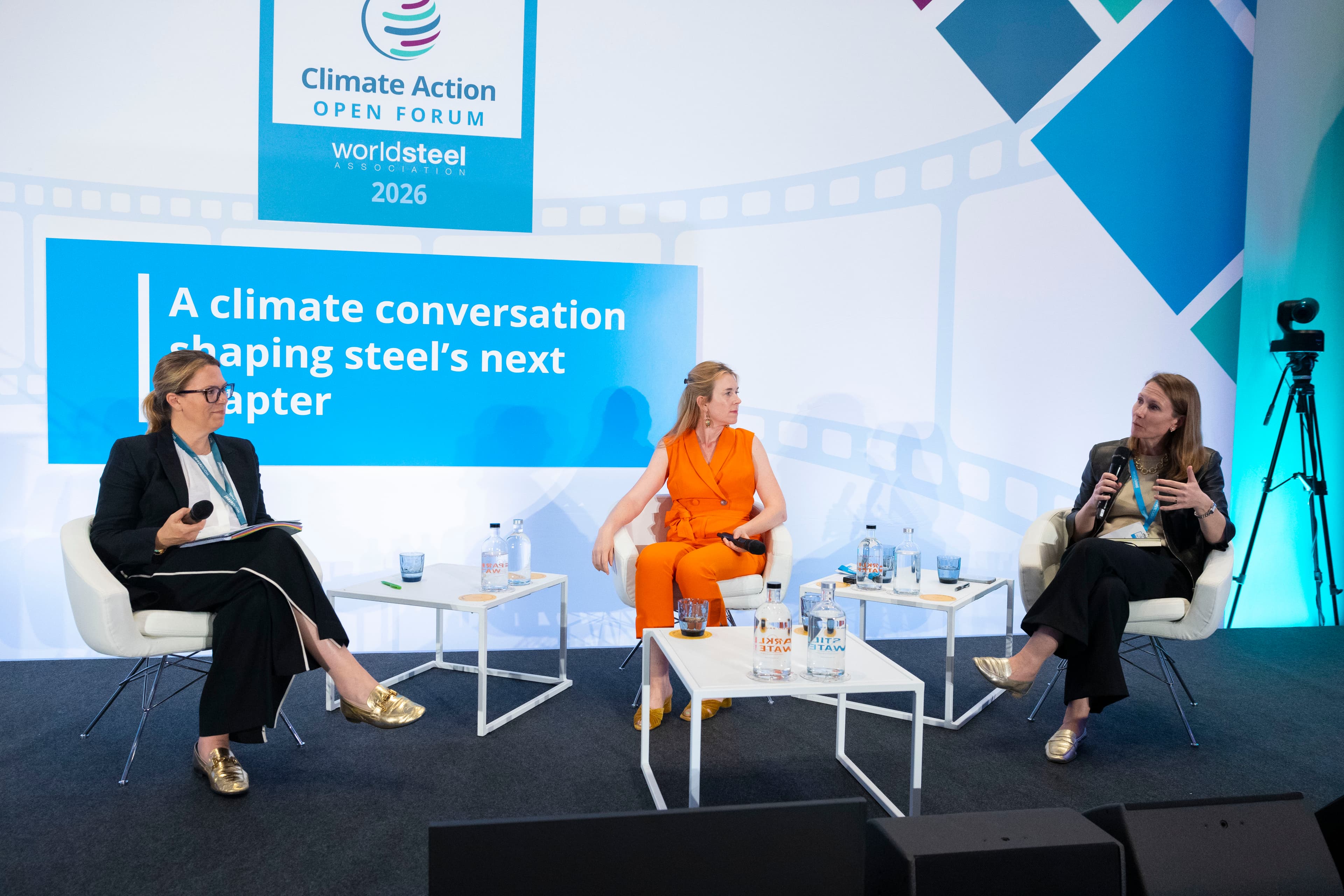
· The global steel industry is undergoing a profound transformation driven by decarbonization, energy security, technology, and changing trade policies. From the perspective of the World Steel Association, where does the industry stand today in its transition towards low-emission steel production?
The global steel industry is moving from a phase of ambition to a phase of action. It is encouraging to see how steel producers around the world are investing in energy efficiency, greater use of steel scrap, low-carbon electricity, hydrogen-based iron production technologies, and carbon capture technologies. At the same time, we must recognize that this is one of the largest industrial transformations ever undertaken. Progress will not be consistent because steel is produced under highly varied regional conditions.
So, do you expect the global steel industry to converge around a limited number of dominant decarbonization pathways, or will it increasingly follow different regional models depending on energy resources, infrastructure, raw materials, and policy frameworks?
I expect we will see a mix of convergence and divergence. There is growing consensus on the key technologies that can reduce emissions; however, how these technologies are deployed will vary depending on local conditions.
Enabling conditions such as access to affordable and low-carbon energy simultaneously, high-quality iron ore, scrap, hydrogen infrastructure, and investment conditions differ significantly around the world.
What matters is not that everyone follows the same path, but that progress is made towards the same climate goals.
Your work at the World Steel Association places you at the crossroads of steel, climate policy, and public communication. How has your role evolved as decarbonization transitions from a long-term ambition to an industrial priority?
To be clear, the World Steel Association does not speak directly to governments or interfere in national or regional policymaking. However, I believe I can say that real progress has been made, but a significant gap still exists between political ambition and the conditions necessary to make major industrial investments feasible. Steel projects are capital-intensive, have long investment cycles, and rely on infrastructure and resources beyond the direct control of steel producers.
The Middle East and North Africa combine abundant solar energy resources, growing renewable energy capacities, extensive experience in Direct Reduced Iron (DRI), industrial infrastructure, and strategic access to major markets. How does the World Steel Association assess the region's potential role in the emerging global low-emission steel economy?
The Middle East and North Africa region possesses several characteristics that position it well for the transition to low-emission steel production. Realizing this opportunity will depend on continued investment in renewable energy, infrastructure, technology, and supportive policy frameworks. The combination of industrial capacity, energy resources, and strategic location in the region provides a strong foundation for future growth.
Can the Middle East and North Africa ultimately become a major global supplier of low-carbon iron products such as Direct Reduced Iron (DRI) and Hot Briquetted Iron (HBI), especially for markets facing greater constraints in renewable energy or suitable iron ore resources? What conditions are necessary for this potential to translate into actual export capacity?
The region certainly has the potential to play an important role in future supply chains for low-carbon iron products, including its convenient geographical proximity to major steel-consuming markets. As global demand for low-emission materials grows, regions with the right mix of resources and industrial capacity can become important suppliers to international markets. We are seeing an increasing number of planned industrial projects in the MENA region that integrate this into their business plans.
Egypt has an established DRI-based steel industry and immense potential for renewable energy development. What opportunities do you believe exist for Egypt in the low-emission steel value chain?
Egypt starts from a position of strength and has a great opportunity to participate in the emerging low-emission iron and steel value chains, but I do not have detailed knowledge to speak specifically about the Egyptian circumstances. I suggest that close cooperation between industry and policymakers is crucial to achieve this potential.
Hydrogen-based direct reduction, electric arc furnaces, greater use of scrap, and carbon capture are among the key technologies being discussed. What technologies or combinations do you expect to have the greatest impact on the global steel industry over the next decade?
The greatest impact will come from a combination of technologies rather than reliance on a single technological superiority. Increased scrap use and the continued expansion of EAF production can achieve significant near-term emissions reductions. At the same time, hydrogen-based direct reduction has enormous long-term potential, particularly in regions with access to low-carbon energy, but it will likely take longer to implement. Carbon capture will also be a vital task wherever existing blast furnace assets remain a key part of steel production.
Different regions will therefore adopt different technologies or combinations of technologies based on their resources, infrastructure, and industrial conditions.
As direct reduction pathways expand, could the availability of high-quality, suitable iron ore become a strategic constraint for the low-emission steel industry? How important is innovation across the ore and pellet supply chain?
The availability of suitable iron ore is certainly an important consideration for this transition. Current direct reduction technologies rely on higher quality iron ore inputs, and increased demand for these materials will create challenges as the low-emission steel industry expands. However, this should be seen as part of a broader transitional challenge rather than a sole limiting factor. Innovation in ore beneficiation, pellet production, and ironmaking technologies to enable the use of lower iron content ores will help address some of these constraints. Investments across the supply chain will be essential.
As the steel industry increasingly relies on low-carbon electricity and potentially hydrogen, could access to abundant, reliable, and competitively priced renewable energy become a strategic advantage for steel-producing regions, comparable to access to iron ore and traditional fuels?
Access to affordable low-carbon energy is likely to become one of the most important factors shaping the future geography of iron and steel production. Many emerging low-emission steel production pathways rely heavily on renewable electricity, either directly through EAFs or indirectly through the use of low-carbon hydrogen.
Regions with abundant renewable resources, supporting infrastructure, and reliable energy systems are likely to have a significant competitive advantage.
But the scale of the transition is enormous. How can steel producers finance the extremely large investments required for decarbonization while maintaining international competitiveness, especially when the bulk of the required investment lies outside the steel plant itself?
Indeed, the scale of investment required for decarbonization in the steel sector is unprecedented and cannot be borne by the industry alone. The cost of the steel industry's transition is estimated to be between US$3.5 and US$5.5 trillion. Of this amount, about 20% will be required within the steel industry itself, while the remaining larger portion is required in the upstream value chain, specifically and almost entirely in energy production and the development of distribution networks. Funding can come from a combination of private capital, public support mechanisms, green finance instruments, and policies that help bridge the cost gap between conventional and low-emission production.
With the EU's Carbon Border Adjustment Mechanism (CBAM) creating a stronger link between carbon emissions and international trade, how does Asa Ekdahl see the relationship between climate policy and the competitiveness of steel producers evolving?
Climate and industrial competitiveness issues are increasingly intertwined. As governments pursue decarbonization goals, policies like CBAM seek to address the risk of carbon leakage and create incentives for emissions reductions. The challenge is to ensure that climate policies accelerate investment in low-emission technologies without creating unintended distortions in global markets.
Policy frameworks work best when they are transparent, predictable, and consistent with broader industrial strategies. Steel producers need confidence that long-term investments will be recognized and rewarded.
With various initiatives, standards, and definitions for 'low-carbon' and 'green' steel emerging, could differences in greenhouse gas accounting methodologies create new barriers to international trade? What is required for meaningful international alignment?
Yes, certainly. As efforts to promote trade in low-carbon goods accelerate, differences in greenhouse gas accounting methodologies and definitions of low-carbon steel could create confusion and potentially new barriers to trade. As demand for low-carbon steel grows, customers, investors, and policymakers need confidence that emissions claims are reliable, comparable, and transparent across markets.
For this reason, greater international convergence in emissions accounting is crucial. More consistent reporting frameworks and product emission methodologies can facilitate trade, support investment decisions, and provide greater clarity across the value chain.
The priority should be coordination where possible and interoperability where coordination is not feasible. Different methodologies have often been developed for different purposes, including reporting at the company, site, and product level.
Common terminology, greater transparency, comparable reporting boundaries, high-quality data, and clear means of translation between credible methodologies are needed.
Standards should also be developed transparently, with broad international participation. Duplication of efforts should be avoided by leveraging existing international standards where possible.
Do you see a realistic prospect for greater international convergence on steel standards and emissions accounting, and what role can industry organizations like the World Steel Association play in this process?
Greater convergence is realistic, but it will require sustained technical work and an inclusive process. The principles of the Steel Standards Principles (SSP) provide a strong foundation, and the World Steel Association is a strong supporter. The process has already brought together over 65 organizations from different regions and parts of the steel value chain.
The principles of steel standards and the World Steel Association work together to bring together steel producers, standards organizations, policymakers, customers, investors, and civil society, mapping existing methodologies, identifying commonalities and fundamental differences, and providing industry data and technical expertise. It is important that standards reflect the diversity of steel origins and production routes.
Beyond technology and standards, where are the most critical gaps in the policy and investment environment to accelerate the decarbonization of the steel sector?
The most critical gaps lie in the availability and cost of low-carbon energy, access to competitively priced finance, infrastructure development, and the creation of reliable markets for low-emission steel. Current policy frameworks still tend to focus on supporting production rather than creating markets.

International decarbonization policies are often formulated from the perspective of advanced industrial economies, while developing countries face entirely different constraints in terms of finance, energy costs, infrastructure, and technology. How does the World Steel Association work to ensure these differences are reflected in the global transition?
A credible global transition must acknowledge that countries and companies start from different positions and are driven by different catalysts. Our role is to educate about the available options and bring the perspectives of all our members.
The organization has participated in international climate forums, including COP, while its Open Forum brings together steel producers, policymakers, financial institutions, international organizations, and other stakeholders. After years of international climate dialogue, where is the global process struggling to move from broad commitments to industrial implementation?
The international debate has become more practical. There is now greater interest in industrial policy, finance, market creation, common emission methodologies, and the infrastructure needed to support the deployment of technologies. However, implementation must happen at the national level.
From your position at the World Steel Association, do you see the steel industry as merely a recipient of climate policies, or is it becoming increasingly involved in shaping the policies that will govern the path of industrial transformation?
I tend to believe that the steel industry is becoming increasingly involved in shaping the policies necessary for the transformation process, although this varies from country to country. I also see a growing realization among policymakers that they need the industry's input for their policies to be as effective as possible. Steel producers possess intrinsic knowledge related to production technologies, investment cycles, infrastructure dependencies, raw material constraints, and market conditions.
How can global industry associations balance the need to represent the competitiveness concerns of steel producers with the need to support ambitious and credible emission reduction policies?
Our role is to educate the public, policymakers, and others about the role of steel and the steel industry in society, present the available decarbonization options in a technologically neutral manner, and encourage discussion about the conditions that must be met for these technologies to be deployed. This, of course, includes aspects of competitiveness, but since competitiveness is heavily influenced by local factors, detailed discussions about what that entails must take place at the national level.
Finally, what is the most important aspect of steel sector decarbonization that policymakers, investors, and industry stakeholders still tend to underestimate or misunderstand?
One of the most common misconceptions is that decarbonizing steel is simply a matter of replacing one technology with another. In reality, it requires a transformation across entire industrial ecosystems, including energy systems, raw material supply chains, infrastructure, markets, and policy frameworks.
The industry already has a good understanding of the necessary technologies. The biggest challenge lies in enabling these technologies to be deployed at scale and at a cost that remains economically sustainable. Success will depend on collaboration across the entire value chain and long-term political certainty that supports investment and innovation.
Åsa Ekdahl, Director of Communications and Climate Policy at the World Steel Association
The highest female voice in a male-dominated heavy industry
Architect of climate discourse and voice of environmental diplomacy in the steel industry

Swedish national Åsa Ekdahl holds a high-level institutional position in one of the most complex heavy industries and one most challenging for global sustainability requirements, as Director of Communications and Climate Policy at the World Steel Association (worldsteel) in Brussels, an organization representing over 85% of global steel production.
Ekdahl derives her strategic vision and analytical rigor from an advanced academic background, having graduated from the esteemed University of Gothenburg in Sweden with a Master's degree in Mathematics, Physics, and Environmental Science, an integrated study she completed between 1995 and 1999.
Her academic studies granted her a deep understanding of the complex models linking energy equations, physics, and long-term environmental impacts, enabling her throughout her career to address industrial climate change issues with the mindset of an experienced scholar, rather than a bureaucratic administrator.
Ekdahl's professional persona was shaped through a deliberate historical progression within the strongholds of the European steel industry and environmental policies. Her initial steps involved direct engagement with production and sustainability standards in her Scandinavian environment through the Swedish Steel Producers Association (Jernkontoret). Her field experience then expanded to encompass work with key players like the Ovako Group before she moved to the broader continental level by joining the ranks of the European Steel Association (EUROFER).
These interconnected stages provided her with a comprehensive understanding of the complexities of European markets and legislative policy frameworks.
Ekdahl reached the pinnacle of her institutional influence with her move to the most prominent international center in Brussels, Belgium, to work at the World Steel Association. From 2012 to 2022, she served as Head of Environment and Climate Change and Secretary to the Environment Committee, where she led intricate technical files related to the collection and analysis of CO2 emission data for over 100 companies, developing climate frameworks and setting carbon neutrality roadmaps in line with the Paris Agreement objectives.
Since 2022, she has moved to her current role as Director of Communications and Climate Advocacy, recognizing the organization's need for effective communication bridges. She has thus become the most prominent voice shaping the industry's global discourse and managing environmental diplomacy with major institutions such as the UNFCCC and the OECD.
Her presence is not limited to the organizational aspect; it is also evident in her ability to engineer cross-sectoral dialogues, as she directly oversees sessions of the annual Open Forum, which has become the premier global platform bringing together over 500 policymakers, steel companies, financial institutions, and energy experts.
Asa Ekdahl's philosophy is embodied in the idea that the transition towards decarbonization is not merely a technical process within factory walls, but a comprehensive re-engineering of industrial ecosystems, encompassing energy networks, infrastructure, and supply chains. This vision holds particular significance for Arab region producers seeking to align their plans with the European Carbon Border Adjustment Mechanism (CBAM) and secure green transition financing. She thus remains an institutional pillar, skillfully balancing the precision of engineering calculations with the demands of environmental rationality, and stands as one of the most prominent female voices in a male-dominated heavy industry.