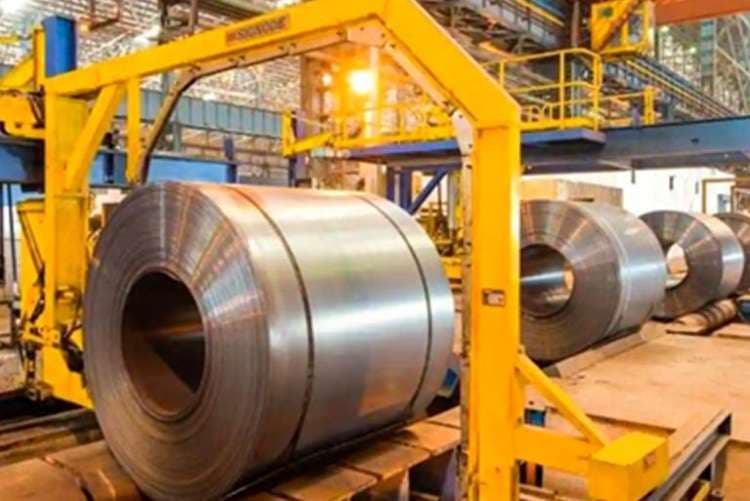
The Indian steel industry is entering a phase of strong expansion, driven by rising production, domestic demand, and government support. However, the main challenge is no longer increasing production capacity, but rather enhancing competitiveness in global markets.
A report by the Policy Circle platform, an initiative focused on providing political and economic insights, noted that India is approaching its goal of reaching 300 million tons of crude steel production capacity by 2030-2031. Production capacity reached 200.33 million tons in 2024-2025, while crude steel production reached 168.4 million tons. Finished steel production reached 160.9 million tons during 2025-2026, against a domestic consumption of 163.7 million tons.
According to the report, these figures indicate that the Indian market does not suffer from a demand shortage, given the continued expansion in infrastructure, housing, and industrial projects. However, the attractiveness of the domestic market might limit producers' incentive to expand abroad, despite India's favorable geographical location for accessing West Asian markets.
The report states that the most significant challenge is confronting China's price advantage, which compels Indian producers to focus on quality, reliability, delivery speed, and product development, especially for specialized, high-value-added steel. In this context, the government has launched a Production Linked Incentive (PLI) scheme to support the sector, expanding its scope after a weak response to the first round.
The report indicated that the need to accelerate transformation is increasing with rising global protectionism and tightening trade restrictions, particularly in the European Union, one of India's key export markets. This requires a strategy that goes beyond relying solely on the domestic market and pushes the Indian steel industry towards building a more competitive global presence.
The report highlighted that major economies now treat steel as a strategic commodity. The United States imposed tariffs on steel during Donald Trump's first term and continued to rely on trade measures. The European Union, a major market for Indian steel exports, has also tightened its protection system. The European Parliament has approved a new system that would reduce duty-free steel import quotas to 18.3 million tons annually, a 47% decrease from 2024 levels, and impose a 50% tariff on imports exceeding the allocated quota.