Difficulties of German steel producers are a warning to all of Europe
Europe still has highly skilled people, advanced technologies, and a strong industrial tradition
Uncertainty about energy prices is a bigger obstacle than the price level
European steel producers face unequal competition with producers whose energy and carbon costs are much lower
Decarbonization cannot be based on regulatory pressure alone; it must make economic sense
Once steel production disappears in Europe, it will not be easy to bring it back
The real question: Can Europe afford not to have a steel industry?
The Middle East and North Africa region is a potential competitor and an important partner for Europe at the same time
The European steel industry is going through a difficult phase both operationally and financially. Between declining production, import pressure, and rising energy costs, the continent faces a question that goes beyond the economic cycle: How to preserve its industrial base as it transitions to low-emission production? In response, Brussels has begun to activate trade protection tools and adjust the free allocation system, while producers question whether these measures are sufficient.
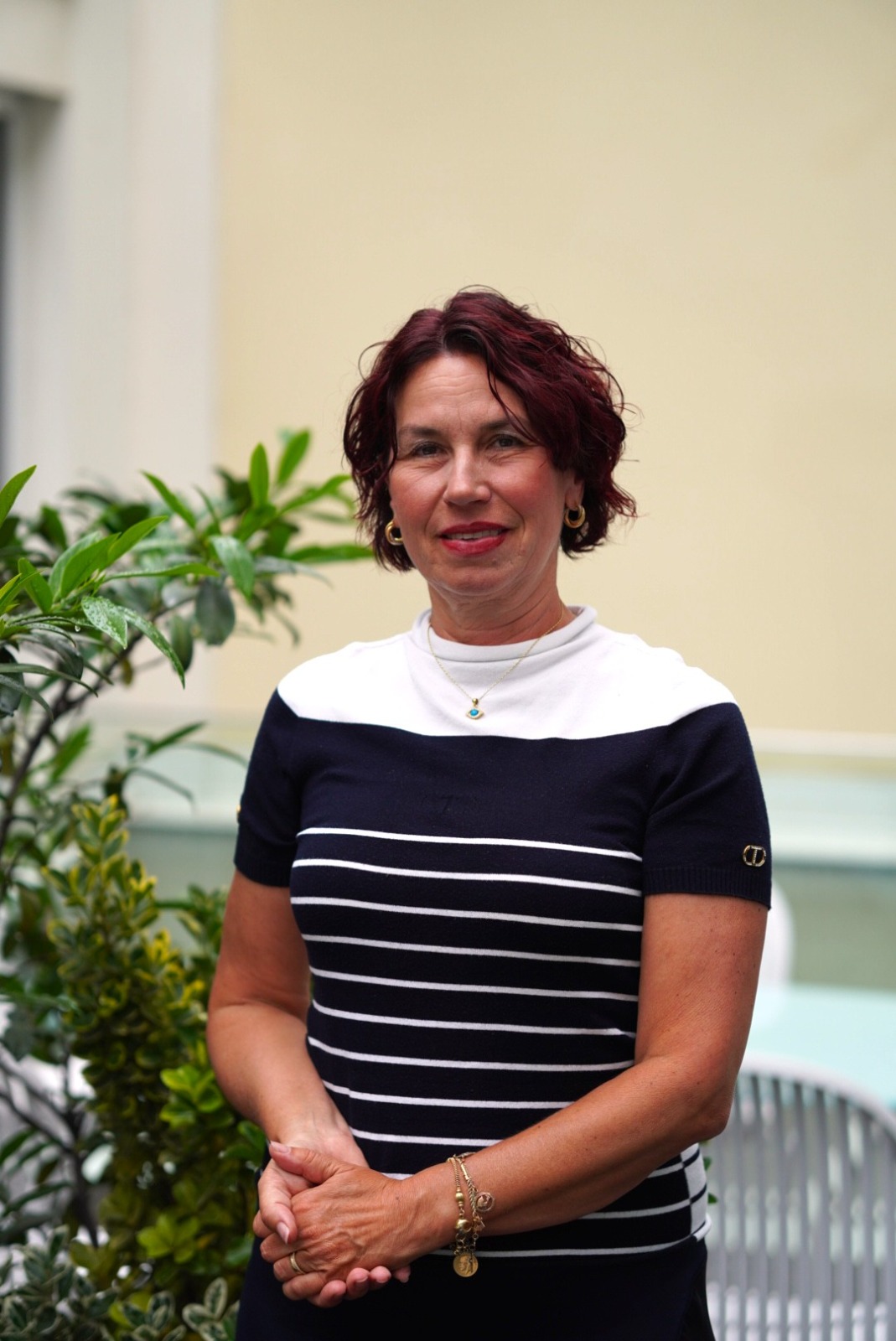
To explore the reality of the steel industry in Europe, the 'Arab Steel Bulletin' interviews Marcela Kubalová, Chairwoman of the Steel Union of the Czech Republic.
Marcela studied economics and law in the Czech Republic and France. She began her career in the automotive industry before moving to the steel sector. She spent a significant part of her career living and working outside Europe, including in the United Arab Emirates, Kazakhstan, Ukraine, and Saudi Arabia. She currently holds the position of Chairwoman of the Steel Union of the Czech Republic (Ocelářská unie) and teaches international trade at VŠB – Technical University of Ostrava. She is also a mother of three.
Kubalová believes that uncertainty about energy prices is a bigger obstacle than the price level itself, and that the transition to electric arc furnaces increases electricity consumption and requires public support to be viable. Steel scrap is a strategic raw material, and the difficulties of German steel producers are a warning to all of Europe. She is reserved about linking free allocations to mandatory investments and calls for a 'reward, not punishment' approach. She sees the new trade measure as a step in the right direction, but it does not fully resolve her concerns in the absence of an effective CBAM mechanism. She concludes from the Liberty Ostrava crisis that the industrial base cannot be taken for granted and that early action is necessary. She summarizes her position by stating that the real question is not whether Europe can afford to maintain a steel industry, but whether it can afford not to have one.
Energy prices in Europe rose again during 2026 and continue to pressure energy-intensive industries. What is the biggest obstacle to long-term investment decisions today: the price level itself, or price volatility and unpredictability?
Uncertainty is a bigger obstacle than the price level itself. Companies need to know what energy prices will look like not only today, but also in five, ten, or fifteen years. Without a reasonable degree of predictability, it becomes extremely difficult to make long-term investment decisions, especially in the steel industry where planning must extend over a decade. The European steel industry also faces enormous investment requirements related to decarbonization. Most companies simply do not have the financial resources to fund such investments from their own balance sheets. The economic reality is that many of these investments are unlikely to generate sufficient returns on their own. If an investment is not economically viable, it is also very difficult to obtain bank financing.
The European steel industry is moving towards electric arc furnaces and low-emission production. What are the conditions related to electricity availability, reliability, and cost that must be met for these investments to be viable?
Decarbonization requires massive capital investments. However, the shift to electric arc furnaces does not automatically mean higher quality steel or lower production costs. On the contrary, it significantly increases electricity consumption, at a time when industrial electricity prices in Europe are already among the highest in the world.
Companies are therefore asked to invest billions in transforming their production processes, while at the same time facing a great deal of uncertainty about the future cost of the energy they will need to operate these new facilities. This creates a fundamental problem. Companies cannot make investment decisions when they cannot reliably calculate their future operating costs or estimate whether they can expect a reasonable return on their investment.
Public support is therefore essential. Without effective support mechanisms, whether through direct subsidies, guarantees, or long-term energy pricing arrangements, many companies will simply not be able to make this transition while remaining economically viable.
Decarbonization cannot be based on regulatory pressure alone. It must also make economic sense. Otherwise, we risk driving European steel production out of Europe rather than actually transforming it.
In September 2026, the European Commission published a draft list of non-OECD countries that could be allowed to import certain types of non-hazardous waste from the EU after May 2027. Specialized reports indicated that the draft excludes several key destinations for metal scrap, including India, Pakistan, and Bangladesh. If the draft remains unchanged, how could this affect scrap flows, the supply of electric arc furnaces, and the competitiveness of European producers?
As the European steel industry moves away from blast furnace production towards electric arc furnaces (EAFs), steel scrap will become strategically more important. It is a key raw material for EAF production, and securing sufficient quantities of high-quality scrap at competitive prices will become increasingly important. Europe currently exports around 20 million tons of steel scrap each year.
If European producers are asked to use more recycled raw materials but cannot secure sufficient quantities of the right quality at competitive prices, this could lead to increased production costs and weaken their position against international competitors.
Therefore, I believe we need a balanced approach. Europe should certainly encourage recycling and the circular economy, but it must also recognize steel scrap as a strategic raw material. It would not make much sense for Europe to encourage the transition to an electric steel industry while undermining the availability or affordability of one of its most important raw materials.
Germany is the largest steel producer in the EU, and its industry faces pressure from energy costs, declining production, and import competition. To what extent do these challenges reflect a broader crisis in the European steel industry model?
The difficulties faced by German steel producers should be seen as a warning to the whole of Europe.
The challenges are very similar across European countries: high and unpredictable energy prices, increasing regulatory costs, strong import competition, and enormous investment requirements associated with decarbonization. At the same time, demand for steel remains under pressure in important customer sectors, such as automotive and construction.
I do not describe this as a crisis in Europe's technological capabilities or industrial know-how. Europe still has highly skilled people, advanced technologies, and a strong industrial tradition. The problem is that the economic conditions for maintaining steel production in Europe are becoming increasingly difficult.
European steel producers are asked to invest billions in transforming their production processes, while at the same time they have to compete with producers from regions where energy costs, regulatory costs, and carbon costs are significantly lower. This creates a fundamental imbalance.
The real question is whether Europe is prepared to maintain the industrial conditions necessary for steel production to remain economically viable. Decarbonization is necessary, but it cannot succeed if European producers are gradually driven out of the market by imports.
This is not just a crisis in the steel industry. The main question is whether Europe still wants to remain an industrial continent.
In July 2026, the European Commission proposed to continue free allowances after 2030, linking them more closely to decarbonization investments in Europe. Does this strike the right balance between protecting competitiveness and encouraging companies to transition?
I understand the intention behind the European Commission's proposal, but I have serious reservations about making free allocation conditional on mandatory decarbonization investments. In our view, free allocation should primarily remain a tool to protect European industry from carbon leakage. Its purpose is to prevent the relocation of production outside Europe, to countries where companies face lower carbon costs and often less stringent environmental requirements.
I do not believe that reducing free allowances for companies that fail to meet certain investment requirements is the right approach. The steel industry is already under immense pressure, and companies are facing very difficult decisions about their future. The main obstacle to decarbonization investments is not a lack of willingness or incentive, but the absence of favorable conditions in Europe, which I mentioned earlier. That is why we call for a 'reward, not punishment' approach. Companies that make extra efforts and invest in decarbonization should be rewarded with additional free allowances, rather than having their free allocation reduced for those that cannot meet mandatory investment conditions.
We must recognize that companies operate under very different conditions. Not every investment is technically possible or economically viable at present, and companies should not be penalized for circumstances largely beyond their control.
Are you concerned that these new conditions will make the allowances less effective in addressing energy costs and international competition?
Yes, absolutely. I am concerned that linking free allocation too closely to mandatory investment conditions could weaken its effectiveness as a tool to protect European industry from carbon leakage and international competition.
A senior Commission official told MEPs that the industry received around €255 billion in free allowances over 14 years, yet this was not followed by sufficient investment. What is your view on this assessment?
I think we need to look at this assessment in a broader context. The figure of €255 billion may seem impressive, but I would be cautious about concluding that companies received substantial support and simply did not invest enough.
I must reiterate that free allocation was designed to protect European industry from carbon leakage and to maintain a level playing field with producers outside the EU. It was never intended to be a fund for industrial decarbonization investments. The volume of free allowances granted should not be interpreted as money available for investment. Companies operate in highly competitive markets and face enormous cost pressures.
I also object to the assumption that companies did not invest because they lacked the incentive. Many steel producers have ambitious decarbonization plans and are ready to transform their production. But willingness alone is not enough. Investments amounting to billions of euros require commercial viability. If electricity is too expensive, infrastructure is missing, or the future regulatory framework is uncertain, even a motivated company may not be able to proceed.
Therefore, the real question is not simply how many free allowances companies received, but whether Europe has created the conditions that enable them to turn decarbonization ambition into economically viable investments.
If this assessment is correct, even partially, what should have been designed differently?
If we accept that the system could have achieved more in terms of decarbonization investments, I believe the answer should be to improve incentives, not to weaken protection against carbon leakage.
The system should ensure access to affordable and predictable energy, develop the necessary infrastructure for electricity and hydrogen, support the deployment of new technologies, and provide a stable regulatory framework that allows companies to plan investments over ten to fifteen years.
We also need to recognize that not all companies are starting from the same position, nor do they have access to the same technologies. Decarbonization pathways must reflect the technical and economic reality of individual production processes.
In the debate on the draft report in the European Parliament's Environment Committee, a proposal was made to exempt 40% of installations from investment conditions. The Commission estimated that this would halve the expected investment compared to its proposal. Do you agree with this estimate?
I think we should be cautious about how we interpret it. It is an estimate, and I would like to understand the assumptions behind it before accepting it as a reliable forecast. Exempting 40% of installations does not necessarily mean that 40% of potential investment will disappear. Installations vary greatly in size, production capacity, emissions, investment needs, and access to decarbonization technologies. The number of installations alone does not tell us the whole story.
What data would you like to see before making a judgment?
Before drawing any conclusions, I would like to see a much more detailed assessment of the assumptions underlying this estimate.
For example, I would like to know how the 40% of installations to be exempted were selected. Are we talking about the total number of installations, or does it represent production capacity or emissions? These are very different things.
It would be useful to see the projected investment figures broken down by sector and type of installation. The investment potential and decarbonization pathways for a steel plant, a cement plant, or a chemical facility are not necessarily comparable. I also request an assessment of the potential impact on the competitiveness of European industry and the risk of carbon leakage.
How can a free allocation system reward companies that have invested early in emission reductions without depriving other companies of the time and support they need to make the transition?
I believe the system should follow the principle of rewarding extra effort rather than punishing companies that are not yet in a position to make the transition. Companies that have invested early in reducing their emissions and have taken concrete steps towards decarbonization should have their efforts recognized. One way to do this is to grant them additional free allowances as a reward for going beyond what is required.
At the same time, we must recognize that companies start from different positions. They have different production processes, investment capacities, and access to technologies. Not every company can move at the same pace, especially in the face of high energy prices, limited infrastructure, and uncertain investment returns.
Therefore, the free allocation system must continue to provide a reliable level of protection against carbon leakage, while creating additional incentives for those who invest. We should not withdraw existing support from companies simply because they cannot meet administratively imposed investment requirements within a specific timeframe.
The goal should be to accelerate decarbonization, not to punish companies for circumstances often beyond their control.
In an interview in March 2025 with Constructie, you said you were against subsidies because they distort the market, while at the same time calling for support for companies, innovation, and investment in new technologies. How do you distinguish between the subsidies you oppose and the support you call for?
I do not see these two positions as contradictory. The key difference for me is between subsidies that distort the market and targeted support that helps create the conditions for long-term competitiveness.
I am against subsidies that artificially keep uncompetitive companies alive, distort competition, or give some companies an unfair advantage over others. Public money should not be used to indefinitely compensate for a lack of competitiveness.
However, I do believe that public support plays an important role in innovation, R&D, new technologies, and industrial transformation. These are areas where the benefits often extend beyond a single company, and public support can help overcome barriers that the market alone cannot easily address.
On 30 September 2026, the Czech and Italian governments submitted a package of proposals ahead of the European Council summit scheduled for 15–16 October. The package calls for greater flexibility in the allocation of free allowances, measures to reduce the impact of carbon costs on electricity prices, and a postponement of ETS2 — the carbon pricing system for road transport and buildings — scheduled to start in 2028. To what extent do these priorities reflect the needs of the Czech steel industry?
To a very large extent. The package addresses a number of the most pressing challenges facing the Czech steel industry today.
We welcome the call for greater flexibility in the allocation of free allowances. The rules should take into account the actual availability and economic viability of decarbonisation technologies. Companies should not lose protection simply because the technologies or investment conditions they need are not yet available. As the industry moves towards greater electrification, including the use of electric arc furnaces (EAFs), access to affordable and predictable electricity becomes absolutely crucial. We cannot expect European steel producers to invest in cleaner production while simultaneously facing electricity prices that put them at a disadvantage compared to producers in other parts of the world.
As for ETS2, its postponement is less directly relevant to steel production, but I understand the broader concern about adding further costs to households and businesses at a time when Europe is already struggling with high energy prices and competitiveness challenges.
Therefore, I see the Czech-Italian initiative as an important recognition that climate policy and industrial competitiveness must go hand in hand. It is encouraging that these concerns have also found their way into the broader European debate, and that the European Council has called for continued work on addressing the impact of carbon costs on electricity prices and re-evaluating the implementation of ETS2.
The EU's new trade defence instrument for steel entered into force on 1 July 2026, setting tariff-free quotas at 18.3 million tonnes per year and imposing a 50% tariff on imports exceeding those quotas. What indicators will you be monitoring to assess its effectiveness, and do you think it may need to be tightened?
I believe it is still too early to judge the full impact of the measure, but there are several key indicators we should monitor closely. First, we need to look at import volumes, both overall and by individual steel product and country of origin. It will be important to track how quickly the tariff-free quotas are consumed, what happens to imports once those quotas are exhausted, and whether trade flows are simply being rerouted from one country or product category to another. Second, we should monitor the impact on European steel producers. Their capacity utilisation, production volumes, market share, profitability, and ultimately employment. The fundamental question is whether the measure is helping European producers regain a level playing field and maintain viable production capacity.
We should also pay close attention to import prices and any signs of circumvention, including transshipment or changes in product origin. Any adjustments should be based on clear evidence. If the data shows that imports are still putting undue pressure on European producers, or that the current quotas and tariff levels are not achieving their intended purpose, then the EU should be prepared to act.
At the same time, we must consider the interests of downstream industries that rely on imported steel and avoid causing unnecessary supply disruptions.
The goal should not be to close the European market, but to ensure that European steel producers can compete on a level playing field.
In an interview conducted in March 2025, she warned that ending safeguard measures without an effective CBAM mechanism would create a serious problem. Has the new measure alleviated these concerns?
Yes, to some extent. The new trade measure is certainly a step in the right direction and addresses some of the concerns I raised in March 2025. However, I cannot say that it resolves them entirely.
My concern was that ending safeguard measures without an effective alternative would leave European steel producers vulnerable to a significant increase in imports, particularly from countries whose producers do not face the same regulatory and carbon costs.
The new measure provides an additional layer of protection by introducing quotas and higher duties on imports exceeding those quotas. However, trade protection and the CBAM mechanism address different challenges. The trade measure is intended to address import pressure and unfair competition, while the CBAM mechanism should ensure that imported steel faces a similar carbon cost to that faced by steel produced in Europe. What matters is not what the legislation promises on paper, but whether it effectively protects European steel production in practice.
What will make low-emission steel commercially viable? Does Europe need public procurement or lead markets that guarantee demand, so that support is not limited to the supply side?
I believe this is one of the missing elements in Europe's current approach to industrial decarbonization. So far, much of the focus has been on the supply side – supporting companies in investing in new technologies and reducing emissions. But we also need to create demand for the low-emission products that are expected to be produced.
Public procurement can play an important role here, particularly in infrastructure, construction, and transport, by creating demand for steel with lower embedded emissions. Europe should also encourage lead markets where customers are willing to recognize the added value of low-emission steel and pay for it.
However, this must be done cautiously. Requirements should be transparent and designed in a way that does not simply increase costs for European industry or undermine its competitiveness. We also need to involve the entire value chain, including automakers, construction companies, and other major steel users.
Ultimately, we cannot expect steel producers to invest billions in low-emission steel production if there is no viable market for it. We need to support not only the production of green steel but also the demand for it. This is one reason why the EU is now proposing the Net-Zero Industry Act, with its focus on lead markets and public procurement. While I welcome the discussion, I believe we should also take a step back and consider the underlying reasons that made such an initiative necessary in the first place.
With more low-emission iron production projects announced across the Middle East and North Africa (MENA), relying on renewable energy, hydrogen, and direct reduced iron, do you see the region as a potential competitor to European steel producers, or as a partner that Europe can rely on in the transition to low-carbon steel?
I see the MENA region as both a potential competitor and an important partner for Europe. The two are not mutually exclusive.
The region has significant advantages, particularly in terms of renewable energy potential, availability of natural resources, and the possibility of developing low-carbon iron production based on hydrogen and direct reduction technologies. These advantages can make it an increasingly important player in the global steel value chain.
At the same time, I see significant opportunities for cooperation. Europe will need reliable supplies of low-carbon iron and other raw materials as its steel industry transforms. MENA countries can become an important partner in developing these supply chains, provided that cooperation is based on long-term reliability, transparency, and mutually beneficial economic relations.
However, I also emphasize that Europe must be careful not to replace its own industrial production with increasing reliance on imports. Maintaining a strong European steel industry is essential not only for jobs and economic competitiveness but also for strategic independence and security of supply.
As Chairwoman of the Steel Union, representing companies with different interests, how do you build consensus when member priorities differ?
I believe the most important thing is to recognize that our members are different companies with different business models, challenges, and priorities. Naturally, they do not always see eye to eye, nor do I expect them to.
My role is not to make everyone think alike, but to find common ground and identify issues that matter to the industry as a whole. This starts with listening. I believe it is essential to give every member the opportunity to express their views and understand the reasons behind their positions.
At the same time, we must look beyond individual company interests and ask ourselves what is best for the future of the Czech steel industry. There are areas where our members' opinions may differ, but there are also core issues that unite us – such as competitive energy prices, fair conditions in the European market, realistic decarbonization policies, and the need to maintain a strong industrial base in Europe.
One month after you took office, Liberty Ostrava entered insolvency proceedings. What did the crisis reveal about the fragility of the Moravian-Silesian region in terms of jobs and companies linked to the steel industry? And what should be done to reduce the risk of a similar crisis?
You know, I actually worked at the pipe plant in Liberty Ostrava when I was still a student. The company was then called Nová Huť, the name it has returned to today after part of its production returned to Czech ownership. So, insolvency was not just an industrial issue for me – it was something I felt very personally. I believe the crisis showed that we cannot take our industrial base for granted. Once production capacity, technical expertise, and skilled people are lost, it is extremely difficult and takes many years to rebuild. This is particularly true for a region like Moravia-Silesia, where the steel industry has been part of its industrial identity and economic foundation for generations.
I believe we need to act much earlier when a major industrial company shows signs of financial distress. The consequences of waiting until insolvency are enormous, not only for employees but also for suppliers, customers, and the entire region.
My biggest fear is that we do not allow the loss of one industrial company to lead to the gradual erosion of an entire industrial ecosystem. Protecting industrial production capacity is not just about protecting individual companies or jobs. It is about preserving the economic foundations of a region and its future generations.
We also need to recognize that steel is not just another commodity. It is a strategic material for the automotive industry, energy infrastructure, construction, and defense. Therefore, maintaining a competitive steel industry in Europe is not just an economic issue, but also a matter of industrial resilience and strategic security.
You have lived and worked in the UAE, and worked in the Middle East markets for years, from Oman to Saudi Arabia and Jordan. What did you learn from that experience about building long-term business relationships in Arab markets? And what do European companies often overlook when entering these markets?
I learned throughout my career that business in the Arab world is about people and trust. Building successful relationships takes time, and trust is earned through consistency, personal commitment, and presence when things get tough.
European companies often focus primarily on the product, price, and technical specifications, aiming to close a deal. However, in Arab markets, people are looking for long-term relationships and partners they can rely on.
It is also essential to understand the local culture, mentality, and decision-making processes. Working in Saudi Arabia may differ from working in the United Arab Emirates or Jordan. There is no one-size-fits-all approach in the region. You have to listen, adapt, and respect local ways of doing business. Therefore, my advice is not to come to the Middle East just to sell something. Come because you want to build something together.
For example, I sometimes had to explain that investment plans are not always driven by pure economic logic. Some Middle Eastern countries are very wealthy, but they lack an industrial base and specialized technical schools through which they can educate and train their young generations. These countries are willing to allocate significant financial resources to projects that may not be economically viable from a European perspective, but they see them as a long-term investment in their future and in building their own industrial capabilities.
Your career combines economics, law, and international trade, and has led you to head the Steel Union. What connects these different stages of your career?
I was born in Ostrava, the heart of the steel industry in former Czechoslovakia. On my way to school every day, I passed by the blast furnaces. Although my father always thought I would become an engineer, I chose a different path, studying economics and then law.
At that time, I imagined myself negotiating major business contracts and traveling around the world. I joined Tatra, a Czech truck manufacturer, at a time when the company, in the 1990s, was establishing its international sales department. I became part of the Middle East and Africa team, and it was a wonderful period of my life. At Tatra, I also met my husband, who was sent to the UAE to oversee the implementation of a contract to supply military vehicles. We ended up spending several years in the UAE.
During that period, our three children were born, and I stepped away from my career to focus on raising them. I must say that those were truly wonderful years, and I look back on them with great fondness.
Later, I received an offer from the owner of Vítkovice, an industrial and engineering company specializing in steel, to establish a branch of the company in the UAE and develop its steel business in the region. The original plan was for me to set up the office and manage its financial and administrative operations, while someone else would handle the technical side of the steel business. However, I became so deeply involved in the work that I ended up developing the steel business itself as well. I have always enjoyed learning new things, and this experience was an invaluable learning opportunity for me.
After returning to the Czech Republic, I re-engaged with Tatra. The company had secured a contract in Saudi Arabia to build a truck factory and was looking for someone who understood the local culture and business mentality. I returned to Tatra for a few more years.
Later, when the CEO of Tatra left the company to move into the steel industry, he asked me if I was interested in leading the Steel Union. He told me he thought I was the right person for the role. I accepted.
In an interview in 2025, you said you weren't entirely sure what you were getting into, and that you listened to the representatives of the major member companies before accepting the position. More than two years after taking over as Chairwoman of the Steel Union in May 2024, how has your understanding of this role and its responsibilities evolved?
Initially, I viewed the role primarily as an opportunity to represent the interests of our members and enhance the standing of the Steel Union. As time went on, I realized that it is not just about representing the industry, but also about listening to and understanding their various challenges, and bringing their perspectives together to form a strong and unified voice.
And perhaps the most important lesson I learned is that leadership in such an environment is about dialogue, effective advocacy, and the ability to build consensus. I do my best to ensure that the voice of the Czech steel industry is heard clearly and that its future is properly represented in the decisions that affect it. By the way, did you know that Czechoslovakia used to produce one ton per person annually, the same amount that China produces today? For decades, we were among the largest steel producers in the world.
Since you took office, what issue facing the steel industry have you found to be more pressing or more difficult than you initially expected? And what makes addressing it particularly challenging?
This is particularly difficult when the industry's competitiveness deteriorates and there is an urgent need for practical measures, yet it can take an extremely long time to reach a political agreement even on the most necessary steps.
Frankly, I did not expect that getting things done in politics would be so difficult. I had no prior experience in this field. My background was always in the business world, a world that can certainly be emotional, but is ultimately driven by rational thinking and practical results.
Politics, however, is a different world. It is shaped by the interests of different political groups, and persuading people who represent those interests, while trying to find common ground and reach consensus, can be extremely difficult.
I realized that the direct, rational approach I was accustomed to in the business world does not always work in politics. This is particularly difficult when the industry needs practical, timely solutions, while reaching an agreement on them can take a very long time.
In an interview in March 2025, you said that steel is not an industry where women typically work, but you did not see that as a problem. You also described the initial caution in building trust as a natural response to a new working relationship. After leading the Steel Union for over two years, has your perspective on that experience changed?
No, my experience has not changed my perspective. I still feel very comfortable in this traditionally male-dominated industry, and I truly enjoy the work I do.
Since taking on this role, I have also become a member of the steering committee of Women in Steel, an organization under the umbrella of the World Steel Association that brings together women from around the world working in the steel industry. Through this network, I have had the opportunity to meet and exchange experiences with many inspiring women working in various fields of the steel sector globally. We also discuss how to attract more women and young people to our industry.
This experience has reinforced my conviction that steel is not exclusively a man's world. There are many talented women working in the industry, including in technical and leadership positions. What we simply need is to make these opportunities more visible.
What practical barriers still limit women's entry and advancement in the steel industry? And what specific change could companies or universities make to remove them?
I believe one of the biggest barriers remains the prevailing perception of the steel industry itself. For many years, the steel industry has been viewed as a traditionally masculine, physically demanding, and somewhat old-fashioned industry. As a result, many young women simply do not consider it as a career option. I believe this perception is often far from the reality of today's steel industry, which is increasingly driven by technology, automation, digitalization, engineering, and innovation.
Another barrier is the lack of visible female role models, especially in senior technical and managerial positions. Young women need to see that there are opportunities for them in this industry and that they can build successful and fulfilling careers in it.
I would also say that companies need to look at their working environments and career development opportunities. It is important to create conditions that give women the same opportunities for development, taking responsibility, and promotion to leadership positions. One practical change could be, for example, to build much closer links between steel companies and universities and schools. We need to introduce young people, especially girls, to the modern steel industry much earlier. Let them visit production facilities, meet inspiring people working in the sector, and see the technology and innovation behind modern steelmaking.
I am convinced that we do not need to convince women that they can work in the steel industry. We need to show them why they should want to. And that requires the industry itself to change how it presents itself to the next generation.
You have over 20 years of experience in international markets, and you are now leading an organization representing an industry going through one of its most difficult periods. What do you fear Europe will lose if it fails to maintain its steel industry?
Let us not forget that the foundations of what is known today as the European Union were laid in 1951, with the establishment of the European Coal and Steel Community – 75 years ago. It would be a great pity if the EU were to lose the very industrial foundations upon which it was built.
I think Europe would lose far more than just an important industrial sector. It would lose a core part of its industrial base, its expertise, and its ability to remain economically and strategically independent.
Steel is not an industry that exists in isolation. It is the backbone of many other sectors – automotive, construction, energy, infrastructure, machinery, and defense. Without a strong steel industry, Europe would become increasingly dependent on imports, on global supply chains, and on decisions made outside Europe. And we should not underestimate what that means in times of actual geopolitical uncertainty or global disruption.
I am also concerned about the loss of knowledge, skills, and the experience of industrial generations. Once steel production disappears, it is not easily brought back. You cannot simply switch it back on when you realize you need it. The people, the technologies, the suppliers, and the entire industrial ecosystems that have grown around steel production may be lost forever.
Having spent more than twenty years working in international markets, I know how important it is to understand global competition. Europe cannot assume it will always be able to buy everything it needs, when it needs it, and at a competitive price. Strategic independence requires maintaining at least a strong industrial base at home.
For me, the real question is not whether Europe can afford to maintain its steel industry. It is whether Europe can afford not to have a steel industry.
Looking at the European steel industry five years from now, what is the most important change you hope to see – in competitiveness, energy, emissions reduction, or the industry’s position in global supply chains?
Above all, I would like to see the competitiveness of the European steel industry restored, because everything else depends on it, in my opinion.
We need to reduce emissions and transform our production processes, but we must do so while maintaining a strong industrial base in Europe. Decarbonization should not mean deindustrialization.
Five years from now, I would like to see a much more predictable and affordable energy environment in Europe, along with a regulatory framework that supports investment rather than creating more uncertainty and costs.
What advice would you give to a young woman considering a career in heavy industry or international trade?
My advice is not to limit yourself or your ambitions. Do not assume that certain industries or positions are not for you simply because men have traditionally dominated them.
Looking back at my career, I certainly did not plan to work in the steel industry or to lead an organization representing it. I studied economics and law, started my career in international trade, and gradually found myself taking on new challenges, often in completely different environments. Some opportunities came unexpectedly, but I was always ready to learn, step out of my comfort zone, and take responsibility.
I encourage young women to be curious, confident, and open to opportunities. No one knows everything from day one. What matters is the willingness to learn, hard work, flexibility, and the courage to take responsibility. You don't need to change yourselves; bring your own perspective, your own strengths, and your own way of doing things. Different experiences and ways of thinking make teams and organizations stronger.
Finally, don't be afraid to go global. Working in different countries and cultures broadens your horizons significantly, teaches you adaptability, and gives you a much better understanding of the world.
If you could ask Brussels for one decision tomorrow, what would it be?
If I could ask Brussels for one decision tomorrow, it would be to make industrial competitiveness a central priority of European policy, starting with energy prices.
European companies need access to affordable and predictable energy if they are to be expected to invest, innovate, and compete globally. We also need a stable regulatory framework that supports long-term investment rather than creating more uncertainty.
And I believe Europe must realize that a strong industrial base is not an obstacle to achieving its climate ambitions. On the contrary, it is necessary for achieving them. We need to decarbonize our industry, but we must also ensure that it remains economically viable and that production does not simply move outside Europe.