-2.jpeg)
• The program is organized by the Arab Iron and Steel Union in cooperation with Ezz Steel and targets trainees from 6 Arab countries.
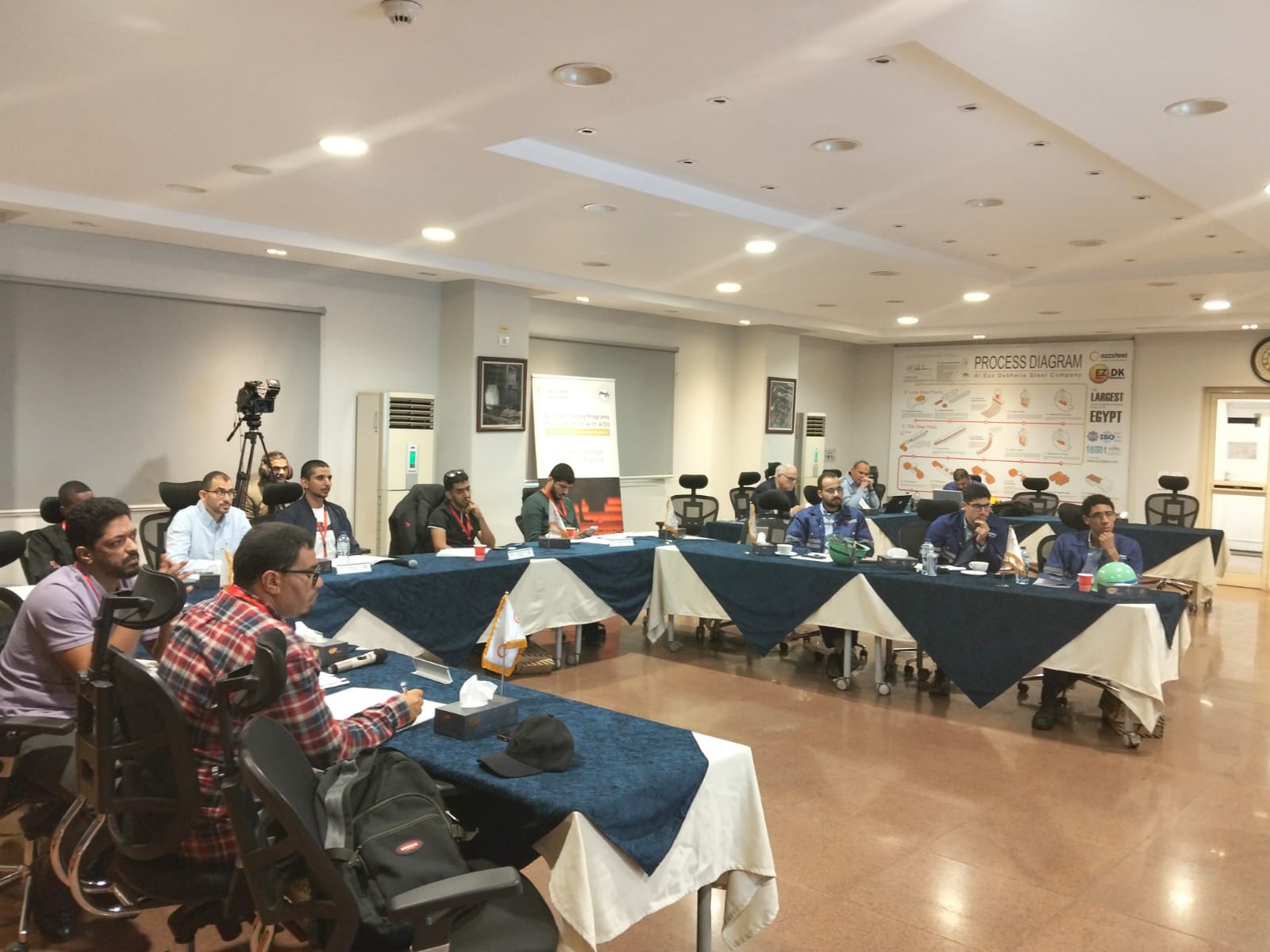
The regional specialized training program titled "Compressed Air Applications in the Iron and Steel Industry" has commenced. Organized by the Arab Iron and Steel Union in cooperation with Ezz Steel Group, it runs from November 15 to 26, 2026, at the Ezz Steel El-Dakhila premises in Alexandria.
.jpeg)
The program aims to develop the skills of 12 trainees, comprising maintenance engineers and technicians from 6 Arab countries, and enhance their technical knowledge of compressed air systems and electro-pneumatic systems, which are fundamental components of automated operation and control systems in modern steel plants.
The program covers the basics of compressed air, its production through compressors, and distribution methods within plants, in addition to the utility system, distribution networks, electro-pneumatic applications, and electrical control. The training combines technical lectures, practical application, and field visits, allowing participants to connect engineering concepts with operational reality.
Engineer Zakaria Ragab: Qualifying Human Resources is a Necessity to Keep Pace with Steel Industry Developments
.jpeg)
Engineer Zakaria Ragab, Director of Training at the Arab Iron and Steel Union, emphasized during his opening speech for the course that developing and qualifying human resources is a primary requirement to enhance the Arab iron and steel industry's ability to keep pace with rapid industrial developments and address the growing challenges in global markets.
Ragab explained that industrial and technological advancements, along with the increasing demand for equipment, technical accessories, and mechanical installations, necessitate that companies develop their operational capabilities and improve employee efficiency to ensure they meet the requirements of the next phase. He pointed out that the challenges posed by global changes to the steel industry require increased attention to human capital and preparedness to deal with new issues and files that companies face daily. He noted that trade restrictions and procedures imposed by European markets represent one of the most prominent of these challenges, requiring the preparation of specialized cadres capable of handling commercial investigation mechanisms and defense procedures for the industry against export restrictions.
He added that the Arab Iron and Steel Union has previously organized training programs on how to deal with these files and related procedures, stemming from the importance of raising awareness among employees of Arab companies about the nature of commercial changes and how to deal with them. He stressed that the Arab steel industry possesses a significant competitive advantage in the form of low carbon emission levels from production in a number of Arab companies compared to levels in other global market players. This can enhance the opportunities for the Arab industry to compete in the next phase, especially with the growing attention to environmental standards and low-carbon production requirements.
Ragab expressed his aspiration that the next ten years will witness a significant expansion in efforts to develop human resources and qualify technical and administrative cadres in Arab iron and steel companies, enabling them to keep pace with global developments and efficiently handle the daily challenges and rapid changes the industry is experiencing.
Dr. Taher Salah: Ezz Steel Has Developed an Integrated System for Workforce Qualification
.jpeg)
Dr. Eng. Taher Mohamed Salah, Projects Manager - Technical Affairs at Ezz Steel and a lecturer in the Mechatronics Department at the Faculty of Engineering and Materials Science at the German University in Cairo, affirmed that developing human resources is a key pillar in supporting the competitiveness of the iron and steel industry. He indicated that the group adopts an integrated system for education and training, starting with cooperation with universities and technical schools, and extending to specialized qualification programs and practical application within the factories.
Salah explained, during a welcoming speech at the opening of the training program, that the program aims to link theoretical knowledge with industrial applications through technical lectures, interactive training, and field visits. He noted that pneumatic systems represent between 10% and 15% of operating systems, depending on the nature of the applications, pointing out that the program allows participants to discuss the technical challenges they face and exchange experiences, with continued communication with them after the course ends to follow up on inquiries and problems related to their work sites.
Regarding workforce development, Salah explained that graduates of universities and technical schools need qualification that goes beyond academic study to align with the requirements of work within steel plants. This drives the group to enhance cooperation with educational institutions and benefit from their research expertise in identifying technological needs and required specializations.
He pointed to the cooperation with the Egyptian Japanese University for Science and Technology to qualify youth in the field of metal forming technology, and to integrate applied aspects related to operation and production into the educational process, thereby enhancing students' benefit from summer and practical training within the group's plants. Ezz Steel also works, in cooperation with the Italian government, to establish seven specialized technical schools aimed at preparing a new generation of technicians, in light of the increasing shortage of skilled technical labor and the emigration of some experienced individuals. The system accepts students after the preparatory stage and provides them with three years of applied education, with schools located in governorates where the group's plants are situated to link education with actual industrial needs.
Salah added that employee development continues after hiring through a six-month preparatory and introductory program. The technicians' program includes 17 courses in the fields of electricity, mechanics, hydraulics, and control, while the engineers' program includes 16 courses to introduce the group's plants and their operations, in addition to 25 specialized courses in quality, refractories, mechanics, and electricity.
The program ensures that engineers gain basic knowledge of disciplines related to their fields of work, enhancing their ability to understand operational problems and deal with multidisciplinary teams. Trainees also carry out applied projects over approximately three weeks to address actual plant needs or shortcomings, and then present their results to senior management to evaluate their capabilities and determine their appropriate career paths.
Salah reviewed the diversity of Ezz Steel's production base, which includes plants in Alexandria, Sadat City, Suez, and 10th of Ramadan, with an annual capacity of approximately 7 million tons of finished products, including about 4.6 million tons of long steel and between 2.2 and 2.4 million tons of flat steel. Products include rebar, wires, coils, sheets, and plates, serving applications in construction, automotive, pipes, home appliances, and others.
He affirmed that cooperation with the Arab Iron and Steel Union allows for the exchange of technical expertise among Arab companies, updating information, and enabling discussions on operational challenges, thereby expanding the impact of training beyond the group and contributing to the development of human and technical capabilities in the Arab steel industry.
Dr. Saad Kassem: Hydraulics provide great operational forces, and pneumatics are characterized by speed and safety
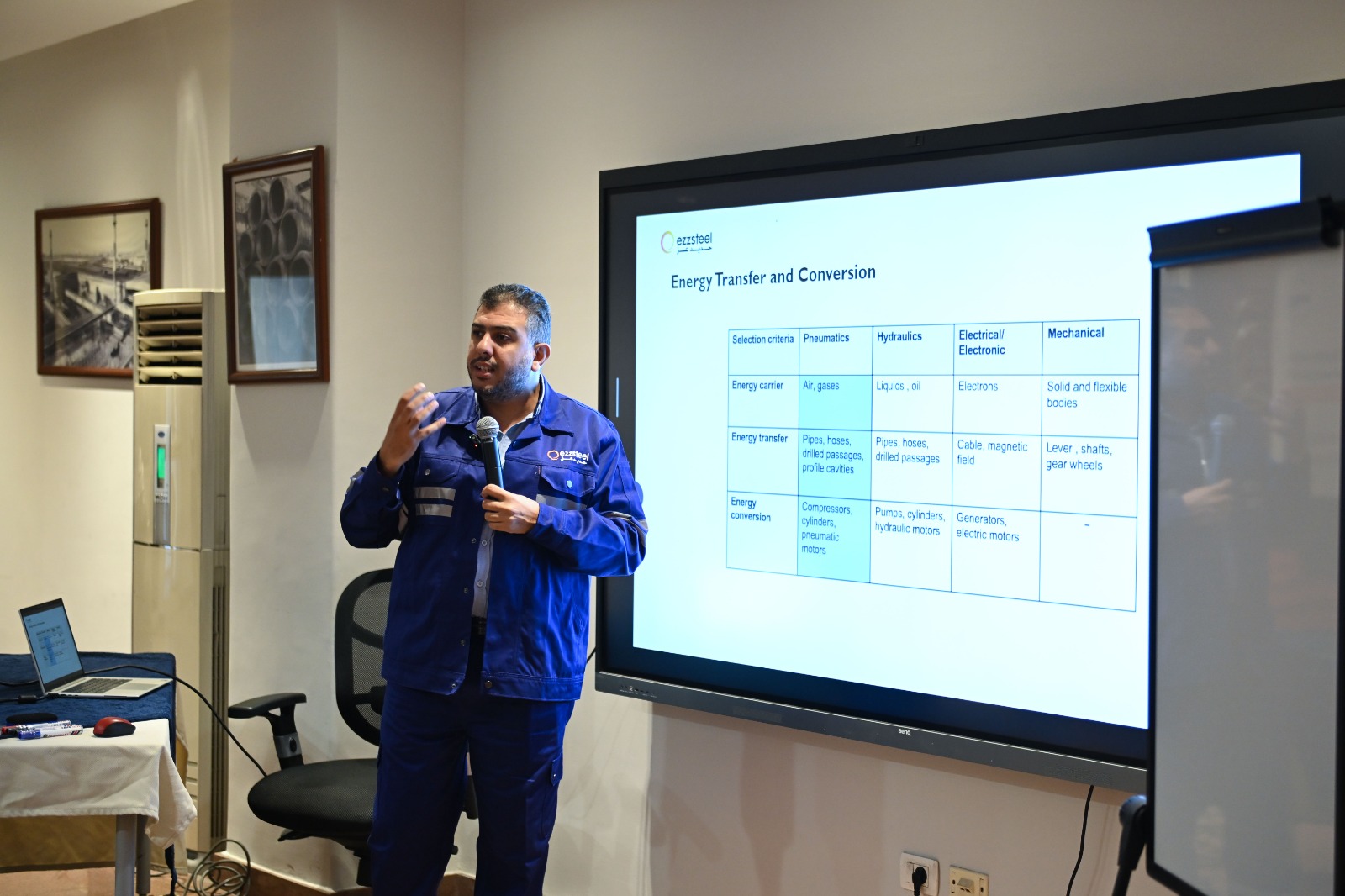
Dr. Saad Kassem, Professor in the Department of Mechanical Design and Production at the Faculty of Engineering, Cairo University, and one of the most prominent distinguished professors in the fields of hydraulic and mechanical systems, affirmed that the choice between hydraulic or pneumatic systems in industrial applications is linked to the nature of operation, requirements for force, speed, and safety levels, explaining that each system has characteristics that make it suitable for different applications.
Qassem explained that hydraulic systems are characterized by their ability to generate extremely large forces by using oil under high pressures, which makes them suitable for applications requiring the movement of heavy weights and equipment or the execution of precise mechanical movements according to specific operational requirements.
He pointed out that hydraulic systems allow control over the amplitude, frequency, and shape of movement, whether the movement is sinusoidal or trapezoidal, in line with the requirements of the technology used. These are capabilities that are difficult to achieve with traditional mechanical means. However, he noted that the high viscosity of the oil limits the response and operating speed compared to systems that use compressed air.
In contrast, he explained that pneumatic systems rely on compressed air and are characterized by high movement speed and the ability to perform sequential operating sequences in short periods. They are also suitable for applications that do not require large forces. He noted that typical operating pressures in pneumatic control applications reach about 8 bar, compared to much higher pressures in hydraulic systems, which can reach hundreds of bar in some equipment.
He added that one of the most prominent advantages of pneumatics is its suitability for locations requiring high safety levels, especially areas prone to fire or electrical sparks, as compressed air can be used to operate actuators and valves without the need for electrical components in the hazardous operating area.
Qassem presented an example of an application combining hydraulic and pneumatic systems in operating large valves within some industrial facilities. The hydraulic system provides the necessary force to move the valves and control the oil, while compressed air is used to operate the actuators that move the hydraulic system's pump, enabling rapid shutdown operations in case of fire or the appearance of danger indicators in the area.
Qassem stressed the importance of distinguishing between pneumatic systems used for moving mechanical parts and industrial process control systems that deal with gases and liquids. He clarified that the program's topic focuses on using compressed air as a means to provide mechanical movement and control equipment parts, not on controlling gas flows within production processes.
He touched upon the difference in the design of the supply systems, explaining that the compressed air source is usually centralized, where compressors feed a large tank to store air under pressure, and then a network of pipelines distributes it to various parts of the factory. Hydraulic systems, on the other hand, often rely on dedicated pump and valve units for equipment or operating groups, and the pumps operate continuously according to the system's needs.
In the context of his discussion about cooperation with the Ezz Steel Group, Qassem praised the company's developments in hydraulics and pneumatics, pointing to its advanced technical capabilities in testing and repairing servo systems and proportional valves. This is achieved through flexible testing platforms that can handle components from different companies and manufacturers, rather than relying on dedicated testing equipment for each company individually.
Qassem affirmed that these capabilities represent a significant addition to the company's maintenance expertise, contribute to reducing operating costs, and enhance reliance on local technical capabilities. He expressed his appreciation for the cooperation in preparing the training program and his hope that it will provide participants with an opportunity to benefit from scientific and practical expertise, ask questions, and discuss practical challenges.
Engineer Mohamed Youssef: The selection of compressed air systems is linked to the nature of the application.
Engineer Mohamed Youssef, Mechanical Maintenance Manager at the Wire Rolling Department of the Long Steel Sector at Ezz Steel - El-Dakhila Alexandria, confirmed that compressed air systems are an important solution in industrial applications, especially in the iron and steel industry, due to the advantages they offer in terms of ease of operation, transportation, storage, safety, and response speed. He stressed the importance of selecting the appropriate system according to the nature of the application and operating requirements.
Youssef indicated that the practical part includes using a specialized training platform produced by Festo, which allows participants to install pneumatic circuits, simulate their operation, learn how to connect their components, and identify and troubleshoot faults. The program also includes visits to the central workshop and the long and flat steel plants to learn about the uses of compressed air in different production stages.
He explained that the natural availability of air is a fundamental advantage of pneumatic systems, in addition to clean operation, as the air is discharged into the surrounding environment after use, unlike hydraulic systems that rely on oils and the associated processes of replacing and treating used oils. He affirmed that safety is an important advantage of compressed air in steel industry environments characterized by high temperatures, as temperatures in some rolling processes reach about 1160 degrees Celsius, which makes the use of oil-based hydraulic systems near heat sources require special precautions to reduce ignition risks.
He added that the ability to transport compressed air over long distances and distribute it through central networks allows for the utilization of a group of compressors to serve multiple factories, instead of allocating independent compressors for each factory, which reduces capital investments and operational and maintenance burdens. Compressed air tanks also allow for storing energy and using it when needed, noting that pneumatic systems are relatively less affected by thermal changes compared to hydraulic systems whose oil viscosity changes with temperature variations, which can affect the performance of control valves and the response speed of equipment. They are also characterized by simple design and installation, ease of maintenance, and fast response in applications requiring repetitive movements.
He added that the compressibility of air affects the accuracy of motion positioning, and therefore it is not the most suitable option for applications requiring very high levels of control accuracy, noting that air discharge can result in operational noise, which can be reduced using silencers, which in turn require monitoring to avoid blockage by contaminants. Energy consumption efficiency is another challenge, given the energy required for air compression and the heat generated, which necessitates cooling systems, in addition to increased operational requirements when higher pressures are needed.
Youssef stressed the necessity of evaluating the investment and operational costs alongside the technical characteristics when comparing pneumatic and hydraulic systems, affirming that each system has its advantages and limitations, and that achieving the best operational efficiency depends on choosing the most suitable solution for the nature of the equipment and the requirements of the industrial process.
Engineer Mohamed Gaber reviews maintenance challenges in the steel industry
-1.jpeg)
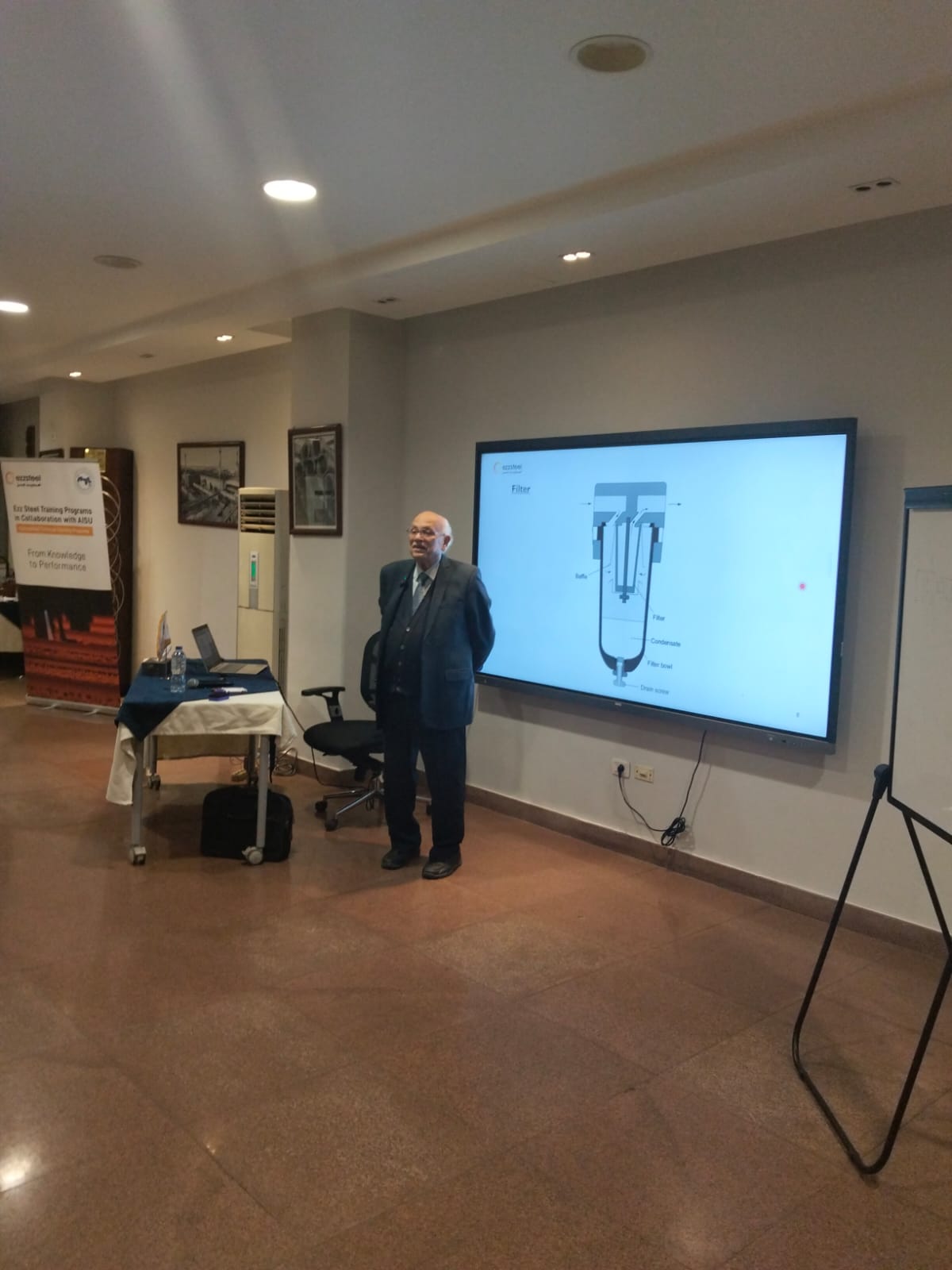
Engineer Mohamed Gaber, Facilities Maintenance Manager at Ezz Dekheila Steel Company Alexandria, reviewed the technical principles of compressed air systems, the types of compressors used in the industry, and the selection mechanisms according to operational requirements, in addition to their main components and maintenance and reliability considerations. He explained that compressed air is one of the essential operational elements in steel and direct reduction plants, as many pneumatic equipment and systems rely on it. Its system consists of a pressure production station and a distribution network, including compressors, air tanks, drying units, and FRL (Filter, Regulator, Lubricator) units, in addition to pipes and valves.
He emphasized the importance of preparing the air before use by adjusting pressure and removing moisture, dust, and foreign materials to avoid corrosion and damage to internal components and pneumatic equipment.
Types of Compressors and Operating Principles
He classified compressors into two main types: dynamic compressors, including centrifugal and axial compressors, and positive displacement compressors, including reciprocating and screw compressors, noting that dynamic compressors rely on increasing the kinetic energy of the air and then converting it into pressure, while positive displacement compressors work by trapping a quantity of gas in a closed space and gradually reducing its volume to increase pressure.
Jaber discussed the difference between oil-free and oil-injected screw compressors, explaining that the former are suitable for applications requiring clean air, while oil in the latter contributes to cooling and lubrication and allows for higher compression ratios. He stressed that compressor selection depends not only on pressure but also on flow rate, application nature, and operating conditions. Reciprocating compressors are suitable for high pressures and relatively limited flow rates, screw compressors for medium pressure and flow requirements, and centrifugal compressors for applications needing large flows at low or medium pressures.
Regarding maintenance, he explained that reciprocating compressors are characterized by high noise and vibration levels and require periodic maintenance and overhauls to inspect components and replace worn parts, while centrifugal compressors are distinguished by quiet operation and relatively low internal maintenance needs.
He warned of the dangers of dust accumulation or the entry of fine particles into centrifugal compressors, which can cause impeller imbalance and serious failures. He emphasized the importance of monitoring air filters, vibration readings, and oil change schedules, noting that El-Ezz Steel has started a project to replace some of its existing compressors with centrifugal ones, involving the replacement of approximately 50% of the compressors, as presented, to improve energy efficiency, enhance reliability, and reduce operating and maintenance costs.
He reviewed five main compressor components, including the drive system, compression element, capacity control system, cooling system, and lubrication system, explaining that drive sources can be electric motors, diesel engines, or turbines, depending on the site's nature and operating requirements.
He also addressed the importance of emergency systems, citing the possibility of combining electric motors and diesel engines to ensure the continuous operation of cooling water pumps in case of power outages and to protect vital equipment from cooling interruptions.
Jaber concluded by emphasizing that the efficiency of the compressed air system is linked to the proper selection of the compressor based on the required pressure and flow rates, and attention to filtration, cooling, lubrication, and vibration monitoring. He noted that the program includes field visits to compressor sites at El-Ezz Steel's El-Dekheila plant to identify the actual applications of the equipment.
Engineer Ahmed Morshedy: Good network design and periodic maintenance improve operational efficiency
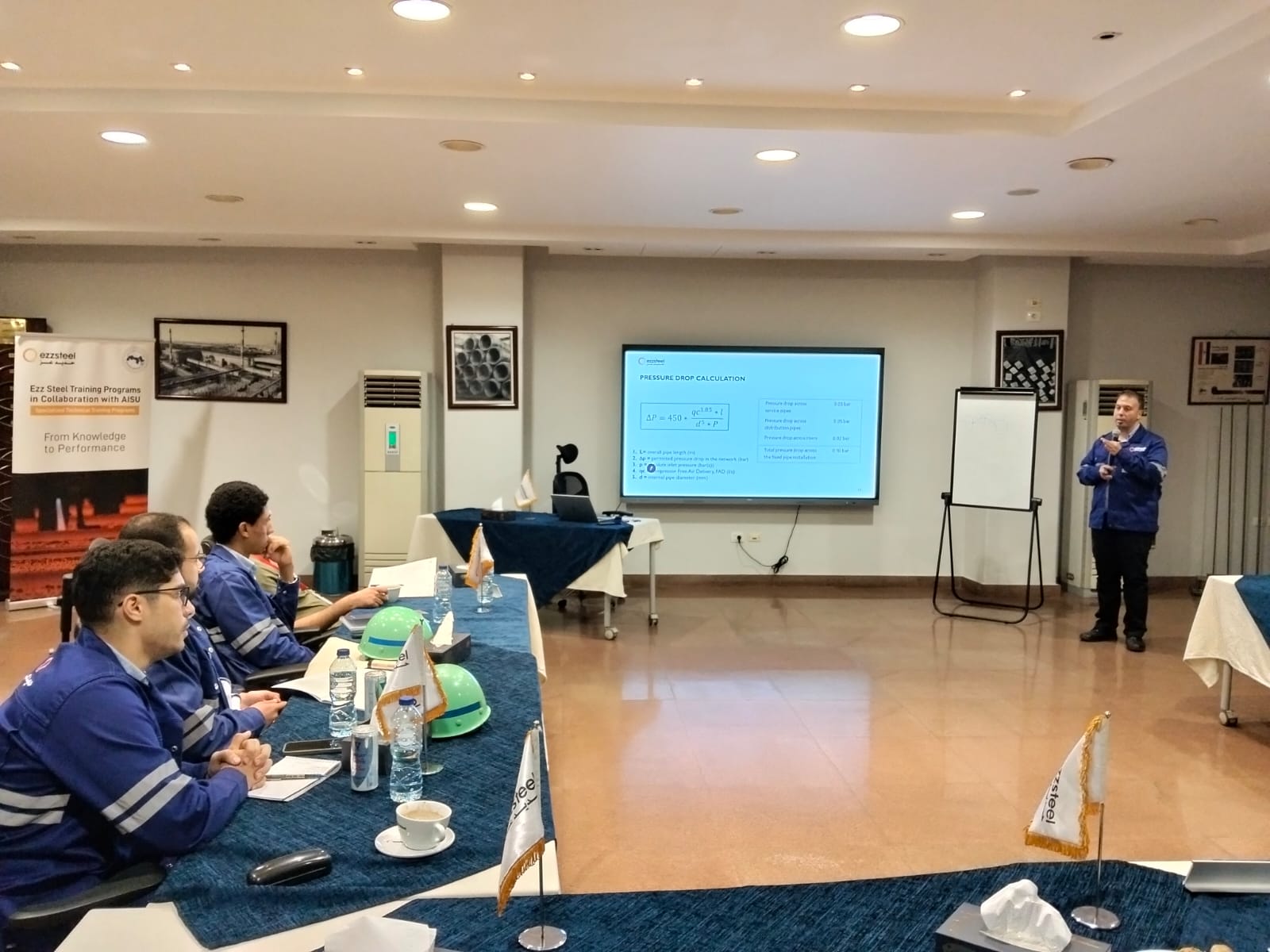
Engineer Ahmed Morshedy, Gas Operations Manager at the Utilities Operations Department at El-Ezz Steel's El-Dekheila plant in Alexandria, affirmed the importance of proper design for compressed air networks and periodic review of their components. He pointed out that a number of pneumatic system problems in factories are not solely related to compressors but may result from deficiencies in the design of air receivers, distribution networks, or modifications made during operation.
Morshedy explained that air receiver tanks are one of the important components in the system, as they help stabilize pressure at consumption points and reduce drops during air transmission through the network. He highlighted the importance of distributing secondary receiver tanks near equipment clusters and usage points, placing them after drying units in accordance with the needs and operating specifications of each user. He also stressed the need to review tank capacities from time to time, especially in older factories that have undergone expansions or increases in air consumption rates.
He noted that moisture inside air receivers is one of the most prominent sources of corrosion, necessitating attention to periodic inspection, measurement of tank wall thickness, and coating of internal surfaces with suitable anti-corrosion materials, in addition to ensuring the efficiency of water drains and preventing their blockage, which prevents moisture accumulation inside the tank.
Regarding distribution networks, Morshedy explained that poor design of pipe routes or poorly planned modifications can lead to pressure variations in different parts of the factory, even with the availability of compressed air at the supply source.
He recommended designing the networks in closed loops as much as possible, and connecting distribution paths in a way that ensures air reaches various consumption areas more balancedly, emphasizing the importance of implementing branches from the top of the main air lines, not from below, due to the possibility of moisture in the compressed air that may accumulate in the lower parts of the pipes, affecting air quality and operational efficiency.
He added that pressure drop calculations must be an essential part of any network design or modification, taking into account pipe length, diameters, flow rates, connections, and branches. He explained that increasing the path length or an unsuitable pipe diameter for the consumption rate may lead to a pressure drop at the equipment, which necessitates choosing appropriate diameters to meet flow and pressure requirements while considering implementation costs.
Mrshidi reviewed the importance of using simulation software to study compressed air networks and identify weak points and areas of pressure drop before implementing modifications, explaining that these programs allow inputting compressor data, pipe diameters, lengths, and flow rates, then calculating the expected pressure at each consumption point and identifying locations that need improvement.
Mrshidi concluded by emphasizing that studying networks before making modifications is a fundamental step to avoid operational problems, achieve optimal utilization of the compressed air system, and reduce pressure loss and maintenance costs.