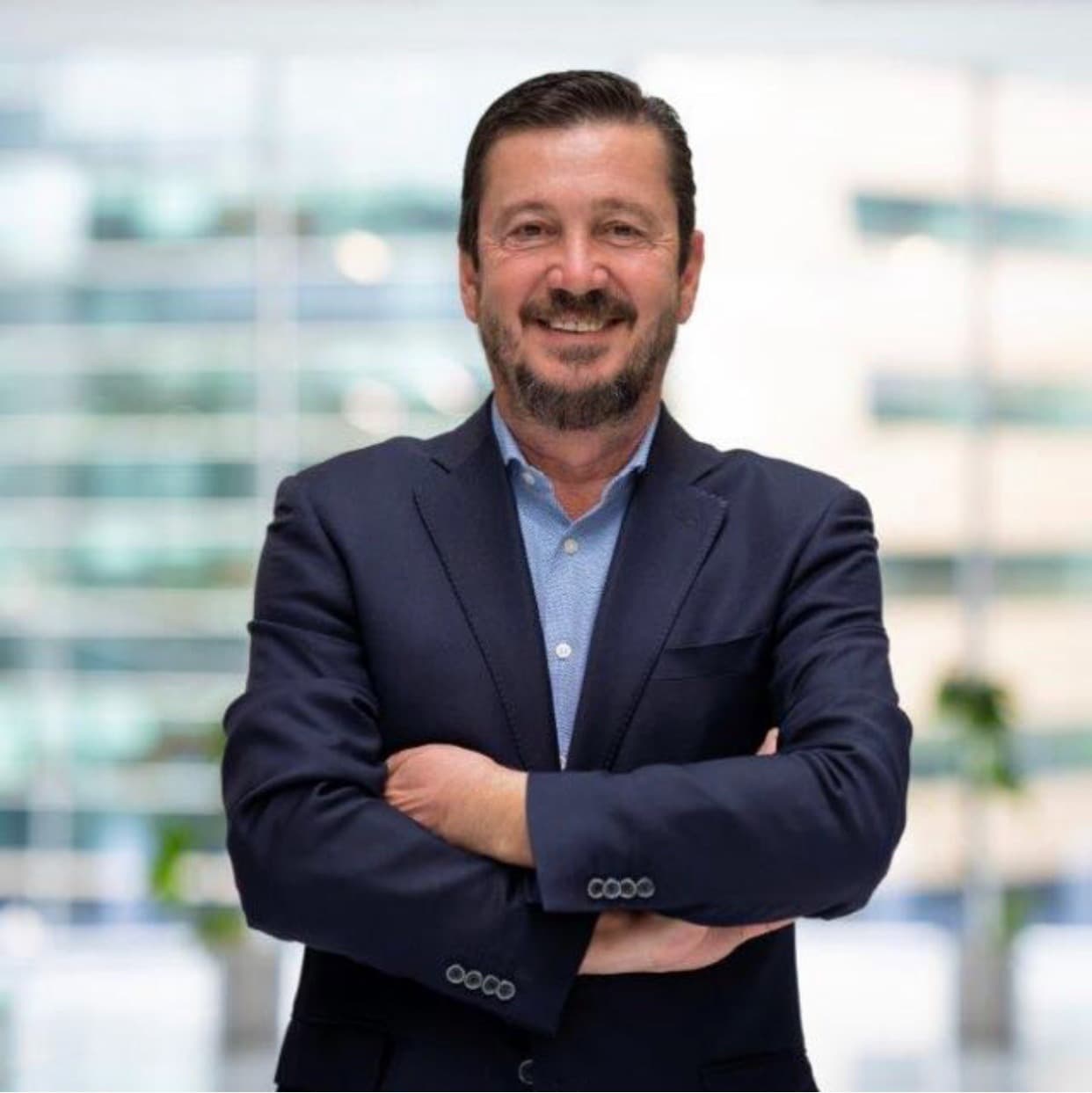
World Steel Association Chairman: Global Steel Trade Pays the Price for Protectionism and Excess Capacity
World Steel Association Chairman: The Future of Steel is Governed by Energy, Technology, and Trade
World Steel Association Chairman: Clean Energy Will Determine the Map of Future Steel Investments
World Steel Association Chairman: Arab Steel Faces a Historic Opportunity in Low Emissions
World Steel Association Chairman: The World is Moving Towards More Regional and Less Open Steel Markets
World Steel Association Chairman: China Will Continue to Lead the Steel Industry and Global Trade
Interview_ Amani Ibrahim
Arab Iron and Steel Union Media Center
From his position at the helm of the World Steel Association, and with decades of experience leading the industry, the Association's Chairman offers a direct insight into the transformations reshaping the global steel market, China's role in the coming years, and the future of trade amidst rising protectionism and the decline of multilateral trade rules, alongside the future of decarbonization, hydrogen, and the Carbon Border Adjustment Mechanism (CBAM).
In a special interview, the World Steel Association Chairman places the Arab steel industry at the heart of these transformations, addressing the region's opportunities in low-emission steel production, the role of natural gas and Direct Reduced Iron (DRI) in the transition to hydrogen, and the importance of clean energy and competitiveness in determining new investment locations. He also presents a clear vision of what the Arab steel industry needs in the next five years to strengthen its position in global steel trade.
At a time when the map of the global steel industry is being redrawn, the Chairman of the World Steel Association shares his vision of what is changing, what will remain, and where the Arab steel industry can position itself in the new equation.
A Global Industry at a Turning Point
• The global steel industry appears to be entering a phase of profound structural change. From your perspective as Chairman of the World Steel Association and a long-standing industry leader, how would you describe the current phase the global steel industry is going through? Are we witnessing a temporary market cycle, or a fundamental restructuring of the industry?
Due to excess production capacity primarily built by China since 2000, global steel trade has become increasingly regional over the last seven to eight years, pushing trade protectionism to the forefront. Simultaneously, the steel sector is undergoing a profound structural transformation driven by the prioritization of emission reduction.
Global Steel Demand Outlook
• The World Steel Association forecasts relatively modest growth in global steel demand in 2026, followed by stronger growth in 2027. What are the key factors that will determine whether this recovery turns into a sustainable growth cycle? And which regions do you expect to become the main drivers of global steel demand in the coming years?
The global economy has been experiencing a slowdown over the past four years. This is mainly due to global geopolitical uncertainty, ongoing conflicts, inflation risks stemming from rising energy costs, and the economic slowdown in China. Recent decisions by both the US Federal Reserve and the European Central Bank underscore this trend, casting a shadow over projected growth figures for 2027.
In an environment of increasing regionalization and uncertainty, sustained and stable growth is highly unlikely.
In terms of demand, India stands out as a key driver, along with Africa and the Middle East, provided political crises are resolved, as all are expected to be promising regions.
China and the Future of Global Market Balance
• China remains the most influential factor in the global steel market, even as its domestic economy and steel demand undergo significant changes. How do you foresee China's role in the global steel industry evolving over the next five years? Could changes in Chinese domestic demand contribute to a better balance in international steel markets?
China will continue to lead the global steel industry and steel trade over the next five years, just as it does today. While it is expected to seek balance within its borders, China is likely to continue expanding its influence and investments in various geographical regions.
New investments that began in Southeast Asia are expected to extend in the future to regions such as the Middle East and Africa.

Global Excess Capacity and Market Competition
• Excess production capacity has become one of the most pressing strategic challenges facing the steel industry. From your perspective, what practical mechanisms can help restore a better balance between global production capacity and demand, while maintaining healthy competition and encouraging long-term investment?
Following the US Section 232 measures, global excess production capacity was used as a pretext for excessive protectionism. This protectionism spread like a chain reaction, evolving into a global trend that reached almost all countries, whether they had significant production capacity or not, starting with major import markets like the European Union and the United Kingdom.
We believe that a key factor behind the spread of this trend was the ineffectiveness of the World Trade Organization.
Regulatory mechanisms, such as a strong WTO that ensures all parties compete fairly according to transparent rules, would provide a solution to the problem of global excess production capacity and its indirect consequences.
Unless this fair and competitive environment is established, it becomes impossible to make optimistic long-term forecasts.
Trade Measures and the Fragmentation of Global Steel Markets
• The global steel industry is witnessing increasing use of tariffs, safeguard measures, anti-dumping measures, and other forms of trade protection. To what extent are these measures reshaping global steel trade and investment flows? Do you believe the industry needs a more coordinated international framework to address structural imbalances in trade?
We fully believe in the need for a coordinated framework based on mutual consultation. The spread of protectionism as a global trend has led to the localization of production. This expansion of localized production translates into new investments in many countries and regions.
Consequently, unfair protectionism—originally arising from excess production capacity—has become a mechanism that actually feeds global excess production capacity by stimulating new regional investments.
It is clear that we need an environment based on coordination and communication to break this cycle and restore lost balances.
Resolving the political crises we face today requires a fair and free trade environment.
Turkey's Position in the Global Steel Industry
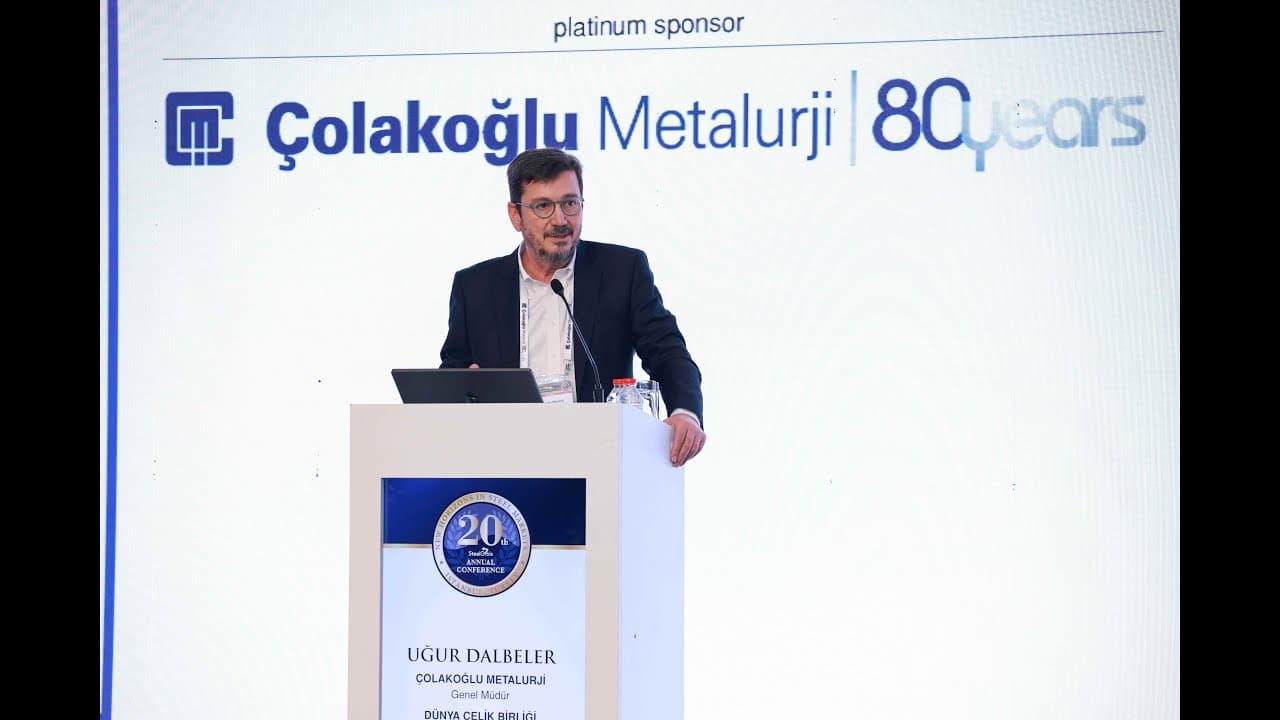
• As President of the World Steel Association and CEO of Çolakoğlu Metalurji at the same time, you have a unique perspective on the Turkish steel industry. How do you assess Turkey's current position on the global steel industry map? What competitive advantages can enable Turkish steel producers to maintain their global competitiveness amid rising energy costs, tightening environmental requirements, and changing trade patterns?
Having witnessed the development of the Turkish steel sector over the past 40 years, I see a very strong infrastructure, remarkably resilient management, advanced technological capabilities, and a firm sense of confidence.
Geographically, Turkey is located at an equidistant point between East and West. Its proximity to the world's two largest import markets, compared to producers in the East, gives the Turkish steel sector a clear advantage.
Furthermore, operating in a dynamic environment due to Turkey's geographical location makes the sector more resilient to crises.
Moreover, the pandemic and ongoing shipping crises have once again underscored Turkey's pivotal importance regarding the security of supply chains.
Thanks to the diversity of companies operating in the sector, their suitable size, and the strength of their capital structure, the Turkish steel sector has a great capacity to withstand difficult periods.
Another key advantage is that its emissions footprint is significantly lower on the international stage compared to its competitors.
Decarbonization: Ambition versus Economic Reality
• Decarbonization has become a strategic necessity for the steel industry, but it also requires massive capital investments and can lead to a significant increase in production costs. How can steel producers reconcile ambitious emission reduction targets with the need to maintain economic competitiveness, especially in markets where customers may not yet be willing or able to pay a price premium for low-carbon steel?
Nearly half of the demand for low-emission steel comes from the European Union, with the automotive sector accounting for a significant portion of this demand. This demand is estimated to represent less than 10% of global steel production.
From this perspective, it seems unlikely that demand confined to specific sectors and products within a particular region will dictate the direction of global steel production.
Furthermore, the EU is significantly restricting its imports through a series of measures, continuously reducing the share of this demand met from outside the EU.
Steel producers exporting to or targeting exports to the EU must reduce their emissions without increasing overall production costs to maintain their competitiveness in other markets.
This dynamic naturally gives a clear advantage to companies whose infrastructure is already aligned with this transformation.
Is Hydrogen the Ultimate Solution for Green Steel?
• Green hydrogen is widely seen as one of the most promising pathways toward near-zero emission steel production, alongside electric arc furnaces and carbon capture technologies. Do you see hydrogen becoming the primary long-term route for decarbonizing the steel industry, or will the future depend on a mix of technologies tailored to the energy resources and industrial conditions of each region?
In terms of chemical reactions and technical requirements, direct reduction using hydrogen is not an unknown technology that needs to be discovered.
However, when considering the stages of hydrogen production through emission-free methods, its transportation and storage, and making it applicable in facilities operating at massive consumption rates, it seems unlikely to become the primary method for low-emission steel production.
On the other hand, using hydrogen to replace carbon-based fuels in certain production stages could be viable to increase the efficiency of existing methods.
Looking ahead, we expect tangible and realistic progress to come from initiatives that combine the energy resources and raw materials specific to each region, with a focus on low-emission steel production.
Carbon Border Adjustment Mechanism (CBAM) and the Future of Carbon-Based Trade
• The EU's Carbon Border Adjustment Mechanism (CBAM) represents a significant development at the intersection of climate policy and international trade. How do you assess its potential impact on steel producers outside Europe? Could CBAM eventually evolve into a broader international model for integrating carbon costs into global steel trade?
The Carbon Border Adjustment Mechanism (CBAM), which affects countries and companies exporting to the EU, presents itself as a new form of protectionism by the EU.
CBAM only makes sense as long as the EU continues to import steel. In other words, as long as EU imports continue and remain at significant levels, CBAM will continue to affect exporters to the region.
However, the EU has sent a key signal about the future by halving import quotas.
It has also sent another message by not applying negative discrimination against higher-emitting countries and not considering carbon leakage when allocating import quotas.
In a sense, it has become clear that the EU's primary concern is not emissions leakage, but rather the creation of a mechanism to protect its domestic producers.
For example, India ensures that it exports up to its allocated quota, even if it takes no action to reduce its emissions.
In light of this perspective, it is unlikely that mechanisms like CBAM will spread globally based on environmental considerations; rather, they may be limited to being imitated by countries like the UK as a new tool for trade protectionism.
The Arab Steel Industry and the Opportunity for Low-Carbon Steel
• Many Arab countries possess significant advantages in renewable energy, natural gas, iron ore resources, and strategic geographical locations close to major markets. How do you assess the Arab steel industry's potential to become a competitive hub for low-carbon steel production? What should policymakers and steel producers in the region prioritize today to capitalize on this opportunity?
Arab steel producers have recently restructured their operations to leverage the advantages offered by their energy resources, adopting production methods suited to their specific conditions for manufacturing low-emission steel.
While the production infrastructure and resources possessed by the Arab steel sector are well-suited to supply markets with low-emission steel, a production model targeting exports to only a specific region cannot be sustainable without sufficient demand for low-emission steel.
Generating high and concentrated domestic demand for low-emission steel within the Arab world would lead to the transformation of the local sector, while simultaneously providing a strong competitive advantage in potential export markets.

Direct Reduced Iron (DRI) as a Bridge to a Hydrogen-Based Steel Industry
• The Arab region possesses extensive experience in Direct Reduced Iron (DRI) production, with a number of countries continuing to invest in expanding and modernizing their DRI production capacities. Do you see natural gas-based DRI production as a viable bridge towards a hydrogen-based steel industry? And what role can the Arab region play in the global transition towards low-carbon DRI and steel production?
Natural gas-based DRI production emerges as a highly compatible approach with hydrogen-based direct reduction technologies.
The Arab steel sector has already succeeded in establishing a significant global position in natural gas-based DRI production.
It can be clearly stated that the region is well-positioned to lead the transition towards a hydrogen-based steel industry.
Energy as the New Determinant of Steel Industry Competitiveness
• Energy costs have become one of the most significant determinants of competitiveness in the steel industry, especially as producers invest in low-carbon technologies. Do you expect access to reliable and competitively priced clean energy to become the decisive factor in determining the location of new steel industry investments over the next decade?
Low-emission steel production is not just about raw materials, equipment, and technical infrastructure; it also requires a high level of efficiency, which is equally important.
Manufacturing in regions where key inputs, such as energy and raw materials, can be accessed at competitive costs naturally leads to a tremendous increase in efficiency.
From this perspective, in geographical areas where raw material resources are limited, investing in regions with low-cost and clean energy sources may be the preferred option.
In the coming period, investments are expected—and indeed should—shift towards regions with access to affordable and clean energy.
Financing the Steel Industry's Transformation
• The transition to a low-carbon steel industry will require unprecedented levels of investment, at a time when the industry also faces uncertainty in energy markets, trade policies, and global demand. What role should governments, steel producers, and financial institutions play in creating the necessary investment environment for modernizing existing facilities and developing the next generation of low-carbon steel plants?
The steel sector is one of the most capital-intensive industries and relies heavily on financing due to high investment costs.
Steel plants continue to invest to maintain their modernity and efficiency, and the return on these ongoing investments—whether large or small—is generally not realized in the short term.
From this perspective, the financing required for a comprehensive transformation must be substantial in scale and long-term in nature.
Similarly, guarantees must be provided to protect against unforeseen circumstances, such as global energy crises and political disruptions.
In short, if financing is provided in sufficient quantities, over the long term, and protected against crises, the steel sector will not hesitate to make the necessary investments.
Given the current situation, a system is in operation where funds collected from steel producers are channeled back into projects aimed at transforming steel production.
In its design, this is a restrictive and coercive model. Instead, the necessary financing for the steel sector's transformation can be provided through a more pluralistic approach involving governments and other stakeholders. This burden cannot fall solely on the steel industry.
A Message to the Arab Steel Industry
• Finally, as the President of the World Steel Association, what is your message to steel producers and policymakers in the Arab world at this critical juncture of the industry's transformation? And what are the three strategic priorities that the Arab steel industry should place at the forefront of its agenda over the next five years to enhance its position in the global steel industry?
Adopting a global approach is the most effective way to solve any issue or challenge facing the steel industry. For this reason, cooperation among various industry sectors has become more important than ever.
Thanks to its geographical location and abundant natural resources, the Arab steel industry is destined to play a fundamental role in global steel trade.