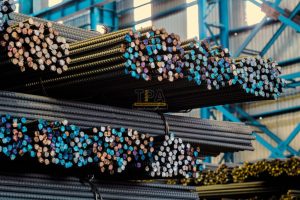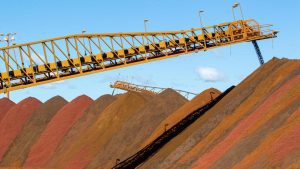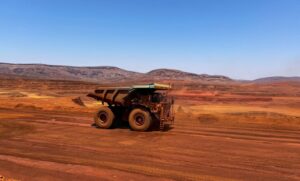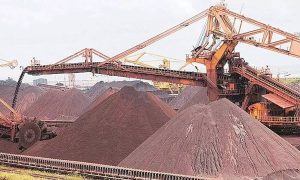


The world’s largest steel miners face a difficult start to 2025, with production impacted by extreme weather conditions, while China, the largest buyer of the ore, prepares for a trade war.
BHP Group, Rio Tinto Group, and Vale SA all announced lower quarterly shipments this week compared to last year, due to disruptions caused by cyclones in Australia’s Pilbara region and heavy rains in northern Brazil. Rio Tinto was the hardest hit, with exports falling 9% to their lowest level in six years.
This decline puts companies under pressure to make up for supply shortages at a time when escalating trade tensions with Washington could severely impact the Chinese economy. The question now is: Will Beijing provide a sufficient stimulus package to support demand for steel and its key components, especially iron?
In this context, David Cachot, director of iron ore research at Wood Mackenzie, said: “We may see a recovery phase during which these companies ramp up production to compensate for the losses,” adding: “Market participants are awaiting Beijing’s moves to further stimulate its economy, which is an additional burden the country does not need at this time.”
Iron ore market: More supply, lower prices
Before supply disruptions worsened and trade tensions intensified, the iron ore market was already suffering from a supply glut, while demand began to decline in the maturing Chinese economy. Despite this, crude futures prices in Singapore stabilized at an average of $103 per ton during the first quarter, roughly the same level as the previous quarter.
You may also be interested in: Mining giants in trouble after China’s demand for iron ore slumps
However, earlier this month, iron ore prices fell sharply, falling below $95 per ton, after the Trump administration announced punitive tariffs on Chinese imports. Beijing responded with similar measures, including steep tariffs on American goods.
“China: A source of concern for manufacturers”
The changes imposed on Beijing cast doubt on its ability to achieve its economic goals, as officials seek to expand domestic consumption to offset declining exports. This could boost demand for steel used in the manufacture of cars, home appliances, and heavy machinery.
Iron ore traders are counting on Beijing returning to its traditional approach to combating the slowdown by boosting spending on infrastructure projects that consume huge amounts of steel, thereby supporting demand for iron ore.
However, BHP Chief Executive Mike Henry warned on Thursday that slowing global growth and the increasing fragmentation of the global trading system could negatively impact the company’s performance.
“China’s ability to transition to a consumer-led economy, along with trade flows adapting to the new environment, will be crucial to maintaining a stable global economic outlook,” Henry concluded.