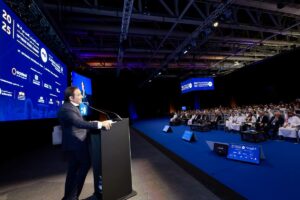


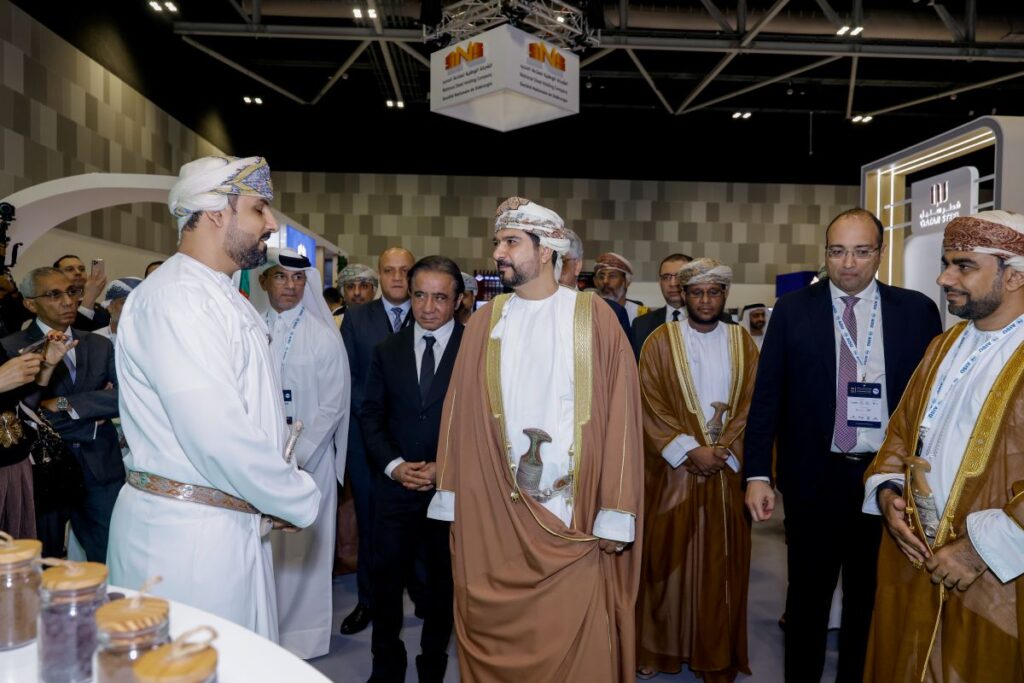
The Arab Steel Summit 2025 was inaugurated under the patronage of H.E. Qais bin Mohammed Al Yousef, Minister of Commerce, Industry and Investment Promotion of Oman, with the participation of over 600 officials, investors, experts, and representatives of regional and international iron and steel companies. The event, organized by the Arab Iron and Steel Union, took place at the Oman Convention and Exhibition Centre.
H.E. Al Yousef stated that the iron and steel industry is no longer a traditional sector, but a strategic industry whose strength is now measured by its ability to reduce carbon emissions, embrace circular economy principles, and build resilient and secure supply chains.
“In Oman, we recognize that the future belongs to nations capable of combining economic competitiveness with environmental sustainability. Therefore, we welcome investments and partnerships that align with this vision,” he said.
He emphasized that the summit serves as a leading platform for exchanging expertise and discussing best practices in green steel production technologies, as well as addressing new sensitivities in global trade, such as carbon border adjustment mechanisms — efforts that strengthen Arab integration and help formulate a unified stance to safeguard regional interests and ensure the industry’s sustainability.
H.E. Dr. Saleh bin Said Masan, Undersecretary of the Ministry of Commerce, Industry and Investment Promotion for Commerce and Industry, noted that Oman’s hosting of the summit comes at a time when the world is witnessing profound transformations in supply chains, energy, and technology. These shifts, he said, require Arab countries to enhance industrial integration and adopt new strategies to keep pace with global changes.
Eng. Khalid bin Salim Al Qasabi, Director General of Industry at the Ministry, explained that Oman’s iron and steel sector is among the most promising industrial sectors, contributing about 2% of GDP, attracting billions of dollars in investment, and employing hundreds of qualified national professionals. He added that iron and steel exports account for roughly 40% of Oman’s total industrial exports.
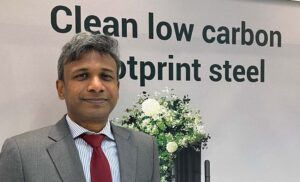
Saleh Al Musalhi, Regional President for the Middle East and North Africa of Green Steel Projects at Vale, said the hosting of the summit and exhibition reflects Vale’s continued role in supporting industrial transformation in the region through the development of an integrated ecosystem for low-emission iron production, helping to advance green steel manufacturing.
In an exclusive statement to Oman Newspaper, Eng. Ahmed Ezz, Chairman of the Arab Iron and Steel Union, described Oman as a true treasure endowed with vast developmental potential in tourism, industry, and services, making it one of the most promising destinations for industrial investment in the region.
He praised Omani human capital, noting their genuine enthusiasm for production and industrial work, and emphasized that such a positive spirit is a key ingredient for the success of any development project.
Ezz further noted that Oman possesses significant natural resources, particularly natural gas, which forms a vital foundation for heavy and medium industries. He pointed out that this resource has already been utilized in major projects, such as Vale’s iron ore pelletizing plant, which has become a key hub for feeding the Arab steel industry across the Gulf and Egypt. He highlighted that Vale is now one of the most important suppliers of raw materials to the Arab steel industry.
He also explained that Oman’s industrial investments go beyond meeting domestic demand, extending to export markets, supported by the country’s investment in deep-water ports—among the deepest in the Arab world, granting Oman a strategic advantage in industry, export, and international trade.
Ezz added that Oman’s population of around five million provides a sufficient base to support industries that rely not on labor intensity, but on efficiency, expertise, and advanced technology, making Oman’s environment ideal for high-tech industries.
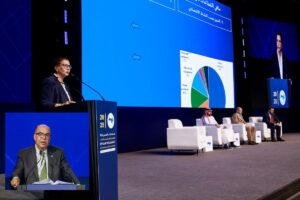
The opening session gathered top CEOs from the Arab and global steel sectors in an open discussion titled “Industry Leaders’ Vision for the Future of Arab Steel.” The panel addressed key challenges facing the sector amid geopolitical and economic shifts, the transition toward low-emission production, and the importance of investing in modern technologies to improve efficiency and competitiveness.
Speakers underscored the need for coordinated Arab efforts to integrate supply chains and stabilize markets, highlighting the crucial role of governments in developing industrial and legislative policies that promote innovation and long-term investment. They also emphasized the importance of developing national talent and attracting young professionals to ensure the sustainable growth and advancement of the industry.
The summit continues through Thursday, with sessions covering topics such as the future of direct reduction and green hydrogen technologies, raw material and supply chain security amid geopolitical challenges, protectionist policies in global markets, and the development of the circular economy and industrial innovation.
The accompanying International Exhibition, inaugurated during the event, serves as a specialized professional platform showcasing the latest technologies and industrial solutions in the iron and steel field, with participation from local and international companies.
This marks the first time Oman hosts this leading regional industrial event, reflecting growing global confidence in Oman’s investment climate, its advanced industrial infrastructure, and its emerging role as a regional hub for heavy and manufacturing industries. The hosting comes at a time when the global iron and steel industry is undergoing rapid structural transformations, driven by the shift toward low-emission production, the rising demand for sustainable raw materials, and ongoing market, tariff, and geopolitical challenges.