

Experts and decision-makers at the 18th Arab Steel Summit, held in the Sultanate of Oman on October 7–8, confirmed that infrastructure and housing investments are the primary engines of steel demand in Arab markets in the near term. They emphasized the importance of maintaining predictable and stable project pipelines to ensure the sustainability of local steel industries.
The experts highlighted the need to stimulate private housing and commercial projects by strengthening mortgage markets, providing land through planning and regulatory reforms, accelerating approval processes, and offering tax incentives or direct support to developers for building affordable and mid-range housing.
They added that the construction and private industrial sectors are vital drivers but remain constrained by limited access to financing, land allocation challenges, and bureaucratic hurdles. Facilitating mortgage systems, simplifying permits, and expanding public-private partnerships (PPP) would accelerate private-sector demand for steel.
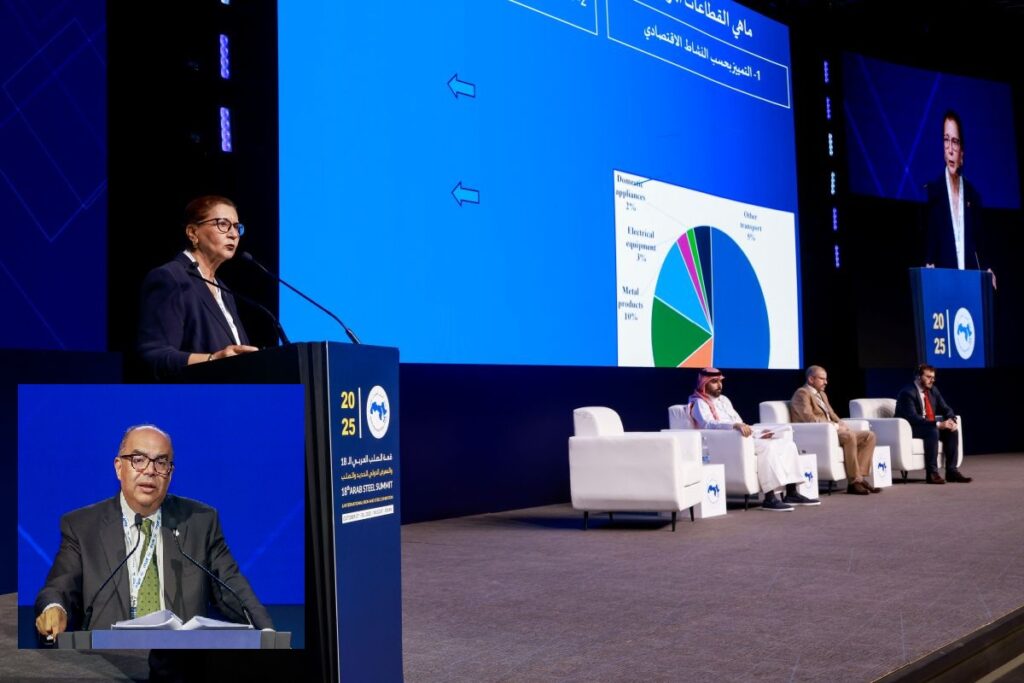
The session, held as part of the summit, featured Dr. Alia El-Mahdi, former Dean of the Faculty of Economics and Political Science at Cairo University; Edward James, Head of Content and Research for the Middle East and North Africa at MEED; Bander Abdullah Al-Sulaim, Chairman of the National Committee for the Iron Industry in Saudi Arabia; and Dr. Soufiane Chaib Setti, Deputy General Manager of AQS – Algeria.
The session shed light on Arab investments in infrastructure and housing, their role in generating demand for finished steel products, and the reasons why the steel industry remains cyclical or stagnant in some markets. Discussions aimed to explore the scale and scope of infrastructure and housing investments in Arab countries and their direct impact on steel demand, analyze current trends and future projections in steel consumption related to construction and infrastructure, and assess the risks of demand concentration in large, publicly funded projects, as well as cyclical or stagnant patterns in local steel industries.
Dr. Alia El-Mahdi explained that the steel industry has backward linkages with mining and energy and forward linkages with construction and manufacturing sectors. She noted that steel production represents 1.4% of global GDP, and that there is a clear correlation between growth in steel output and GDP growth—though it differs between developing and developed nations due to their varying stages of economic development. Rapidly growing countries such as India and Vietnam have seen steel output expand faster than GDP due to urbanization, housing, and industrial expansion.
According to El-Mahdi, construction and infrastructure account for 52% of global steel demand. She noted that while both the public and private sectors drive demand, government demand tends to be strong for limited periods before fading, making the private sector the natural and sustainable driver of steel consumption. The more diversified an economy becomes, the higher its per capita steel consumption.
She emphasized that the challenges facing the steel industry include slow growth rates, rising excess capacity, declining global steel exports, and a shrinking ratio of exports to total output.
Bander Abdullah Al-Sulaim, Chairman of the National Committee for the Iron Industry, stated that Saudi Arabia’s steel industry began in the mid-1960s and expanded in the 1980s with the first integrated industrial complex. It now boasts a production capacity exceeding 9 million tons, having produced 150 million tons over the past 40 years. He highlighted the sector’s contribution to job creation and private-sector growth, stressing that steel is among the most in-demand materials across industries. Saudi Arabia aims to expand capacity to 30 million tons per year to meet rising domestic demand.
Edward James pointed out that numerous steel production projects are emerging and expanding across the region, closely tied to the growth of infrastructure, construction, and transportation projects, especially in Saudi Arabia and the UAE. He noted promising future prospects for steel demand, supported by population growth, rising energy and water needs, upcoming sports events, housing initiatives, and megaprojects.
Soufiane Chaib Setti of AQS–Algeria stressed that infrastructure and housing are key drivers of industrial growth, noting that megaprojects and reconstruction efforts in certain countries will require millions of tons of steel. However, he cautioned that this growth depends heavily on state budgets amid tightening fiscal constraints. He praised the Turkish experience, where empowering the private sector has positively impacted the steel industry’s expansion.
He called for a greater role for the private sector and a review of monetary policies and regulations, particularly those restricting private investment in certain economic sectors.
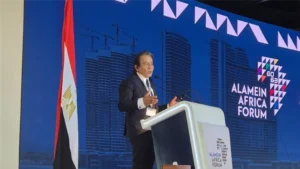
Meanwhile, Dr. Mahmoud Mohieldin, UN Special Envoy on Financing the 2030 Sustainable Development Agenda and Chair of the UN High-Level Expert Group on Global Debt Solutions, stated that the Arab steel industry is undergoing a profound transformation, facing a mix of challenges that demand stronger regional cooperation and integration.
He emphasized the need for the sector to keep pace with technological transformation and the green transition. Speaking during the main session of the 18th Arab Iron and Steel Summit in Muscat, he said the steel industry—the backbone of industrial and economic development—faces economic and geopolitical pressures, including fragmented global markets and rising protectionist trade policies, which limit developing countries’ access to international markets.
Dr. Mohieldin added that digital transformation and the green transition bring additional challenges. The industry is being reshaped globally through smart factories and advanced mining technologies, while climate targets are driving pressure for carbon neutrality. Mechanisms such as the EU Carbon Border Adjustment Mechanism (CBAM)—set to take effect in early 2026—pose new trade restrictions, despite being unilateral measures inconsistent with WTO rules and the UNFCCC framework.
He concluded that enhancing the competitiveness and innovation capacity of the Arab steel sector requires joint investment in R&D for green steel technologies, digitization, and energy efficiency, establishing regional centers of excellence to train talent and share best practices, and fostering joint ventures among Arab steel companies to achieve economies of scale and global competitiveness.
Al-Shorouk Newspaper