



China is seeking to revive its steel sector through a gradual reform approach that supports advanced producers in the industry, while avoiding sharp output cuts that could significantly reduce supply.
According to a report published by Bloomberg, China’s upcoming five-year plan includes broad commitments to boost consumption and innovation. However, the government’s campaign against “over-competition” — aimed at curbing excess capacity and destructive rivalry in the steel sector and other industries — received less emphasis than many had anticipated.
Instead of taking immediate action, Beijing appears to have opted for a slow tightening process that will unfold over years rather than months. In October, the Ministry of Industry and Information Technology proposed stricter rules on production capacity, requiring that plant closures exceed new additions by a ratio of 1.5 to 1. Projects involving modernization or replacement will be granted more flexibility, while certain key regions will be prohibited from adding any new capacity at all.
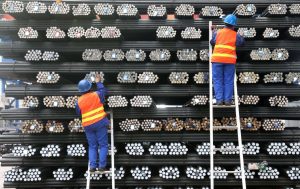
This policy of limiting expansion — rather than forcing struggling mills to shut down — is unlikely to bring immediate relief to steelmakers hit by China’s prolonged real estate downturn. Still, the focus on higher-value steel products, instead of traditional commodity items such as construction rebar, signals that specialized, technologically advanced producers are likely to benefit most.
According to Thomas Gutierrez, an analyst at Kallanish Commodities Ltd, “The outlook for the sector looks brighter for larger producers, who are likely to receive government support to improve quality and foster innovation, aligning with China’s broader goal of upgrading its industrial capabilities.”
China may announce specific output or capacity targets during the National People’s Congress meeting in March. Earlier government statements had sparked speculation about potential direct output cuts to tackle overcapacity, but no such measures have yet been introduced. As a result, steelmakers are adjusting production based on weak domestic demand and narrow profit margins, which have been temporarily supported by lower raw material costs. Annual output is now expected to fall below 1 billion tons for the first time in six years.
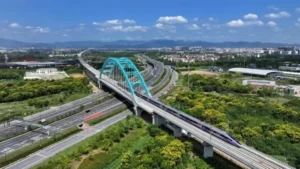
While the government focuses on the supply side, demand remains the key driver for the sector’s trajectory. The upcoming five-year plan outlines major infrastructure projects that could help boost domestic steel consumption.
On the export front, Bloomberg notes that steel shipments have been a bright spot for Chinese producers, though it remains uncertain whether this momentum can continue amid growing global protectionism. Goldman Sachs forecasts an 8% decline in steel exports next year, which would still represent the second-highest historical level on record.
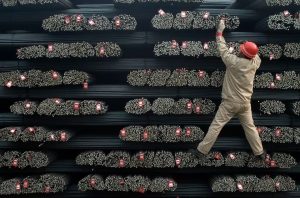
However, a growing share of these exports are semi-finished products rather than high-value finished goods that the government favors, indicating considerable room for upgrading product quality.
According to Florence Sun, an analyst at Macquarie Group Ltd, “If you look at what China has been exporting this year, most of the growth has come from semi-finished steel such as billets.”