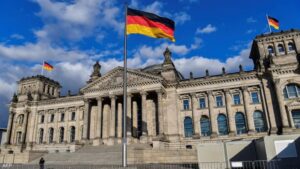


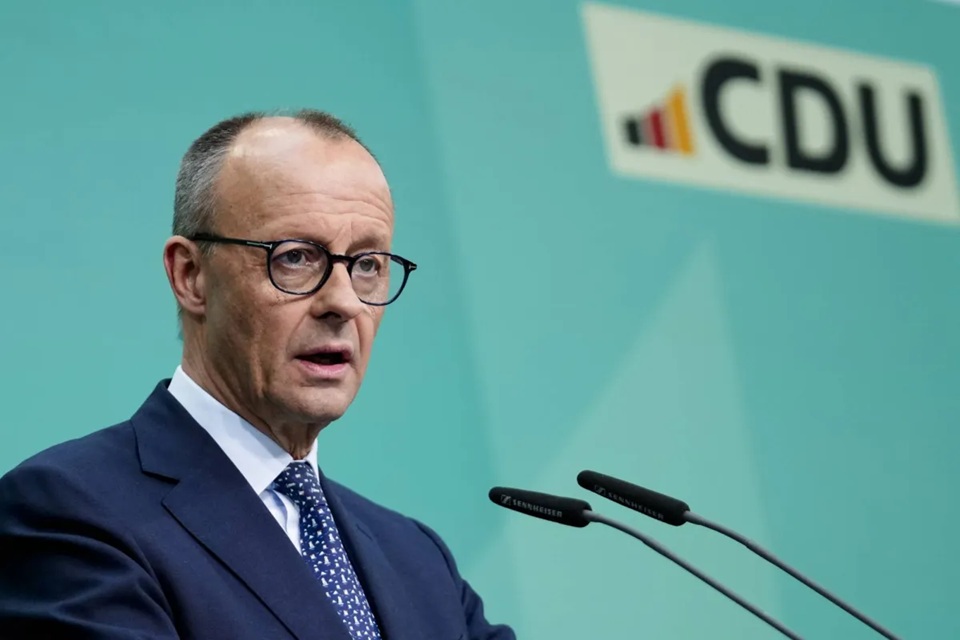
German Chancellor Friedrich Merz on Thursday voiced his country’s support for European Union proposals to raise tariffs on imported steel, as the bloc struggles with an influx of cheap imports, particularly from China.
Following meetings with senior figures in the steel industry in Berlin, Merz said: “These proposals are a step in the right direction.”
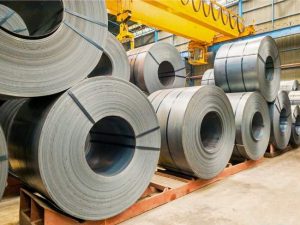
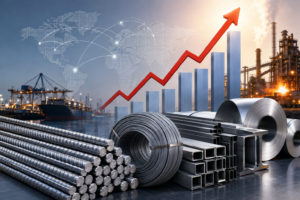
In October, the European Union unveiled plans to double tariffs on imported steel, drawing inspiration from the protectionist measures once adopted by former U.S. President Donald Trump to shield domestic producers from low-priced Chinese exports. The European Commission has proposed increasing tariffs to 50% and reducing the volume of duty-free imports by 47%.
“I will support these proposals as much as I can,” Merz said, “and I hope the appropriate regulations will soon be implemented.”
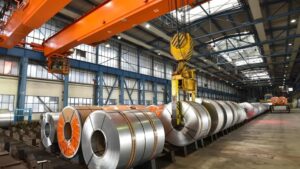
The move reflects a broader EU strategy to curb the influx of cheap metals from China, which produces more than half of the world’s steel. Germany is the largest steel producer in Europe and the seventh-largest globally, according to the World Steel Association. Steel plays a crucial role in Germany’s economy, being widely used in construction, automotive manufacturing, and mechanical engineering, and is a key component of the country’s exports.
However, German producers have long struggled with China’s massive exports of low-priced steel, which have flooded global markets. “We are facing major challenges due to shifts in global trade policy,” Merz said. “These include, on one hand, the tariffs imposed by the United States, and on the other, changing trade flows — especially from Asia, and particularly from China, which is flooding markets with subsidized steel. That’s why we need effective protection, and we agreed to call for that in Brussels.”
Merz also noted that Germany’s steel sector has been hit hard by rising energy costs following Russia’s invasion of Ukraine in 2022, with prices remaining far above pre-war levels. As a result, steel production in Germany has declined by 10–15% compared to 2022.
Thursday’s meetings in Berlin brought together leading German steel producers and state leaders from regions where the industry is one of the largest sources of employment. “We share the steel industry’s concerns about the current economic situation,” Merz concluded. “Companies are facing an existential crisis — that’s why this dialogue was so urgently needed.”
(AFP)