

Chinese steelmakers continue to flood global markets with record export volumes, driven by strong demand from Southeast Asia and expanding new markets in the Middle East, despite escalating global protectionism.
Saudi Arabia has emerged as a key new destination in 2025, with imports of Chinese steel rising 41% during the first nine months of the year compared with the same period last year — the highest increase among major markets, according to Bloomberg calculations based on Chinese customs data.
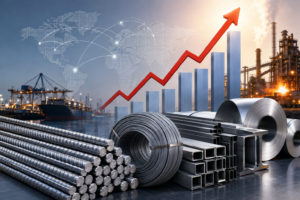
China’s total steel exports reached 97.76 million tons in the first ten months of 2025, surpassing the 2024 level and setting the country on track for a new annual record.
While shipments to Vietnam and South Korea declined due to import restrictions, the Philippines, Indonesia, and Thailand saw strong growth. Meanwhile, the Middle East and Africa have emerged as new drivers of global steel demand.
China’s overseas investments, particularly under the Belt and Road Initiative, have also supported steel consumption, especially in Saudi Arabia and the UAE, where combined Chinese spending reached $86 billion over the past decade, largely in steel-intensive sectors such as energy and transport.
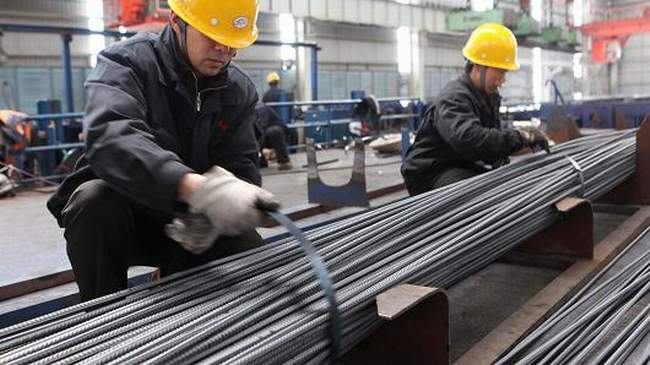
China’s export routes are increasingly shifting toward the Middle East and Africa, with a notable rise in pipe and long product exports used in infrastructure projects.
Exports of construction-related steel products to Saudi Arabia have nearly doubled, while semi-finished steel shipments surged more than sixfold compared to last year, despite a slowdown in the progress of the massive NEOM project.
Although this strategy has proven effective so far, rising global trade tensions and weak domestic demand in China raise questions about the sustainability of the country’s steel export boom, and its growing reliance on the Middle East and Southeast Asia as key engines of growth.