



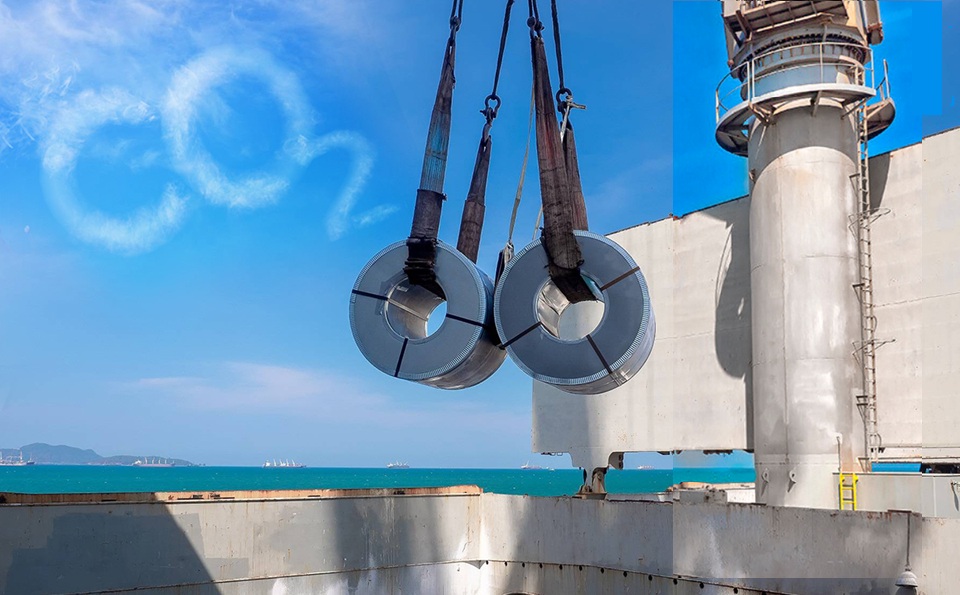
Reducing emissions from Japan’s steel industry is a central pillar of the country’s strategy to achieve carbon neutrality by 2050. The sector alone accounts for around 13% of national emissions due to its heavy reliance on coal for smelting and reduction processes.
As global competition intensifies, cutting emissions has become a key benchmark for preserving the competitiveness of Japan’s steel exports and maintaining its industrial standing.
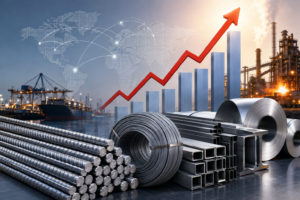
In 2024, Japan ranked as the world’s third-largest producer of crude steel; however, domestic demand continues to decline due to population shrinkage, driving production down from 120.2 million tons in 2007 to 84 million tons in 2024. Meanwhile, global demand is rising, supported by growing consumption in emerging economies such as China and India, which have significantly increased investments to expand production capacity for infrastructure and manufacturing needs.
Against this backdrop, a recent report—reviewed by the Energy Research Unit—outlined the main pathways to reduce emissions in Japan’s steel sector and accelerate its decarbonization efforts.
Production Structure in Japan: Persistent Challenges
Globally, steel production relies mainly on two routes:
-
Blast Furnace–Basic Oxygen Furnace (BF–BOF), which accounted for 71% of global crude steel output in 2023, and represents 74% of Japan’s production.
-
Direct Reduction with Electric Arc Furnaces (DR–EAF), which emits 1.4 metric tons of CO₂ per ton of steel, compared with 2.2 tons from traditional furnaces. Japan has not yet adopted this technology on a commercial scale due to high gas costs.
Both routes rely on fossil fuels for heat and chemical reduction, while scrap-based secondary production is largely carried out in electric arc furnaces, which offer substantially lower emissions.
Japan faces significant challenges due to its heavy dependence on the carbon-intensive BF–BOF route, with coal used in these furnaces accounting for about 93% of direct fuel-related emissions in 2024. The construction and automotive sectors are the main domestic consumers of steel.
According to Bloomberg New Energy Finance (BNEF), reducing emissions from existing assets will be crucial for achieving national climate goals.
Decarbonization Pathways: Multiple Options, High Costs
There is growing global consensus among governments and steelmakers on the need to reduce emissions through various pathways, including:
-
Retrofitting traditional furnaces with carbon capture systems
-
Using biomass inputs in BF–BOF operations
-
Direct reduction combined with electric arc furnaces
-
Direct reduction with carbon capture and storage (CCS)
-
Hydrogen-based direct reduction
Although traditional furnaces remain the cheapest route in the absence of carbon pricing, scrap-based EAFs powered by renewable energy stand out as a promising low-emission solution. Producing a ton of steel via this route is expected to cost around $720 by 2030, about 18% higher than traditional furnaces, yet with near-zero emissions.
Pathways relying on hydrogen or CCS are significantly more expensive, exceeding $1,000 per ton by 2030, and are not expected to reach cost competitiveness before 2050.
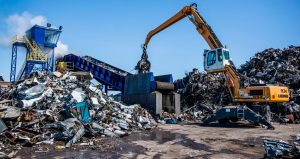
Expanding scrap-based EAF production is therefore one of the most cost-effective approaches for Japan to reduce emissions.
The report also highlights that redirecting currently exported scrap to the domestic market, and powering EAFs with clean electricity, could reduce emissions by up to 23.7 million tons of CO₂.
Key Challenges and Proposed Solutions
Japan’s steel sector faces rising pressures from the EU’s Carbon Border Adjustment Mechanism (CBAM) and China’s rapid progress in low-carbon steel technologies.
To accelerate decarbonization, BNEF proposes a roadmap built on four major pillars:
-
Establishing unified standards for green steel
-
Expanding the deployment of electric arc furnaces
-
Strengthening the carbon market
-
Supporting domestic demand for low-emission steel
Long-term planning for infrastructure, supply chains, clean and affordable electricity, and robust steel recycling systems will be essential to avoid future market volatility.