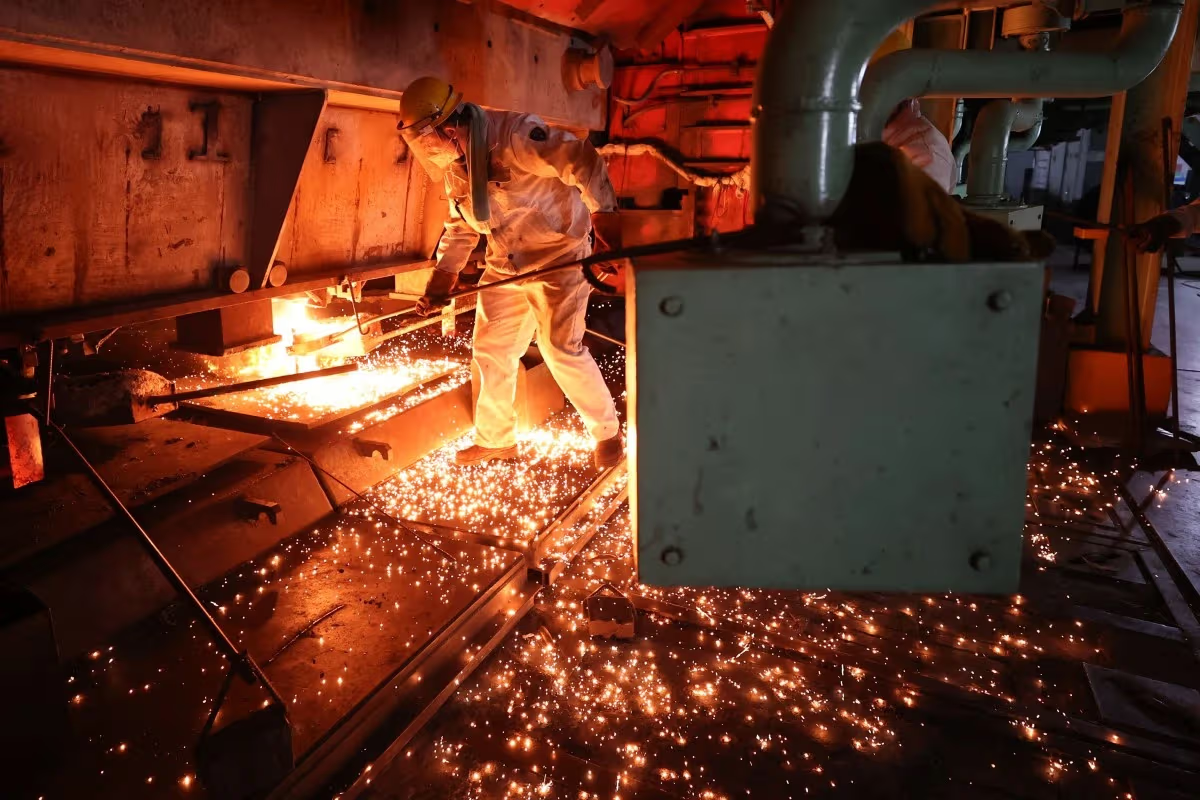
Pressures are mounting on the Chinese steel industry as the real estate sector continues to decline and demand from the construction sector wanes, amid a 34.2% year-on-year decrease in real estate investments during October 2026. This is reflected in factory operating rates and demand for iron ore, according to an analysis published by S&P Global.
The analysis indicated that the construction sector, at its peak activity in 2019, accounted for about a third of China's total steel consumption. This makes the continued real estate slump one of the most significant factors affecting the steel market, especially with declining sales figures and the commencement of new projects.
Industry indicators reveal widening financial pressures on producers, with only 11.26% of Chinese steel mills reporting profits in mid-November, compared to about two-thirds in May. This figure dropped to 6.93% in September, according to Mysteel data.
In contrast, iron ore inventories at 46 major Chinese ports rose to a record level for November 2026, reaching 156.2 million tons, an increase of 19.4% above the historical average for this month. This reflects a weak pace of inventory drawdown and reduced needs by factories.
The analysis pointed to varied inventories of finished products, with rebar and wire rod inventories decreasing by 17% and 20% respectively from their seasonal averages, while hot-rolled and cold-rolled coil inventories increased by 40% and 63%.
These combined indicators suggest a continued weakness in the fundamentals of the Chinese steel market, with limited incentives for mills to increase production or boost raw material purchases amid declining demand and pressure on profit margins.