
Introduction
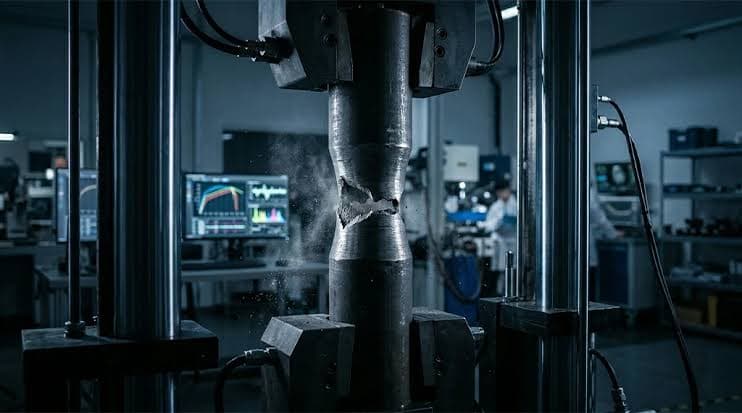
Destructive and Non-Destructive Testing (NDT) are essential quality assurance techniques used throughout the manufacturing and inspection of steel pipes and steel strips. Destructive testing is performed to determine the mechanical, physical, and chemical properties of materials by subjecting test specimens to controlled loading until failure. In contrast, Non-Destructive Testing (NDT) enables inspectors to detect surface and internal defects without damaging the material, ensuring product integrity, compliance with international standards, and operational safety.
This training program provides participants with a comprehensive understanding of the principles, applications, advantages, and limitations of both destructive and non-destructive testing methods commonly used in the steel industry.
Program Contents
Destructive Testing (DT)
- Tensile Testing – Evaluation of the tensile strength, yield strength, elongation, and ductility of materials.
- Compression Testing – Measurement of material resistance under compressive loads.
- Hardness Testing – Determination of material hardness using standard hardness testing methods.
- Chemical Analysis – Identification and verification of the chemical composition of steel materials.
Non-Destructive Testing (NDT)
- Ultrasonic Testing (UT) – Detection of internal defects such as cracks, laminations, and voids using high-frequency sound waves.
- Radiographic Testing (RT) – Inspection of internal discontinuities using X-rays or gamma rays.
- Eddy Current Testing (ECT) – Detection of surface and near-surface defects, corrosion, and variations in material properties.
- Magnetic Particle Testing (MT) – Detection of surface and near-surface discontinuities in ferromagnetic materials.
- Liquid Penetrant Testing (PT) – Identification of surface-breaking defects through dye penetrant inspection.
- Visual Inspection (VT) – Examination of visible surface defects using direct or assisted visual methods.