
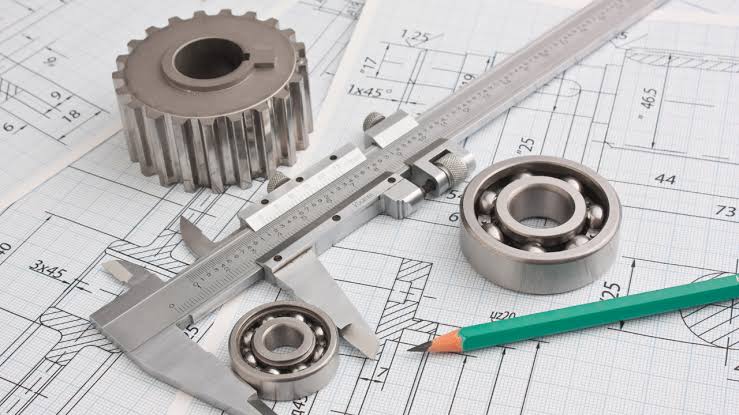
Engineering drawings are the universal language of manufacturing, maintenance, and engineering. They provide precise technical information required for the fabrication, assembly, inspection, and maintenance of equipment and components. Because engineering drawings are usually prepared at reduced scales, they rely on standardized symbols, dimensions, and conventions to accurately represent complex objects.
A solid understanding of engineering drawings enables technicians to correctly interpret design intent, perform accurate measurements, reduce production errors, and improve communication between engineering, production, and maintenance teams. This training program provides participants with the fundamental knowledge and practical skills required to read and interpret engineering drawings and apply measurement techniques commonly used in industrial environments.
- Introduction to Metrology and its importance in industrial applications.
- Measuring instruments used in industry and their proper use.
- Measurement units and the International System of Units (SI).
- Basic metrology terminology and definitions.
- Measurement errors: types, causes, and methods of minimizing them.
- Gauges and measuring fixtures: types, applications, and selection criteria.
- Calibration principles and maintaining the accuracy of measuring instruments.
- Practical exercises and hands-on applications in measurement techniques and result interpretation.
I prefer this response