

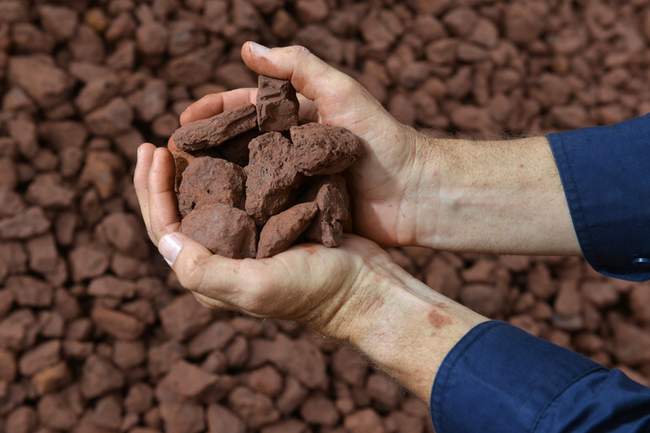
The world’s biggest mining companies have benefited from China’s surge in demand for iron ore in the past, but they are now being hit by the economic challenges facing China, their biggest customer.
Australia’s BHP Group, Rio Tinto, Fortescue and Brazil’s Vale all reported lower profits this week, as prices for the key steelmaking metal fell amid China’s ongoing property crisis and its impact on construction demand in the world’s second-largest economy. Companies with the most investment in iron ore were the hardest hit.
Iron ore was one of the worst performing commodities in 2024, with iron ore prices down by more than a quarter and benchmark futures prices down about 7% from a year earlier. Prices on the Singapore Exchange topped $140 per tonne before falling to around $100 per tonne, with analysts expecting the decline to continue to below $90 per tonne by the end of 2025.
China and Steel Demand
China’s steel demand is expected to have peaked during the current period, and its decline indicates a decline in demand for iron ore. Although the country continues to import more than a billion tons annually, the expected turning point has not yet occurred.
Steel mills are under increasing financial pressure, and the government is unlikely to provide a stimulus that would give the construction sector a major boost. The rise in protectionism around the world is also expected to negatively impact steel exports from China.
The decline in demand is not the only source of pressure on iron ore prices, as supply is also likely to rise, with the giant Simandou project in Guinea expected to start up later this year, in addition to increasing production in Australia and Brazil.
Jiang Mengtian, chief iron ore analyst at Shanghai-based consultancy Horizon Insights, said smaller, higher-cost companies would be hit hardest, and “the squeeze on profits will gradually shift to primary production sectors, especially as iron ore mine capacity is expected to rise by about 46 million tonnes in 2025.”
Mining companies hit
While lower costs have provided some protection for the big miners, they have also been hit hard. BHP posted record profits in the year to June 2022 thanks to a surge in demand for iron ore, but annual profits have more than halved since then, while Rio Tinto’s annual profits from the steelmaking element have fallen 19% from 2023, despite stable production levels.
The two Australian giants have spent decades expanding their iron ore mines, enabling them to profit even when prices are low, and they have a more diversified strategy than some of their peers, with other metals accounting for most of BHP’s revenue and more than 40% of Rio Tinto’s.
“Rio Tinto is poised to continue generating significant cash flow from its iron ore business, while maintaining and enhancing its ability to benefit from higher copper and aluminum prices as the next demand cycle begins,” Chris Lavmina, an analyst at Jefferies Financial Group, said in a research note.
BHP and Rio Tinto saw gross profit fall 23% and 8%, respectively, but miners with greater exposure to iron ore, such as Brazil’s Vale and Australia’s Fortescue, fared worse. Vale, which relies on iron ore for 80% of its revenue, saw a measure of its latest quarterly earnings fall 41%, while Fortescue, which specialises in iron ore alone, saw its first-half earnings fall 53%.