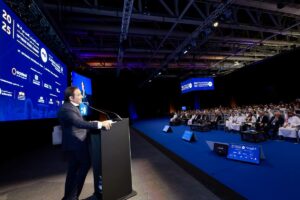


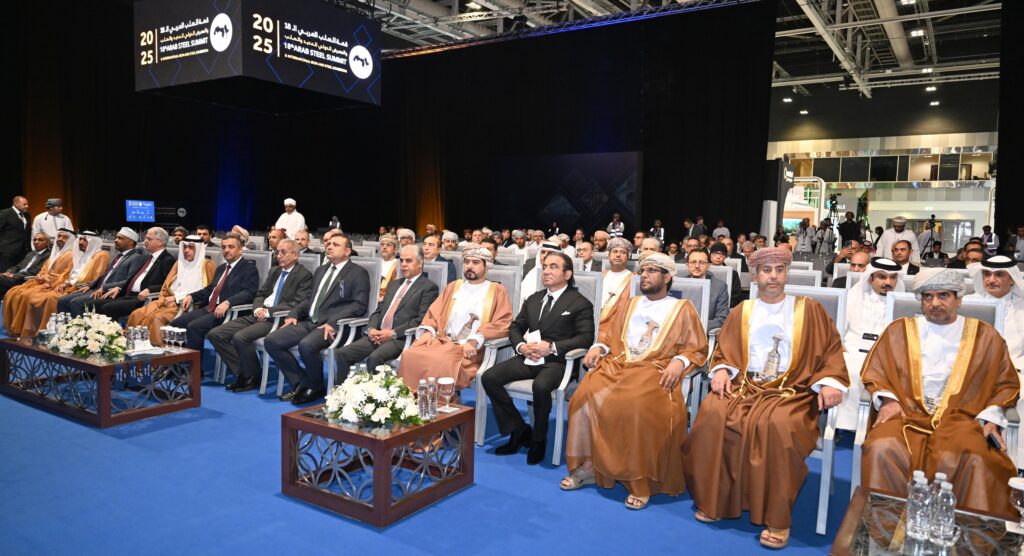
The Arab Steel Summit 2025, hosted by the Sultanate of Oman at the Oman Convention and Exhibition Centre, discussed the future of the iron and steel industry in the Arab region, with the participation of more than 600 officials, investors, experts, and representatives of regional and international companies in the sector.
The summit was inaugurated under the patronage of H.E. Qais bin Mohammed Al Yousef, Minister of Commerce, Industry and Investment Promotion. The 18th Arab Steel Summit, organized by the Arab Iron and Steel Union and Vale, served as an intellectual and industrial platform bringing together government leaders, the private sector, and academia in a comprehensive dialogue on the future of the Arab iron and steel industry.
H.E. Qais bin Mohammed Al Yousef emphasized that the iron and steel sector occupies a pivotal position—not only for its role in supporting infrastructure, energy, and logistics sectors, but also for its connection to global issues such as the transition to a low-carbon economy.
He noted that the iron and steel industries in Oman are among the most promising sectors, contributing about 2% of the GDP and attracting investments worth billions of dollars. The sector employs hundreds of qualified national professionals, while iron and steel exports account for nearly 40% of Oman’s total industrial exports.
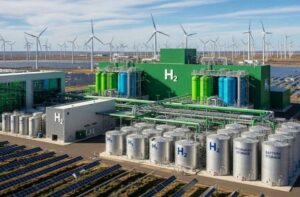
The Minister added that Oman has begun preparing for these global shifts by investing in renewable energy and green hydrogen projects, encouraging factories to adopt Fourth Industrial Revolution technologies, developing incentive systems to attract high-value investments, and promoting local content through digital business facilitation platforms.
The summit’s sessions covered strategic themes, including Arab industry leaders’ visions for the sector’s future, supply security and value chains, new protectionist policies, and the role of innovation and advanced technologies in enhancing competitiveness and sustainability. Specialized discussions also addressed environmental and technological transformation in the steel industry, the development of a circular economy based on recycling and industrial scrap, alongside an exhibition highlighting the latest technologies and projects in iron and steel manufacturing.
H.E. Dr. Saleh bin Said Masan, Undersecretary for Commerce and Industry at the Ministry of Commerce, Industry and Investment Promotion, stated that Oman’s hosting of the 2025 Arab Steel Summit comes at a time of profound global transformations in supply chains, energy, and technology, calling on Arab nations to enhance industrial integration and adopt new strategies to keep pace with global changes.
He affirmed that the iron and steel industry is a cornerstone of industrial development and a main driver for infrastructure, energy, and construction projects. The summit, he added, is a key opportunity for investors to meet and learn about Oman’s competitive advantages, attracting high-quality investments that strengthen its regional and international competitiveness. Oman’s hosting of this event, he noted, underscores its growing role as a regional hub for metallurgical industries and a gateway for raw material trade in the region.
H.E. Dr. Masan added that the Ministry aims through this summit to open new horizons for Arab-Arab cooperation and integration toward a more efficient and sustainable Arab steel industry, driven by innovation and modern technology, in line with Oman’s vision for a green economy and carbon neutrality.
Ahmed Ezz, Chairman of Ezz Steel and Chairman of the Arab Iron and Steel Union, said that holding the summit in Oman reflects the strong cooperation between the Union and member states to strengthen the position of Arab industry in the global economy. He praised the high organizational level of the event and the participation of major institutions and companies in the sector.
He added that the summit’s outcomes are expected to help shape a shared Arab vision for developing the iron and steel industry, setting industrial priorities for the coming period, supporting sustainable economic development, and reinforcing Oman’s position as a regional hub for advanced industries and a key driver of industrial growth in the region.
Eng. Khalid bin Salim Al Qasabi, Director General of Industry at the Ministry of Commerce, Industry and Investment Promotion, said the summit provides a unique opportunity to exchange expertise and discuss key challenges facing Arab producers amid market volatility and growing trade competition. He noted that sessions addressed critical topics such as global overproduction, new protectionist measures, raw material supply security, and the future of direct reduction technology amid energy price fluctuations, while highlighting the increasing role of research in developing more sustainable and efficient production solutions.
He stressed that the Ministry places special focus on metallurgical industries, aiming to empower them through added local value, regional partnerships, and an attractive investment environment that draws capital and advanced technologies in line with the Industrial Strategy 2040. The summit, he said, reaffirms Oman’s growing stature as a strategic destination for heavy industries and a regional hub for Arab industrial cooperation, strengthening its presence in the global industrial landscape.
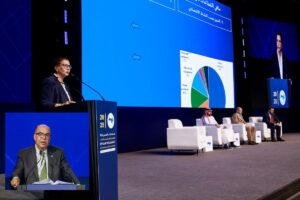
The opening session, titled “Industry Leaders’ Visions for the Future of Arab Steel,” explored the challenges facing the sector amid geopolitical and economic shifts, the move toward low-emission production, and the importance of investing in modern technologies to improve efficiency and competitiveness.
Speakers emphasized the need for coordinated Arab efforts to integrate supply chains and stabilize markets, along with the vital role of governments in shaping industrial and legislative policies that foster innovation and long-term investment. They also highlighted the importance of developing national skills and attracting young talent to ensure the industry’s sustainable growth.
The working sessions addressed topics such as the future of direct reduction and green hydrogen technologies, raw material and supply chain security amid geopolitical challenges, protectionist policies in global markets, the development of a circular economy, and innovation in steelmaking. Research papers were also presented by the Ministry of Energy and Minerals and several institutions on the future of energy and metallurgical industries in Oman and the region.
The accompanying international exhibition was inaugurated alongside the summit, serving as a specialized professional platform showcasing the latest technologies and industrial solutions in the iron and steel sector, with participation from companies and institutions inside and outside Oman. The exhibition aims to enhance networking among investors, suppliers, and manufacturers, facilitate industrial partnerships, and highlight technological advancements that boost production efficiency and drive the transition toward low-emission manufacturing.
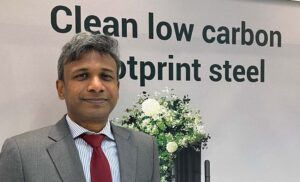
Saleh Al Muslahi, Regional Head for the Middle East and North Africa for Green Steel Projects at Vale, stated that hosting the summit and exhibition extends Vale’s role in supporting industrial transformation in the region by building an integrated system for low-emission iron production and enabling the green steel industry.
He added that choosing Oman to host this event reflects international confidence in its strategic location and capacity to foster major industrial partnerships. He affirmed that the ongoing collaboration between Vale and Omani government entities represents a practical model of public-private partnership, paving the way for an integrated regional production base that supports sustainability and economic growth in the Arab world.
This marks the first time Oman hosts this premier regional industrial event, reflecting growing international confidence in Oman’s investment environment, advanced industrial infrastructure, and emerging role as a regional hub for manufacturing and heavy industries. The hosting comes at a time when the global iron and steel industry is undergoing rapid structural transformations, driven by the shift toward low-emission production, rising demand for sustainable raw materials, and challenges related to markets, tariffs, and geopolitical changes.
Oman News Agency