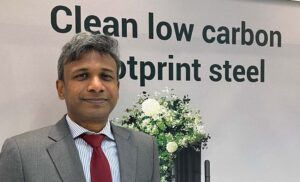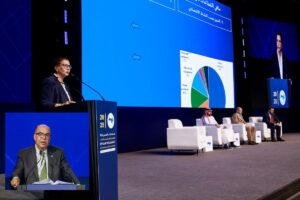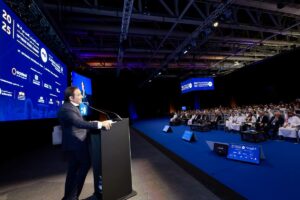


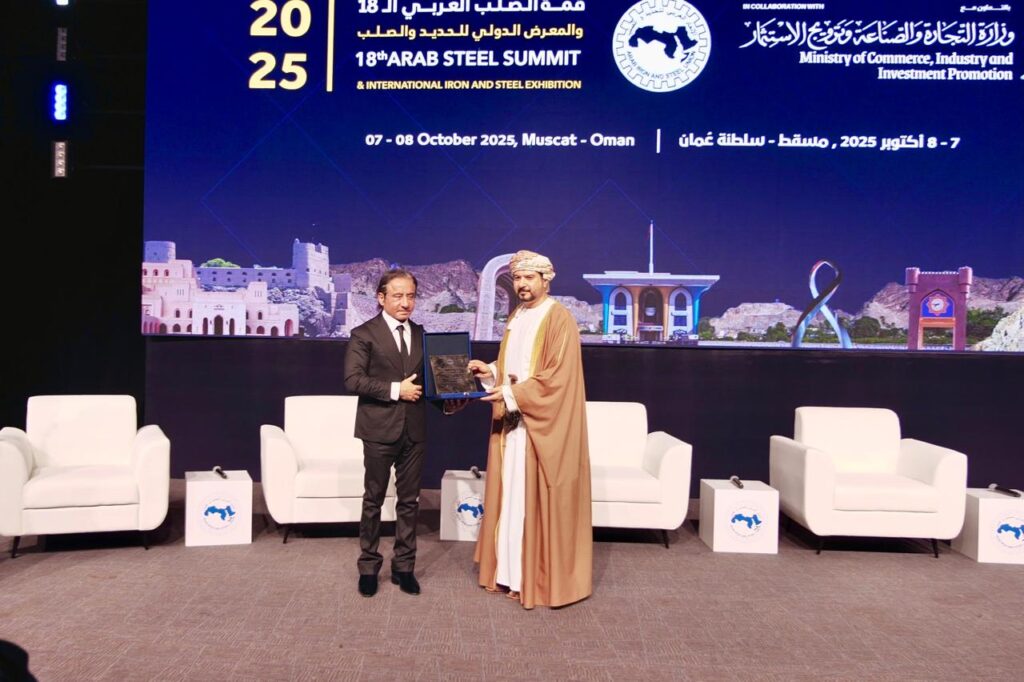
During the Arab Steel Summit held in Muscat, Eng. Ahmed Ezz, Chairman of the Arab Iron and Steel Union (AISU), welcomed H.E. Qais bin Mohammed al Yousef, Oman’s Minister of Commerce, Industry and Investment Promotion, and extended his gratitude to His Majesty Sultan Haitham bin Tarik Al Said for the warm hospitality and excellent organization of the event.
In his address, Ezz delivered a series of key messages — as Chairman of AISU — to Arab governments and Ministers of Commerce and Industry through Minister al Yousef.
Ezz said: “The world has changed. For three decades, we have followed its developmental and trade model, aligning our policies with the global economic system that promotes free trade. We adopted a development model that balanced domestic demand with the need for exports, reduced customs tariffs, committed to protecting intellectual property and trademarks, and signed trade remedy agreements. We even accepted being subject to anti-dumping, subsidy, and safeguard cases in times of export surpluses. We were ready to accept even more obligations under the international trading system — but those who created these rules have now abandoned them. Markets are closing, trade barriers are rising, and global trade rules are disappearing. The current trading system is on the verge of collapse, as if the World Trade Organization no longer exists.”
He continued: “The United States — regardless of administration — has adopted a consistent approach of raising protectionist barriers that harm international trade. The European Union has followed suit, imposing declining quotas on exports to its markets. Meanwhile, Arab markets are accused of not protecting themselves adequately against dumped imports from China, and we are blamed for having export surpluses simply because we do not shield our industries.”
Ezz added: “The voice of importers has become louder than that of producers — those who have neither the time nor luxury to lobby because they are focused on building and producing. What we urgently need is a unified, integrated Arab industrial policy for the steel sector. Such a policy should establish balanced protective measures — not because our steel industry is weak or inefficient, but because it faces relentless waves of protectionism worldwide. Our only viable path forward is to grow within our Arab markets.”
For his part, H.E. Qais bin Mohammed al Yousef, Oman’s Minister of Commerce, Industry and Investment Promotion, welcomed the proposal of a working paper to be presented by the Chairman of AISU summarizing the summit’s key findings and recommendations. He noted that these outcomes would be discussed with Gulf Ministers of Commerce and Industry in their upcoming meetings.
Alborsaa News