

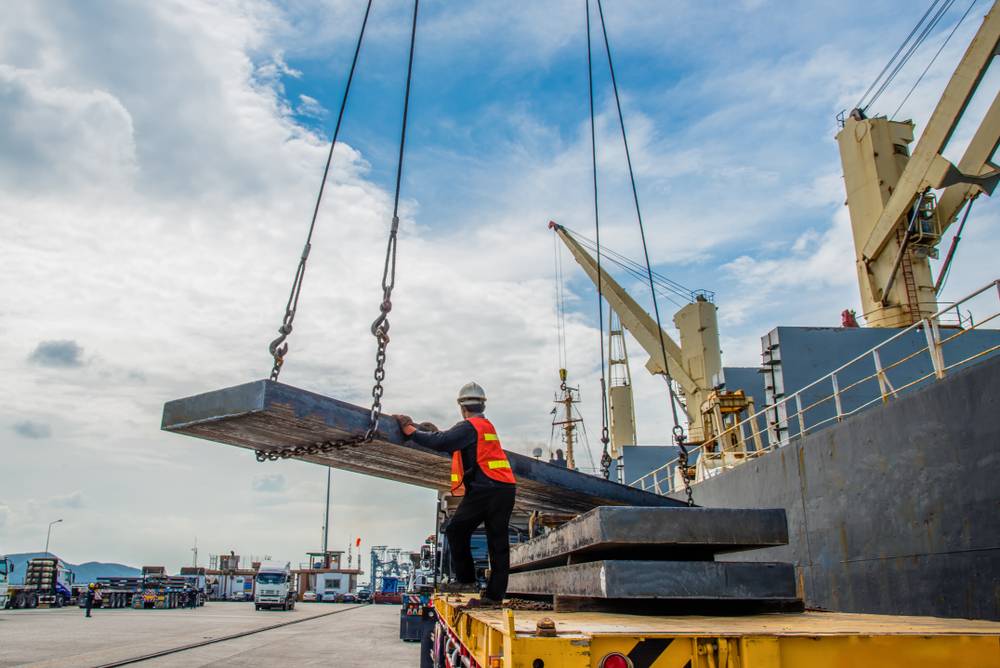
Egypt’s iron and steel exports declined by 15% during the first five months of 2025, recording approximately $801 million, compared to $938 million in the same period last year, according to data from the General Organization for Export and Import Control.
The data showed a significant decline in exports to the US and Turkish markets, which together represent nearly a quarter of the sector’s total exports. Exports to the US fell by 26% to $72.5 million, compared to $97.7 million in the same period of 2024, while exports to Turkey declined by 19%, recording $119.6 million, compared to $148.5 million.
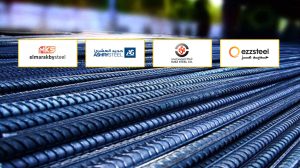
According to Rami Saleh, CEO of Business Development, Marketing, Sustainability, and Export at El Marakby Steel, the US threat to impose new tariffs since the beginning of this year has negatively impacted exports. This situation worsened with the implementation of these tariffs last June, when the US tariff on steel imports increased from 25% to 50%, implementing a previous decision.
Saleh told Al Arabiya Business that the anti-dumping case announced by the US Department of Commerce against steel imports from Egypt and three other countries also contributed to the decline in exports, especially of rebar (lengths) to the United States, which he described as “almost non-existent.”
In the same context, Samir Noman, a member of the Export Council for Building Materials and Metal Industries, attributed the decline in exports to Turkey to the economic recession in Europe due to the ongoing Russian-Ukrainian war, which has made it difficult to maintain normal export levels to Ankara.
Despite the challenges, the data revealed record increases in Egyptian steel exports to several alternative markets. Brazil topped the list of countries with the highest growth in its imports of Egyptian steel, increasing 286% to $71.4 million, followed by India, whose imports jumped 559% to $26.7 million.
Egyptian steel exports to Saudi Arabia also increased by 57% to $54.9 million, Lebanon by 292% to $43.4 million, and Sudan by 179% to $34.6 million. Exports to Kenya increased by 439% to $34.5 million, and Libya by 60% to $27.4 million.
A source in the Building Materials Export Council explained that the expansion into alternative markets is part of a plan to compensate for lost exports to the United States and Turkey, noting that the council is currently focusing on opening new export channels in Latin America, India, and some Arab and African countries.
Mr. Rami Saleh considered the Brazilian market to be one of the most prominent opportunities for Egyptian steel at the present time, especially in light of European restrictions such as the “quota” and the decline in export opportunities to the United States. He also noted that some Balkan countries and Albania offer limited export opportunities, although competition there is difficult due to the absence of customs duties on imports from other countries.
Across the African continent, Saleh believed that competition is becoming more difficult due to the internal duties imposed by some countries, such as Kenya, which imposed duties of up to 17.5% per ton of steel, despite its membership in the COMESA agreement, which stipulates customs exemption for products within member states.
In light of the current challenges, the sector continues its efforts to enhance its external competitiveness by diversifying markets, reducing costs, and improving product quality to ensure its continued role in supporting Egyptian exports and contributing to the trade balance.